Home » Tennis Court » Tennis Court Construction and Resurfacing Guide for Broward County, FL
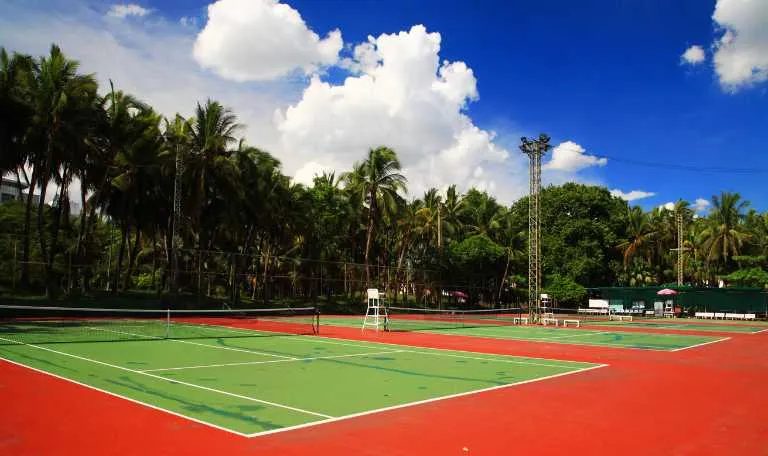
In Broward County, home to vibrant cities like Fort Lauderdale, Hollywood, and Pompano Beach, the construction and resurfacing of tennis courts presents an exciting, but challenging opportunity for sports facility planners. The region’s humid subtropical climate, characteristic of South Florida, adds an interesting challenge, necessitating a strategic choice of materials and court designs to ensure top-quality, long-lasting courts.
This guide is tailored to energize and assist schools, commercial entities, and city planners in Broward County in creating standout tennis court projects. It navigates through local regulations, highlights the selection of climate-resistant materials, and offers design insights for catering to diverse player groups. Also included are discussions on factors impacting construction costs and a list of premier tennis court companies in the region. This guide is your go-to source for those aiming to build or resurface a tennis court with flair and precision.
Don’t miss out on getting a customized estimate for your project with our tennis court cost calculator.
Tennis Court Construction and Resurfacing Cost in Broward County
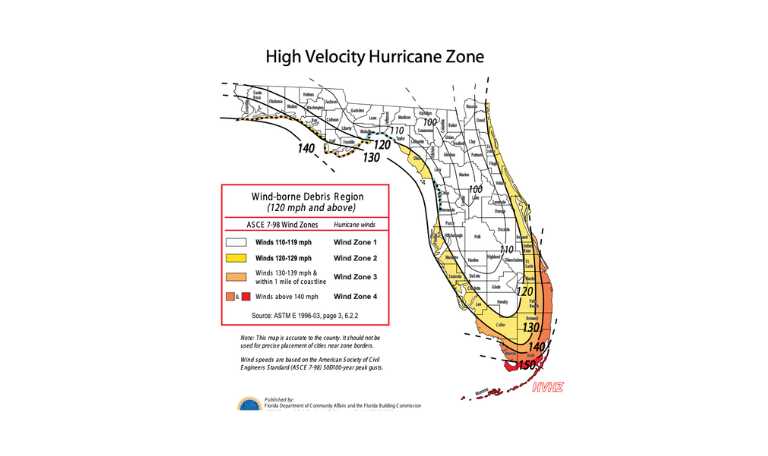
Broward County falls within the High Velocity Hurricane Zone (HVWZ). This means stricter building codes to ensure structures can handle fiercer winds. While this translates to a safer court, it also translates to a higher price tag. If you are planning a tennis facility in or around Fort Lauderdale, Hollywood, Pompano Beach, expect stronger foundations, wind-resistant materials like metal roofs and special fencing, and potentially more complex engineering, all adding to the overall cost.
Constructing a new tennis court in Broward County typically falls in the range of $25,000 to $120,000. This cost variation is influenced by several factors, such as the type of court surface material and the inclusion of additional amenities like lighting, fencing, bleachers, and scoreboards, all of which can significantly impact the total cost.
City Comparison: Fort Lauderdale vs. Pompano Beach vs. Hollywood
While Broward County overall might be pricier than other parts of Florida, there can be slight variations among its cities. The biggest factor influencing cost here is land price. Fort Lauderdale, being the largest and most populous city, might have the highest land cost, impacting the total construction budget. Labor costs tend to be similar across all three major cities (Fort Lauderdale, Pompano Beach, Hollywood), and material availability might cause slight variations, but these are likely minimal.
Cost of Resurfacing
When it comes to resurfacing an existing tennis court, the expenses are generally more affordable, ranging approximately from $4,000 to $10,000. The final cost in these cases will depend on the chosen resurfacing material and any additional features or necessary repairs.
To get a precise and tailored estimate for your tennis court construction or resurfacing project in Broward County, our tennis court cost calculator is a handy resource. Just enter your project details, and receive a customized cost estimate in your inbox in minutes.
Cost LED Lighting will add to the costs – but is worth it!
Installing LED lighting into your tennis court will result in additional costs. Explore information on the expenses associated with tennis court lighting, how to choose a reliable lighting partner in Florida, and gain knowledge about grants and funding options available for tennis court lighting in the state.

Top Tennis Court Construction and Resurfacing Companies in Broward County, Florida
Let’s start by highlighting some of the top tennis court construction companies in Broward County, FL. Whether you are planning a tennis court facility in Fort Lauderdale, Pompano Beach or Hollywood, these companies have the local experience and knowhow to make your project a success. For a comprehensive perspective that covers all of the Sunshine State, be sure to explore our detailed guide on tennis court development throughout Florida!
ClassicCourt by Tarkett Sports
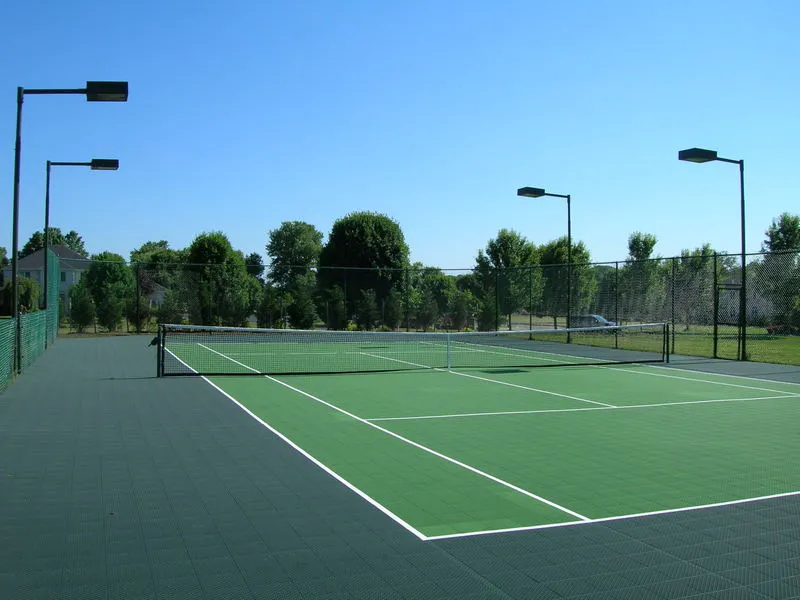
ClassicCourt, from Tarkett Sports, is a premium sports surfacing system built on post-tension concrete. Specifically designed to meet the demands of high-use tennis facilities, ClassicCourt combines structural strength with reliable play characteristics to deliver a surface that outperforms traditional asphalt courts. With an industry-leading 50-year structural warranty, ClassicCourt is trusted by schools, universities, parks, and private clubs looking for a long-lasting tennis court solution.
Tennis Court Systems by ClassicCourt
- Post-Tension Concrete Base – Reduces cracking and settling compared to asphalt, ensuring a consistently smooth playing surface.
- True Ball Response – Provides dependable bounce and footing for both recreational and competitive tennis.
- Extended Lifespan – 50-year structural warranty and 10-year surfacing warranty reduce long-term costs.
- Lower Maintenance – Engineered to minimize resurfacing and patchwork common to asphalt courts.
- Expert Installation – Constructed by PTI-certified professionals for precision and quality.
Why Choose ClassicCourt for Tennis?
- Backed by Tarkett Sports, a global leader in athletic flooring solutions.
- Member of the American Sports Builders Association
Delivers superior durability and performance year-round while offering a cost-effective alternative to asphalt with significantly reduced maintenance needs.
VersaCourt
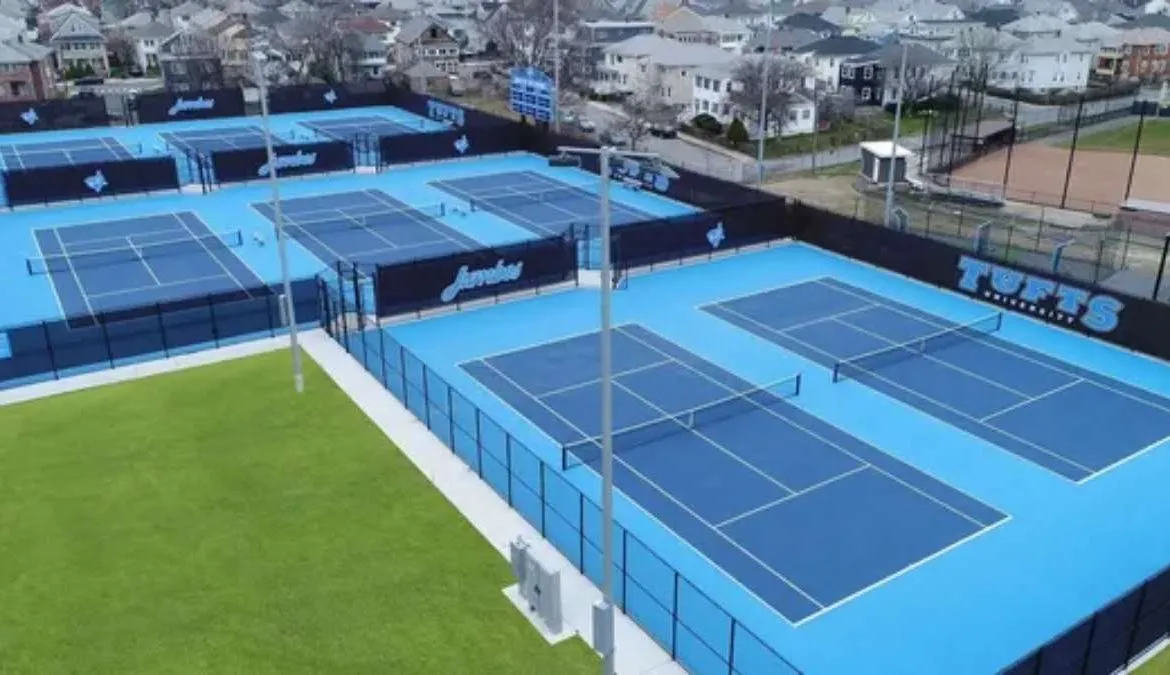
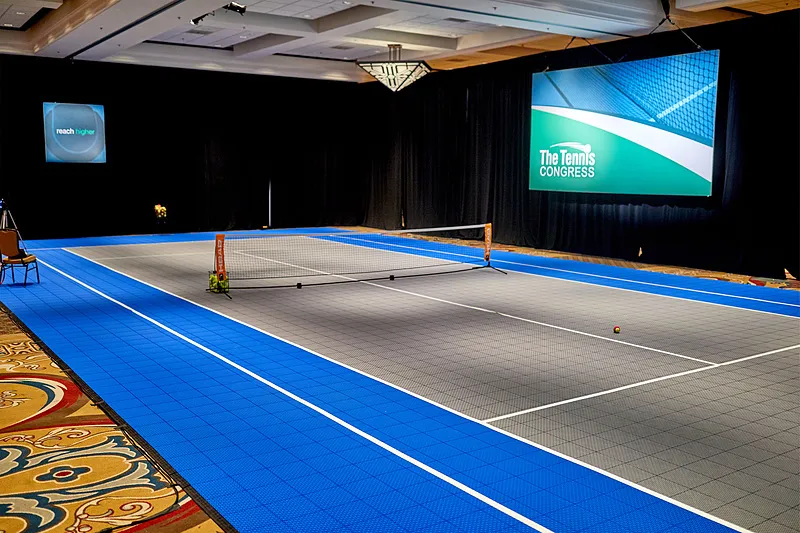
VersaCourt is a leading provider of high-quality tennis courts, known for its innovative modular interlocking tiles that offer exceptional durability and performance. Their advanced tile systems create safe, customizable surfaces ideal for both residential and professional sports venues. In San Francisco, California, VersaCourt offers comprehensive design and installation services, collaborating closely with clients to develop courts that meet specific aesthetic and functional needs. Widely used in local schools, parks, and resorts, VersaCourt’s products are recognized for enhancing both safety and visual appeal. Their commitment to quality is underscored by their ISO 9001:2008 certification.
Tennis Court Systems:
- Consistent Ball Bounce: Engineered to provide reliable and consistent play.
- Enhanced Safety: Designed with superior grip to reduce the risk of injury.
- Easy Maintenance: The modular design simplifies cleaning and allows for straightforward repairs.
- Customizable Design: Adaptable to various environments, whether residential or professional.
- Durability: Constructed to withstand diverse conditions, ensuring long-term performance.
- Versatile Installation: Available with options for both professional installation and DIY support.
Services Offered:
- Customized court design and installation services in San Francisco.
- DIY installation support.
- Integration with additional features from The Recreational Group, including synthetic turf and playground surfacing.
Certifications & Memberships:
- ISO 9001:2008 certified, highlighting their commitment to quality management.
Get in Touch
- Learn more and contact VersaCourt in our supplier directory.
California Sports Surfaces
Since its founding in 1953, California Sports Surfaces (CSS) has been a leader in the innovation of sports surfaces, creating products that significantly enhance athletic performance. With a strong presence in San Francisco, California, CSS has established itself as a trusted provider of high-quality sports surfaces. As a prominent member of the American Sports Builders Association (ASBA) and holding certifications in all four ITF Court Pace categories, CSS has provided surfaces for some of the most prestigious sporting events globally, including the Olympics and the US Open. Their dedication to excellence and cutting-edge technology has earned them numerous accolades, including five ASBA 2023 Outstanding Facilities of the Year awards.
Tennis Court Systems:
- DecoTurf®: The official surface of the US Open from 1978 to 2019, offering a range of ITF pace ratings suitable for all levels of play.
- Plexipave: Selected for major tournaments such as the Australian Open (2008-2019) and the BNP Paribas Open, Plexipave is celebrated for its top-tier performance and durability.
- Rebound Ace®: Known globally for its cushioned, multi-layered design, Rebound Ace® is ideal for a variety of sports, including netball and basketball.
- Premier Sports Coatings®: These high-performance coatings are perfect for residential courts, clubs, universities, and recreational facilities, providing long-lasting durability.
Certifications & Memberships:
- Active member of the American Sports Builders Association (ASBA)
- Certified across all ITF Court Pace categories 1-4
Get in Touch
- Learn more and contact California Sports Surfaces in our supplier directory.
Featured project by California Sports Surfaces at the Delray Beach Open Tennis Center.
Ecore Athletic
Ecore Athletic is a leader in designing and producing tennis court surfaces that enhance player performance through durable, ergonomic, and acoustically optimized materials. Their surfaces, suitable for both indoor and outdoor courts, prioritize safety, comfort, and high performance. Ecore Athletic is also deeply committed to sustainability, focusing on reducing rubber waste and developing environmentally responsible products. Serving San Francisco, California, they provide top-quality solutions tailored to the unique needs of the region’s diverse tennis environments.
Tennis Court System:
- TrueCourt: Specifically designed for outdoor tennis courts, TrueCourt offers exceptional durability and optimal shock absorption to handle San Francisco’s outdoor conditions.
- TeamPlay M: Tailored for indoor courts, TeamPlay M ensures consistent ball response and provides cushioning to enhance player safety.
Services Offered:
- Comprehensive design and installation services for tennis courts in San Francisco.
- Tailored solutions to meet the specific needs of each project.
Certifications & Memberships:
- Member of the American Sports Builders Association (ASBA)
- Holds certifications including FloorScore®, EPDs, HPDs, GREENGUARD Gold, and ISO 9001.
Broward County’s Climate and Its Impact on Tennis Court Construction and Resurfacing
Overall, tennis court construction and resurfacing in Broward County’s High Velocity Wind Zone (HVWZ) means adhering to stricter building codes to ensure that these facilities can withstand the higher winds of hurricanes, thus enhancing safety and reducing storm damage.
- Enhanced Structural Requirements: Courts and their permanent structures must be designed for higher wind speeds. This involves deeper foundations, reinforced framing, and stronger connections for walls and fences to resist wind forces.
- Specific Material Selection: Materials must be chosen for their wind resistance. Metal roofs are preferred over other types due to their durability in high winds, and impact-resistant fencing materials are essential to meet code requirements.
- Court Surface Adaptations: Clay courts need robust anchoring systems to prevent wind uplift and erosion, while hard court surfacing materials should be chosen with wind resistance in mind, even though it’s a lesser concern.
Additionally, the HVWZ impacts the permitting process, often requiring more documentation to ensure compliance with wind load requirements. It’s crucial to consult engineers experienced in HVWZ construction to meet these stringent specifications. These requirements generally lead to higher construction or resurfacing costs due to the need for stronger materials and complex engineering.
Local Regulations and Compliance for Tennis Court Construction and Resurfacing in Broward County, FL
In Broward County, including cities like Fort Lauderdale, Hollywood, and Pompano Beach, court builders typically manage the permit application process for tennis court construction due to their expertise. Nonetheless, property owners are responsible for ensuring their projects comply with all building codes and regulations. It’s important for owners to stay involved, review documents, and understand their role in ensuring compliance. Given that situations can differ, seeking professional consultation is advisable to effectively navigate these requirements.
Building Codes Overview in Broward County:
Florida 2020 Building Code: This code sets the standard for all construction in the area, with specific sections relevant to tennis courts. These include:
- Site and building design, covering aspects like court placement, drainage, and accessibility
- Structural design, which details requirements for foundations, fences, and supports.
- Exterior wall standards dictate the materials and construction of fences
- Water features are considered if included in the court design.
Broward County’s location in a hurricane-prone area means building codes also include amendments for hurricane resistance and coastal construction, with wind load and wind design considerations essential for tennis courts and their supporting structures.
Permit Requirements in Broward County:
- Building Permit: Generally necessary for new constructions or significant renovations.
- Resurfacing Permit: Required for resurfacing projects to comply with safety and building standards.
- Zoning Variance or Special Use Permit: May be needed based on the court’s location and size, particularly if the project diverges from current zoning regulations.
For the latest building codes and specific permit applications, refer to the local building departments of your city:
Choosing the Right Tennis Court Surface in Broward County, Florida
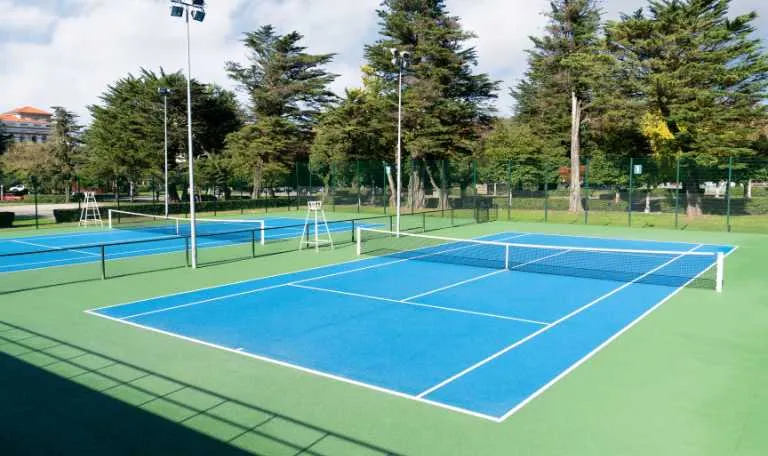
Whether you are comparing tennis court surface materials for a tennis court facility in Fort Lauderdale, Hollywood or Pompano Beach, it’s essential to take into account the region’s sunny and humid climate.
- Acrylic Hard Courts: These are well-suited for Broward County’s humidity and sunshine, offering durability and ease of maintenance. However, they can feel hotter underfoot compared to courts in cooler regions of Florida.
- Synthetic Grass: This option is becoming popular for its cooler surface and resemblance to natural grass. It’s less common in the cooler parts of Florida.
- Clay Courts: In the humid conditions of Broward County, clay courts need more maintenance and might not be as suitable for areas with frequent rainfall as they would be in other parts of Florida.
Overall, the choice of materials in Broward County typically focuses on resistance to sun and moisture, while in other regions of Florida, the emphasis might be on adapting to varied weather conditions and managing surface temperature.
Other Considerations for Tennis Court Surfacing in Broward County
In Broward County, where the climate is humid and subtropical, selecting tennis court surfaces requires a thoughtful approach. It’s important to choose materials that can withstand the challenges of high humidity and intense sun exposure.
To keep the courts comfortable in the heat, surfaces that reflect rather than absorb heat are preferable, with lighter colors offering a cooler playing experience. Durability is also a key factor, as materials need to be low-maintenance and resistant to common issues like mold, mildew, and UV fading.
Additionally, considering the area’s frequent heavy rainfalls, well-designed drainage systems are essential to prevent water pooling and ensure quick drying of the court surfaces. The choice of surface should also prioritize player safety and performance, providing adequate cushioning and traction for various levels of play, from competitive tennis to recreational activities.
Opting for eco-friendly construction materials and methods further contributes to reducing the environmental impact. By addressing these aspects, tennis courts in Broward County can be both enjoyable and sustainable for players.
Tennis Court Maintenance and Upkeep Tips in Broward County
Maintaining tennis courts in Broward County’s subtropical climate demands a specialized approach. The area’s higher humidity and strong sun exposure require more frequent cleaning to prevent issues like mold and mildew, which are less prevalent in other, milder parts of Florida.
Regular surface repairs are necessary to manage damage from the intense heat and moisture. It’s advantageous to work with local maintenance services in Broward County, as they have expertise tailored to the region’s specific climatic challenges, offering skills that may differ from those needed in other parts of the state.
Bottom Line
In conclusion, when installing or resurfacing a tennis court in Broward County, understanding the area’s specific climate and geographical attributes is crucial. The humid subtropical environment and coastal influences in the county necessitate careful material and design choices to ensure long-lasting functionality. This includes particular attention to drainage and wind resistance.
Opting for a local, experienced tennis court company familiar with Broward County’s unique conditions is essential. Their expertise in adhering to local regulations and handling regional climate challenges can greatly enhance the outcome of the project. By focusing on these key elements, stakeholders in Broward County can ensure their tennis court remains a high-quality, enjoyable playing surface for many years.