Home » LED Sports Lighting » NCAA Lighting Standards for College Athletic Facilities
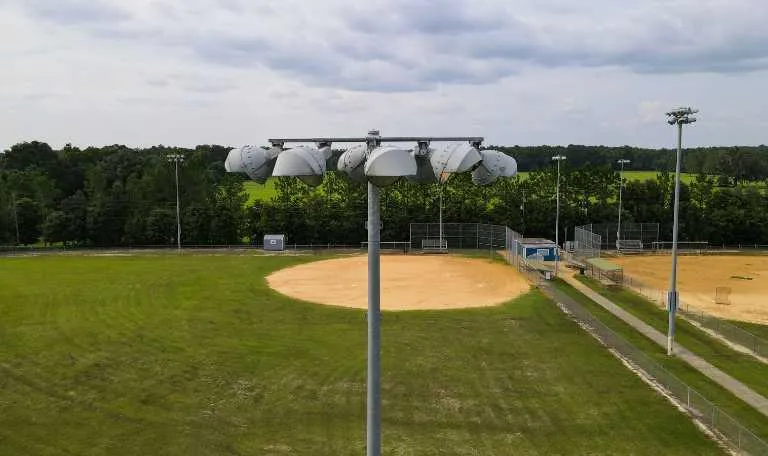
As college and university athletic directors and project planners aim to enhance their sports facilities—whether for baseball, football, soccer, tennis, or basketball—a key area of focus is the installation of appropriate lighting systems. Proper lighting is essential not only for player safety but also for providing a high-quality experience for spectators and media broadcasts. With the increasing adoption of LED sports lighting, understanding NCAA lighting standards is crucial for ensuring compliance and optimal performance. This article highlights the key requirements for NCAA sports lighting, including specific standards for different sports, installation costs, funding opportunities, and tips for selecting reliable lighting suppliers.
If you are currently planning to install a new LED sports lighting system for your facility, try our cost calculator to get a tailored cost estimate in a matter of minutes.
Overview of NCAA Lighting Standards
NCAA lighting standards are designed to ensure that sports facilities provide adequate visibility for players, referees, spectators, and media broadcasts. These standards specify the minimum lighting levels, uniformity ratios, color temperatures, and other essential criteria tailored to different sports. Compliance with these standards is critical not only for the safety and performance of athletes but also to meet broadcasting requirements, especially for games that are televised.
The primary goals of these standards include minimizing glare, achieving uniform light distribution, and ensuring sufficient brightness levels. LED lighting systems are increasingly preferred because they offer better control, efficiency, and longevity compared to traditional lighting solutions like metal halide or fluorescent lights. Moreover, LED lighting allows for precise adjustments to meet specific NCAA requirements, making them a popular choice for upgrading or installing new sports facility lighting.
Key Requirements for All NCAA Sports
The NCAA sets specific lighting standards that vary based on the sport, the level of play (practice vs. competition), and whether the event is televised. However, some general requirements apply across all sports:
- Minimum Lighting Levels: The brightness of lighting is measured in foot-candles, and NCAA standards typically require a minimum average of 50-200 foot-candles, depending on the sport and competition level. For example, non-televised practice sessions may only require around 50 foot-candles, while televised games often need up to 200 foot-candles or more.
- Uniformity Ratios: Uniformity is crucial to avoid dark spots and ensure consistent lighting across the entire playing surface. The NCAA typically requires uniformity ratios of 2:1 or lower (maximum to minimum foot-candle levels) for most sports, ensuring even illumination.
- Color Temperature and Rendering: The color temperature, measured in Kelvin (K), is another important factor. Most NCAA sports require lighting with a color temperature between 4000K to 6500K to replicate daylight conditions, enhancing visibility and the quality of broadcasts. High color rendering index (CRI) values are also essential, with a CRI of 80 or higher generally preferred to accurately display colors on the field.
- Glare Control and Flicker-Free Lighting: The NCAA regulates glare control in sports lighting by emphasizing proper fixture positioning and aiming to direct light onto the playing surface while minimizing direct exposure to light sources. This includes the use of shielded and glare-controlled fixtures, such as those with louvers or shields, to limit spill light and reduce visual discomfort. Ensuring uniform lighting levels across the field helps avoid bright spots that can cause glare. The NCAA also promotes the use of high-quality LED lighting systems, which offer better glare control, and often refers to industry standards, like those from the Illuminating Engineering Society (IES).
Lighting Classifications for NCAA Sports
NCAA sports lighting standards are divided into different classifications based on the type of event and its broadcast requirements. These classifications help ensure appropriate lighting levels for various settings, enhancing player performance, safety, and viewer experience:
Standard Intercollegiate Play: This classification applies to regular, non-televised college games. The focus is on providing sufficient lighting for player visibility and safety, with moderate levels of brightness and uniformity suitable for local competition.
Regional Broadcast: Events falling under this category are broadcast on regional networks. The lighting requirements are elevated to accommodate the needs of television cameras, ensuring better illumination, color rendering, and uniformity to improve the viewing experience for a broader audience.
National Broadcast: For games televised on national networks, the lighting standards are more stringent. This classification demands higher brightness levels, precise uniformity, and advanced color rendering to meet the expectations of high-definition broadcasts, providing clear visuals and vibrant colors for viewers across the country.
National Championship Final Site: The highest classification is reserved for national championship final sites, where lighting standards are at their most rigorous. These venues require the brightest and most uniform lighting, along with superior glare control, to deliver the best possible conditions for athletes and a top-tier broadcast experience for a global audience.
Minimum Lighting Levels: NCAA Lighting Standards per Sport
| Sport | Standard | Regional | National | Championship |
|---|---|---|---|---|
Football | 50 fc. | 75 fc. | 100 fc. | 125 fc. |
Soccer | 50 fc. | 75 fc. | 100 fc. | 125 fc. |
Baseball | 70 fc. / 50 fc. (in/out) | 100 fc. / 70 fc. (in/out) | 100 fc. / 70 fc. (in/out) | 125 fc. / 100 fc. (in/out) |
Softball | 70 fc. / 50 fc. (in/out) | 100 fc. / 70 fc. (in/out) | 100 fc. / 70 fc. (in/out) | 125 fc. / 100 fc. (in/out) |
Lacrosse | 50 fc. | 75 fc. | 100 fc. | 125 fc. |
Field Hockey | 50 fc. | 75 fc. | 100 fc. | 125 fc. |
Basketball | 80 fc. | 80 fc. | 100 fc. | 125 – 250 fc. |
Ice Hockey | 100 fc. | 100 fc. | 100 fc. | 125 fc. |
Swimming / Water Polo / Diving | 50 fc. | 75 fc. | 100 fc. | 125 fc. |
Tennis | 75 fc. | 75 fc. | 100 fc. | 125 fc. |
Track & Field | 50 fc. / 30 fc. (field / track) | 75 fc. | 100 fc. | 125 fc. |
Volleyball | 80 fc. | 80 fc. | 100 fc. | 125 fc. |
Wrestling | 80 fc. | 80 fc. | 100 fc. | 125 fc. |
Uniformity Ratio: NCAA Lighting Standards per Sport
| Sport | Standard | Regional | National | Championship |
|---|---|---|---|---|
Football | 2.0:1 | 2.0:1 | 1.7:1 | 1.5:1 |
Soccer | 2.0:1 | 2.0:1 | 1.7:1 | 1.5:1 |
Baseball | 2.0:1 / 2.5:1 (infield/outfield) | 1.5:1 / 2.0:1 (infield/outfield) | 1.5:1 / 2.0:1 (infield/outfield) | 1.3:1 / 1.7:1 (infield/outfield) |
Softball | 2.0:1 / 2.5:1 (infield/outfield) | 1.5:1 / 2.0:1 (infield/outfield) | 1.5:1 / 2.0:1 (infield/outfield) | 1.3:1 / 1.7:1 (infield/outfield) |
Lacrosse | 2.0:1 | 2.0:1 | 1.7:1 | 1.5:1 |
Field Hockey | 2.0:1 | 2.0:1 | 1.7:1 | 1.5:1 |
Basketball | 2.0:1 | 2.0:1 | 1.7:1 | 1.35:1 |
Ice Hockey | 2.5:1 | 2.0:1 | 1.7:1 | 1.5:1 |
Swimming / Water Polo / Diving | 2.5:1 | 2.0:1 | 1.7:1 | 1.5:1 |
Tennis | 1.7:1 | 1.7:1 | 1.7:1 | 1.5:1 |
Track & Field | 3.0:1 | 2.0:1 | 1.7:1 | 1.5:1 |
Volleyball | 2.0:1 | 2.0:1 | 1.7:1 | 1.5:1 |
Wrestling | 2.0:1 | 2.0:1 | 1.7:1 | 1.5:1 |
Color Rendering Index: NCAA Lighting Standards per Sport
| Sport | Color Temperature (K) | Color Rendering Index |
|---|---|---|
Football | 4,000 – 5,600 | 70 or higher |
Soccer | 4,000 – 5,600 | 70 or higher |
Baseball | 4,000 – 5,600 | 70 or higher |
Softball | 4,000 – 5,600 | 70 or higher |
Lacrosse | 4,000 – 5,600 | 70 or higher |
Field Hockey | 4,000 – 5,600 | 70 or higher |
Basketball | 4,000 – 5,600 | 80 or higher |
Ice Hockey | 4,000 – 5,600 | 80 or higher |
Swimming / Water Polo / Diving | 4,000 – 5,600 | 70 or higher |
Tennis | 4,000 – 5,600 | 70 or higher |
Track & Field | 4,000 – 5,600 | 70 or higher |
Volleyball | 4,000 – 5,600 | 80 or higher |
Wrestling | 4,000 – 5,600 | 80 or higher |
Kick Off Your LED Sports Lighting Project
We’ve created a set of tools designed to assist facility managers and project planners in initiating their projects and help connect them with the professionals in the industry.
Installation Costs for LED Sports Lighting Systems
The installation costs for LED sports lighting systems can vary significantly based on factors such as the size of the facility, the number of light fixtures required, and any additional features like smart controls. On average, costs can range from $30,000 to over $500,000 for a complete installation. Although the upfront costs for LED systems are higher compared to traditional lighting, they offer long-term savings through reduced energy consumption, lower maintenance costs, and extended lifespan. Additionally, LED systems provide better control over lighting quality and compliance with NCAA standards, making them a worthwhile investment for athletic facilities.
To get a tailored cost estimate for your project, try our sports lighting cost calculator and receive an estimate in your inbox in a matter of minutes.
Funding Opportunities
Funding for LED lighting installations can be sourced from a variety of avenues, including NCAA grants, government incentives, and private donations. Many utility companies offer rebates or incentives for energy-efficient upgrades, which can significantly offset the initial costs of LED installations. Athletic directors and project planners should also explore sponsorships and partnerships with alumni or corporate sponsors who may be interested in supporting facility improvements. Additionally, financing options through lighting companies or third-party lenders can help spread the costs over time, making the investment more manageable.
We have written extensively about sports lighting grants in a separate article.
Choosing a Reliable Sports Lighting Company
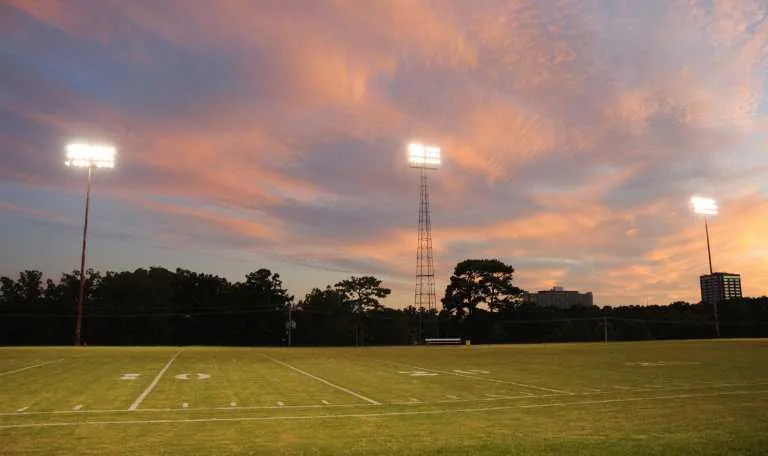
Selecting the right lighting partner is crucial to ensure that the installation meets NCAA standards and provides the best performance. When evaluating potential suppliers, consider the following:
- Experience and Expertise: Look for companies with a strong track record in sports facility lighting, particularly those experienced with NCAA-compliant installations.
- Accreditation and References: Check for certifications such as ISO or other industry standards, and ask for references from previous clients, particularly those in the collegiate sports sector.
- Customer Support and Warranty: Ensure that the company offers robust customer support and a comprehensive warranty. This will be important for ongoing maintenance and any future upgrades that may be required.
If you are looking for LED sports lighting suppliers, try our Lighting Partner Finder to save time in researching and comparing companies. These companies are some of the leading sports lighting companies in the U.S.
LED Sports Lighting Buyer's Guide
Our comprehensive buyer's guide covers all the essential aspects including budgeting, design, funding, and installation considerations, simplifying your decision-making process.
Get the Free Guide
Considerations for Planning LED Lighting Installations
When planning an LED lighting installation, it is essential to conduct a thorough lighting audit to assess the current conditions and identify specific needs. This includes considering factors such as the size of the facility, existing infrastructure, and the specific requirements of the sports being played. Working with professional lighting designers who are familiar with NCAA standards can help ensure that the installation is tailored to meet both regulatory requirements and the unique needs of your facility. Additionally, incorporating energy-efficient practices and exploring sustainability options can further enhance the value of your lighting investment.
Best Practices for Compliance
To maintain compliance with NCAA standards, regular maintenance and upgrades are essential. Conducting periodic lighting audits can help identify any areas that need improvement, ensuring that your facility remains up-to-date with the latest requirements. Partnering with professional lighting designers and maintenance teams can provide the expertise needed to keep your lighting system performing at its best. By prioritizing compliance and regularly assessing your lighting system, you can ensure a safe and high-quality environment for athletes and spectators alike.
Read more about LED sports lighting design considerations in our separate guide.
Conclusion
Meeting NCAA lighting standards is crucial for ensuring player safety, supporting high-quality broadcasts, and providing an exceptional experience for fans. By understanding the specific requirements for each sport, carefully planning your installation, and choosing the right suppliers, you can create a lighting system that enhances your sports facilities and meets the highest standards of performance. With the right approach, LED lighting can offer significant benefits, from cost savings and energy efficiency to improved visibility and compliance with NCAA guidelines.
For more detailed information on NCAA lighting standards, visit the NCAA’s official website or consult with professional lighting designers who specialize in sports facility projects. Reaching out to lighting companies with experience in collegiate sports can also provide valuable insights and guidance to ensure your project meets all necessary requirements.