Home » Tennis Court » Tennis Court Maintenance Guidelines, Schedule, and Costs Analysis
Proper tennis court maintenance is essential for ensuring safety, longevity, and optimal playability. Whether you’re managing courts at a school, a club, or a public facility, having a well-planned maintenance routine is key to protecting your investment and offering players a high-quality surface. This guide will walk you through the general maintenance steps for daily, weekly, and seasonal care, specific maintenance requirements for various surface types, and the necessary equipment and supplies. We’ll also explore when to hire professional maintenance services and discuss the typical costs involved.
Try our tennis court cost calculator to get a tailored cost estimate for your project.
General Tennis Court Maintenance Routine
Effective tennis court maintenance involves consistent attention to both daily upkeep and more in-depth seasonal work. By breaking down maintenance into daily, weekly, and seasonal tasks, you can ensure that your court remains in excellent condition throughout the year.
Daily Maintenance
- Debris Removal: One of the most important daily tasks is keeping the court surface clear of debris such as leaves, twigs, and dirt. This is especially important for outdoor courts, as debris can damage the surface and pose a safety hazard to players.
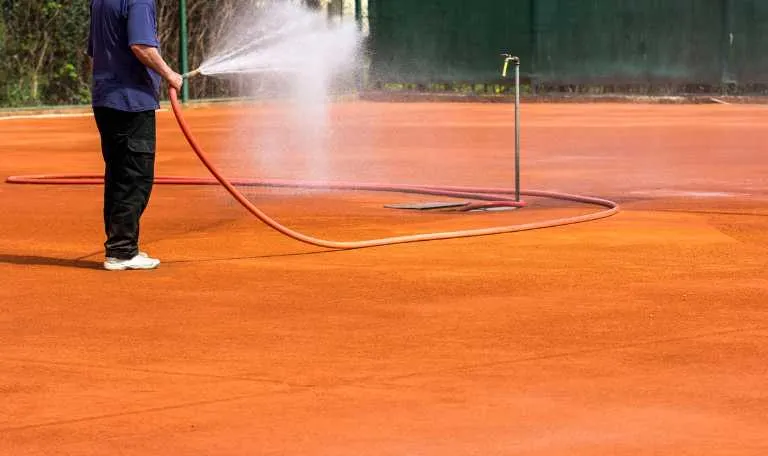
- Checking for Surface Water: After rainfall or irrigation, it’s essential to check for standing water on the court. For clay courts, ensure the surface remains moist but not oversaturated.
- Nets and Equipment: Inspect the net tension and ensure that poles, lines, and other court accessories are in good condition.
Weekly Maintenance
- Surface Sweeping: Depending on the surface type, a more thorough sweeping or cleaning should be done weekly. Clay and synthetic grass courts require brushing to maintain their texture, while hard courts (like asphalt or concrete) benefit from sweeping or blowing off dust and debris.
- Watering (for Clay Courts): Clay courts need to be watered regularly to maintain the right surface firmness. Watering schedules will depend on the climate and level of use.
- Inspecting for Minor Damage: Check the court for cracks, bubbles, or any early signs of wear and tear. Catching issues early can prevent them from escalating into larger repair needs.
Seasonal Maintenance
- Repainting and Line Marking: For hard courts, repainting lines and touching up faded surfaces should be part of a seasonal routine.
- Surface Repairs: During offseason periods, inspect the court for significant cracks or surface damage that might need professional attention.
- Deep Cleaning: Courts should undergo a deep clean seasonally to remove any built-up grime. For hard courts, this can be done using pressure washing, while clay courts may require replenishing the top layer of clay.
- Drainage System Check: For outdoor courts, ensure that drainage systems are clear of debris and functioning properly to avoid flooding or water pooling.
Tennis Court Maintenance Checklist and Schedule
A structured maintenance schedule helps manage all the necessary tasks in a routine way. Here’s a sample checklist that you can customize based on your facility’s needs:
| Tennis Court Maintenance Task | Frequency |
|---|---|
Remove debris | Daily |
Check for water pooling | Daily |
Inspect nets and poles | Daily |
Sweep/clean surface | Weekly |
Water clay courts | Weekly |
Inspect for minor damage | Weekly |
Repaint lines and touch up surfaces | Seasonally |
Deep clean court | Seasonally |
Check drainage system | Seasonally |
Repair cracks or surface damage | As needed |
Specific Maintenance for Different Surface Types
Each type of tennis court surface has its own set of maintenance requirements. The following sections will outline how to care for clay, grass, hard courts, and all-weather courts, along with tips for indoor courts.
Clay Courts
- Watering: Clay courts need consistent moisture to maintain their playability. This can mean watering the court several times a day in hotter climates.
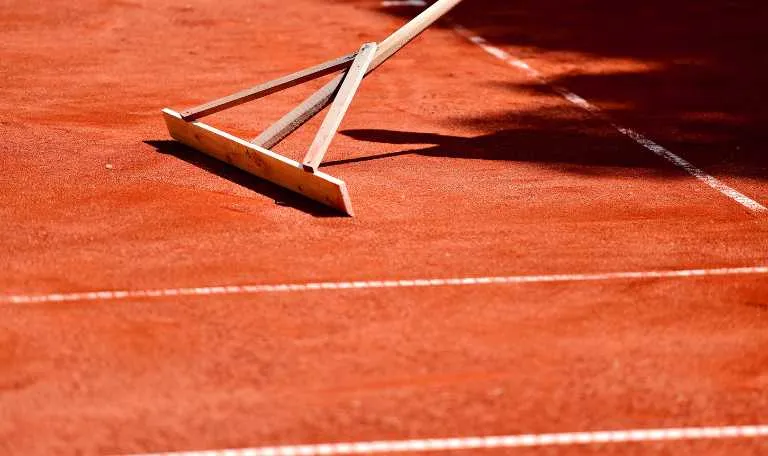
- Brushing and Rolling: After each match or daily, the court should be brushed to redistribute the clay and smooth out high-traffic areas. Regular rolling compacts the clay to keep it firm.
- Top Layer Replenishment: Clay surfaces will need fresh clay applied periodically to maintain the proper depth.
Grass Courts
- Mowing: Grass courts require regular mowing to keep the grass at the proper height for play (typically around 8-12 mm).
- Watering and Fertilization: Grass needs watering during dry periods and may require fertilization to keep it healthy.
- Rolling: Like clay courts, rolling is essential to maintain a smooth playing surface.
- Reseeding: Damaged or worn-out areas of the court will need to be reseeded to maintain even coverage.
Hard Courts (Concrete, Asphalt, Acrylic)
- Cleaning: Hard courts should be swept or pressure washed regularly to remove dust, dirt, and any debris that could cause damage or reduce traction.
- Crack Filling: Inspect for cracks, especially after cold weather, as freezing and thawing can cause damage. Use crack fillers to address issues as they appear.
- Repainting: Over time, hard courts may need to be repainted to keep the surface even and the lines visible.
- Recoating: While the top layer of a hard court is built for durability, it won’t last indefinitely. Most tennis court coatings need to be refreshed approximately every 4 to 8 years to maintain optimal performance and appearance.
All-Weather Courts
- Minimal Maintenance: These courts are designed for year-round use and require relatively little upkeep. However, periodic cleaning and checking for drainage issues is still important.
- Snow and Ice Removal: In colder climates, you’ll need to remove snow carefully, avoiding any heavy tools that could damage the surface.
Indoor Courts
- Cleaning: Indoor courts need regular cleaning to remove dust and debris. This can usually be done with a dry mop or vacuum designed for indoor surfaces.
- Ventilation: Ensure that the indoor space has proper ventilation to avoid moisture buildup, which can damage the surface or cause mildew.
- Lighting Maintenance: Regularly check lighting systems to ensure the court remains well-lit for players.
Tennis Court Maintenance Equipment and Supplies
The right equipment is essential for maintaining tennis courts effectively. Depending on the surface, you may need:
- Sweepers and Blowers: For clearing debris off hard courts and artificial grass courts.
- Rollers: A critical tool for clay and grass courts to ensure the surface remains even and compacted.
- Brushes: Used to smooth clay courts and redistribute clay after each use.
- Watering Systems: Automatic irrigation systems are ideal for keeping clay courts at the right moisture level, while grass courts require sprinkler systems.
- Pressure Washers: Used for deep cleaning hard courts to remove dirt and stains.
- Line Marking Equipment: Necessary for repainting lines on hard courts.
Professional Maintenance Services and Costs
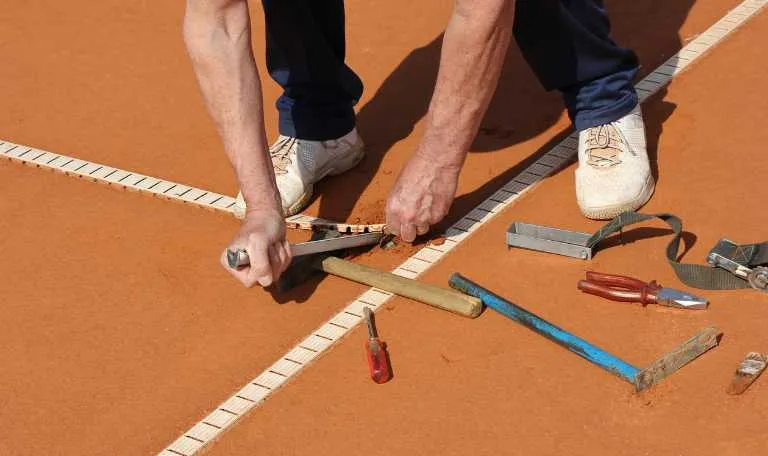
While routine maintenance can be handled by staff or volunteers, some tasks, such as major repairs or resurfacing, may require professional services. Hiring a tennis court maintenance company ensures that work is done correctly, particularly for complex jobs like repairing cracks or resurfacing.
When to Hire Professionals
- Resurfacing: Every few years, depending on the surface type and usage, courts will need resurfacing to maintain optimal playing conditions.
- Major Repairs: If cracks or surface damage extend beyond basic repairs, professional intervention will be necessary to avoid further deterioration.
- Deep Cleaning: Some surfaces, particularly hard courts, may need professional deep cleaning to remove stubborn stains or marks.
Maintenance Costs
The cost of tennis court maintenance can vary depending on the tennis court type, size, and location. Typical expenses include:
- Clay court maintenance: Due to the need for regular watering, brushing, and top-layer replenishment, clay courts are among the most expensive to maintain.
- Hard court maintenance: Hard courts are relatively low-cost to maintain, requiring mainly regular cleaning and occasional crack filling or repainting.
- Grass court maintenance: Grass courts are high-maintenance due to the need for mowing, fertilizing, watering, and rolling.
Hiring a professional company for routine maintenance could range from $1,500 to $5,000 per year, depending on the number of courts and the specific services required. For more involved tasks like resurfacing, costs can be between $4,000 to $8,000 per court.
Conclusion
Tennis court maintenance is an ongoing task that requires attention to detail and the right equipment. By following a structured maintenance routine, addressing the specific needs of your court’s surface type, and investing in professional services when necessary, you can extend the lifespan of your court and ensure optimal performance for players. Proper planning and execution of maintenance tasks not only preserve the court but also reduce the likelihood of costly repairs in the future.