Home » Tennis Court » Tennis Court Construction & Resurfacing Guide for California
“California is always a good idea.” The state’s diverse landscapes require equally diverse and thoughtful planning for tennis court construction. California’s rich tennis culture reflects its deep enthusiasm for the sport, making it essential that tennis courts are built and maintained with the state’s unique needs in mind. From varying weather conditions to regional player preferences, understanding these specifics is crucial for creating facilities that not only meet professional standards but also serve the community’s needs effectively.
For those managing sports facilities in California – including athletic directors, facility operators, municipal planners, and sports organization leaders – mastering the complexities of tennis court projects requires an in-depth, tailored approach. This comprehensive guide explores the critical elements of such projects in California. It addresses the unique regulatory environment, the significant impact of the state’s varied climate, and particular cost factors. The guide goes beyond technical details like surface choices and contractor selection, extending to wider aspects such as funding acquisition and integrating projects into the community landscape effectively.
We’ve built this guide for tennis court construction and resurfacing in California to get you the best idea of the local requirements. Planning to surface a tennis court in the near future? Get an instant cost estimate for your project by using our tennis court cost calculator.
Tennis Court Construction and Resurfacing Cost in California
The cost of tennis court construction and resurfacing in California is influenced by a variety of factors, including the choice of materials, the type of court surface, labor costs, and geographical location within the state. For instance, construction in urban areas like San Francisco or Los Angeles may be more expensive due to higher labor rates and material costs compared to rural areas. Additionally, California’s strict building codes and environmental regulations can add to the overall expenses. The cost also varies depending on whether it’s a new construction or a resurfacing project, with new constructions generally being more costly.
On average, in California, you can expect to pay somewhere between $25,000 and $150,000 to install a new tennis court. Resurfacing an existing court will set you back typically anywhere from $4,000 to $12,000.
Use our tennis court cost calculator to get a tailored cost estimate for your project.
Comparatively, the cost of constructing or resurfacing a tennis court in California can be higher than in many other U.S. states. This difference is primarily due to the state’s higher cost of living, labor wages, and the price of construction materials. Moreover, certain states with less stringent regulations or lower costs of labor and materials might offer more affordable options for tennis court construction and resurfacing.
Read more:

The California Factor: Unique Climate Considerations
California’s diverse climate significantly impacts tennis court construction and resurfacing, with notable differences between Northern and Southern California, as well as between coastal and inland areas.
Northern vs. Southern California:
- Northern California: The climate is generally cooler and wetter. Tennis courts here require materials and surfaces that can withstand more moisture and lower temperatures. Drainage considerations are crucial to prevent water accumulation and damage.
- Southern California: Characterized by warmer, drier conditions, tennis courts in this region need to be resistant to higher temperatures and sun exposure. Materials used must not degrade easily under intense sunlight and should maintain playability in hotter conditions.
Coastal vs. Inland Locations:
- Coastal Areas: The presence of salt in the air can affect court surfaces and materials. Tennis courts near the coast need to be constructed with materials that are resistant to corrosion and salt damage.
- Inland Areas: These regions can experience more extreme temperatures, both hot and cold. Court materials need to be durable enough to handle temperature fluctuations without cracking or becoming too hard.
Seismic Activity
Choosing Your Tennis Court Construction Company
When it comes to picking a tennis court builder, you’re not just checking boxes; you’re establishing a partnership. Consider:
- Budget Alignment: Does the constructor offer scalable solutions?
- Timeline Compatibility: Can they deliver within your project’s timeframe?
- Customization Capabilities: From lighting to fencing, how flexible are they with custom features?
- Post-Construction Care: In California’s multifaceted climates, ongoing maintenance isn’t optional.
- Warranty Assurance: What kind of safety net does the constructor offer?
Questions for Tennis Court Construction Companies in California
- Are you well-versed in California-specific building codes?
- Can you showcase any California-based tennis court projects?
- What’s your estimated project completion timeline?
- Do you offer maintenance packages?
- What kind of industry certifications and membership do you have?
- Is your company licensed and insured in the state of California?
The Non-Negotiables: Quality and Durability
Let’s cut to the chase: quality isn’t optional. When it comes to constructing a tennis court that will stand the test of time, several factors are non-negotiable:
- Material Integrity: Think high-grade asphalt or post-tensioned concrete for the foundational layer, topped with premium acrylic or synthetic surfaces.
- Drainage Design: Proper drainage isn’t just good practice; it’s a necessity—especially considering California’s diverse climatic conditions.
- Surface Resilience: Given California’s generous sunshine, a UV-resistant, non-slip finish is a must.
Top Tennis Court Construction and Resurfacing Companies in California
ClassicCourt by Tarkett Sports
ClassicCourt, from Tarkett Sports, is a premium sports surfacing system built on post-tension concrete. Specifically designed to meet the demands of high-use tennis facilities, ClassicCourt combines structural strength with reliable play characteristics to deliver a surface that outperforms traditional asphalt courts. With an industry-leading 50-year structural warranty, ClassicCourt is trusted by schools, universities, parks, and private clubs looking for a long-lasting tennis court solution.
Tennis Court Systems by ClassicCourt
- Post-Tension Concrete Base – Reduces cracking and settling compared to asphalt, ensuring a consistently smooth playing surface.
- True Ball Response – Provides dependable bounce and footing for both recreational and competitive tennis.
- Extended Lifespan – 50-year structural warranty and 10-year surfacing warranty reduce long-term costs.
- Lower Maintenance – Engineered to minimize resurfacing and patchwork common to asphalt courts.
- Expert Installation – Constructed by PTI-certified professionals for precision and quality.
Why Choose ClassicCourt for Tennis?
- Backed by Tarkett Sports, a global leader in athletic flooring solutions.
- Member of the American Sports Builders Association
Delivers superior durability and performance year-round while offering a cost-effective alternative to asphalt with significantly reduced maintenance needs.
VersaCourt
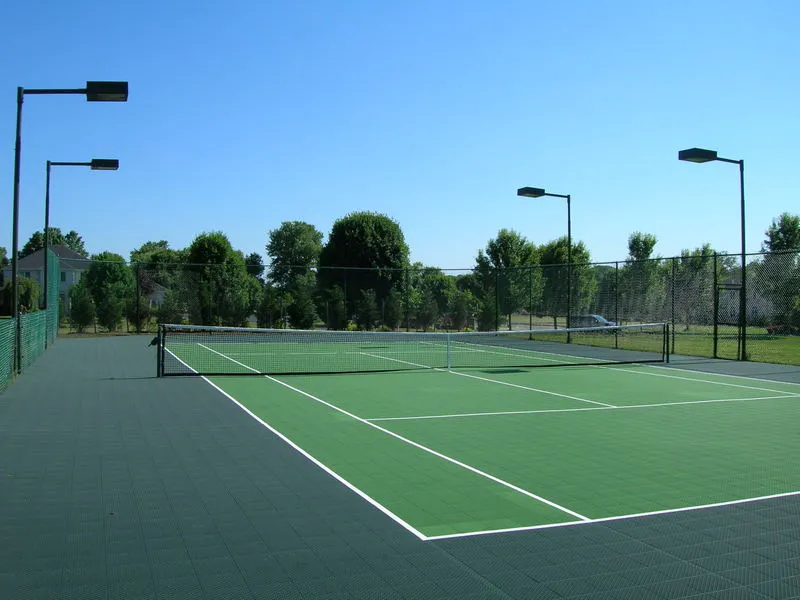
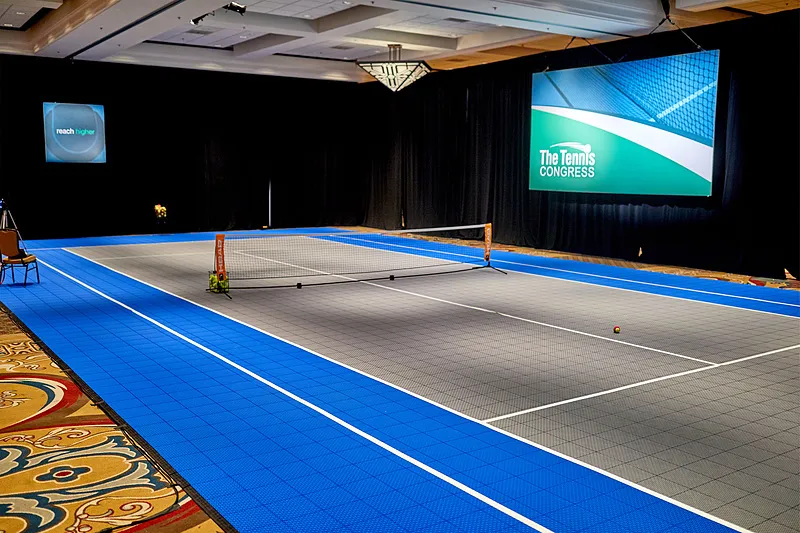
VersaCourt is a leading provider of high-quality tennis courts, known for its innovative modular interlocking tiles that offer exceptional durability and performance. Their advanced tile systems create safe, customizable surfaces ideal for both residential and professional sports venues. In San Francisco, California, VersaCourt offers comprehensive design and installation services, collaborating closely with clients to develop courts that meet specific aesthetic and functional needs. Widely used in local schools, parks, and resorts, VersaCourt’s products are recognized for enhancing both safety and visual appeal. Their commitment to quality is underscored by their ISO 9001:2008 certification.
Tennis Court Systems:
- Consistent Ball Bounce: Engineered to provide reliable and consistent play.
- Enhanced Safety: Designed with superior grip to reduce the risk of injury.
- Easy Maintenance: The modular design simplifies cleaning and allows for straightforward repairs.
- Customizable Design: Adaptable to various environments, whether residential or professional.
- Durability: Constructed to withstand diverse conditions, ensuring long-term performance.
- Versatile Installation: Available with options for both professional installation and DIY support.
Services Offered:
- Customized court design and installation services in San Francisco.
- DIY installation support.
- Integration with additional features from The Recreational Group, including synthetic turf and playground surfacing.
Certifications & Memberships:
- ISO 9001:2008 certified, highlighting their commitment to quality management.
Get in Touch
- Learn more and contact VersaCourt in our supplier directory.
California Sports Surfaces
Since its founding in 1953, California Sports Surfaces (CSS) has been a leader in the innovation of sports surfaces, creating products that significantly enhance athletic performance. With a strong presence in San Francisco, California, CSS has established itself as a trusted provider of high-quality sports surfaces. As a prominent member of the American Sports Builders Association (ASBA) and holding certifications in all four ITF Court Pace categories, CSS has provided surfaces for some of the most prestigious sporting events globally, including the Olympics and the US Open. Their dedication to excellence and cutting-edge technology has earned them numerous accolades, including five ASBA 2023 Outstanding Facilities of the Year awards.
Tennis Court Systems:
- DecoTurf®: The official surface of the US Open from 1978 to 2019, offering a range of ITF pace ratings suitable for all levels of play.
- Plexipave: Selected for major tournaments such as the Australian Open (2008-2019) and the BNP Paribas Open, Plexipave is celebrated for its top-tier performance and durability.
- Rebound Ace®: Known globally for its cushioned, multi-layered design, Rebound Ace® is ideal for a variety of sports, including netball and basketball.
- Premier Sports Coatings®: These high-performance coatings are perfect for residential courts, clubs, universities, and recreational facilities, providing long-lasting durability.
Certifications & Memberships:
- Active member of the American Sports Builders Association (ASBA)
- Certified across all ITF Court Pace categories 1-4
Get in Touch
- Learn more and contact California Sports Surfaces in our supplier directory.
Featured project by California Sports Surfaces at the Delray Beach Open Tennis Center.
Ecore Athletic
Ecore Athletic is a leader in designing and producing tennis court surfaces that enhance player performance through durable, ergonomic, and acoustically optimized materials. Their surfaces, suitable for both indoor and outdoor courts, prioritize safety, comfort, and high performance. Ecore Athletic is also deeply committed to sustainability, focusing on reducing rubber waste and developing environmentally responsible products. Serving San Francisco, California, they provide top-quality solutions tailored to the unique needs of the region’s diverse tennis environments.
Tennis Court System:
- TrueCourt: Specifically designed for outdoor tennis courts, TrueCourt offers exceptional durability and optimal shock absorption to handle San Francisco’s outdoor conditions.
- TeamPlay M: Tailored for indoor courts, TeamPlay M ensures consistent ball response and provides cushioning to enhance player safety.
Services Offered:
- Comprehensive design and installation services for tennis courts in San Francisco.
- Tailored solutions to meet the specific needs of each project.
Certifications & Memberships:
- Member of the American Sports Builders Association (ASBA)
- Holds certifications including FloorScore®, EPDs, HPDs, GREENGUARD Gold, and ISO 9001.
Local Building Codes and Permits for Tennis Court Construction and Resurfacing in California
In California, local building authorities are responsible for enforcing building codes relevant to tennis court construction and resurfacing. These authorities provide information on permits necessary for different types of construction, including tennis courts, which may involve permits for structural work, drainage, and safety features.
It’s the responsibility of your chosen construction company to adhere to these local building codes. Here’s an overview of what these might include:
- Zoning and Permitting: Builders must check the project against local zoning ordinances and obtain any special permits needed for construction or resurfacing.
- Site Planning: Adherence to code-mandated requirements such as setbacks, fencing, lighting, and landscaping is crucial.
- Drainage and Grading: Design considerations for proper slopes and drainage systems must comply with California’s specific requirements to prevent flooding and water damage.
- Materials and Specifications: The builder should use materials and construction methods that meet all building code standards, covering the court base, surfacing, and fencing.
- Accessibility: Compliance with the Americans with Disabilities Act (ADA) is important for ramps, accessible routes, and court dimensions.
While builders will handle the specifics, understanding the basics of these codes can be beneficial. California’s building authority website provides resources and guidance.
Seismic Activity and Its Impact on Tennis Court Design
The California Building Standards Code, known as Title 24, outlines regulations for building safety, including seismic design criteria tailored to California’s diverse earthquake risks. This code details the appropriate materials and construction methods for seismic zones, and mandates retrofitting for existing buildings in high-risk areas. Regularly updated to keep pace with new seismic research, local variations may apply based on specific regional risks. For current, detailed guidance, consulting the latest code or a knowledgeable construction professional is recommended.
Permits for Building or Resurfacing Tennis Courts in California
The specific permits required will depend on the project’s scope, location, and zoning laws. Experienced builders will manage the permit process, ensuring compliance and smooth execution. Common permits might include:
- Building Permit: Usually required for new constructions or significant resurfacing involving structural changes.
- Grading Permit: Necessary for projects altering land topography.
- Electrical Permit: Required for new or modified lighting installations.
- Plumbing Permit: Needed for installing or altering drainage systems.
- Tennis cout construction guide for Los Angeles
- Guide to tennis court construction in San Jose, CA
- Tennis court resurfacing and construction guide for Sacramento
- Guide for tennis court construction in San Francisco
- Tennis court construction guide for Orange County, CA
- San Diego tennis court surfacing guide
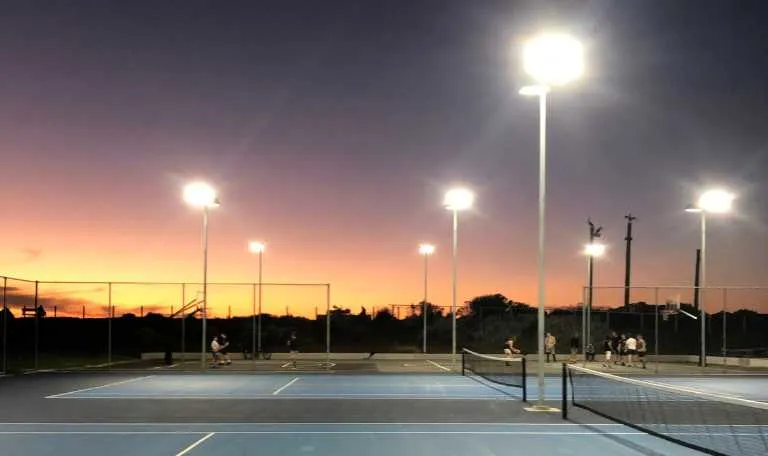
Tennis Court Surface Options In California
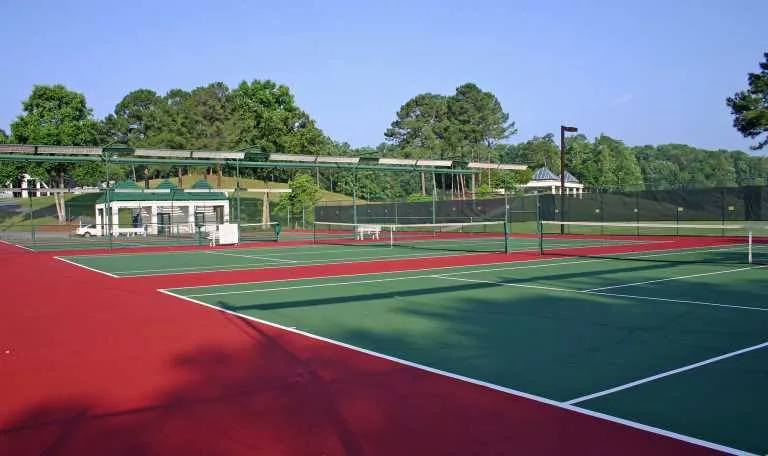
Hard Courts: The most common type in California, they are favored for their durability and low maintenance. Made of concrete or asphalt and coated with an acrylic surface layer, hard courts offer a consistent bounce and are suitable for a wide range of playing styles. They are especially prevalent in both public and private facilities due to their all-weather resilience.
Clay Courts: Less common than hard courts but still popular, clay courts are made of crushed stone, brick, or shale. They are slower than hard courts as they allow for a higher bounce and longer rallies. Clay courts require more maintenance, especially in terms of regular watering and lining.
Synthetic Grass Courts: These replicate the feel of natural grass courts but with lower maintenance requirements. They provide a softer playing surface and are kinder to the body, reducing the risk of injuries.
Regional differences
In Northern California, where the climate is cooler and wetter, tennis courts are often chosen for their ability to manage moisture effectively and for reduced water requirements. Surfaces like specific clay types or advanced synthetic materials are preferred. Conversely, in Southern California’s warmer and drier conditions, hard courts are popular due to their resistance to heat and sun damage. Additionally, the reduced need for water makes both hard and synthetic courts a more practical choice in this region.
Maintenance Tips
- Regular Cleaning: Regularly sweep to remove leaves, dust, and debris, and hose down the court for thorough cleaning.
- Crack and Damage Repair: Fix cracks, holes, or other surface damages promptly to prevent major deterioration and save on future resurfacing costs.
- Drainage Maintenance: After rain, check and clear drains and gutters to avoid standing water and potential damage.
- Landscaping Management: Trim surrounding greenery to prevent plant overgrowth and remove overhanging branches to keep the court debris-free.
- Periodic Professional Inspections: Schedule routine inspections by professionals to identify and address issues early, ensuring the court’s longevity and playability.
The Bottom Line
Constructing a top-tier tennis court in California demands attention to the state’s diverse climate and adherence to local regulations. Teaming up with a reputable, local, tennis court construction company in California provides access to professionals skilled in handling these specific considerations. Employing such experts ensures the creation of a court that is aesthetically pleasing, durable, and provides lasting enjoyment.
Use our tennis court cost calculator for immediate and precise estimates on surfacing your tennis court.