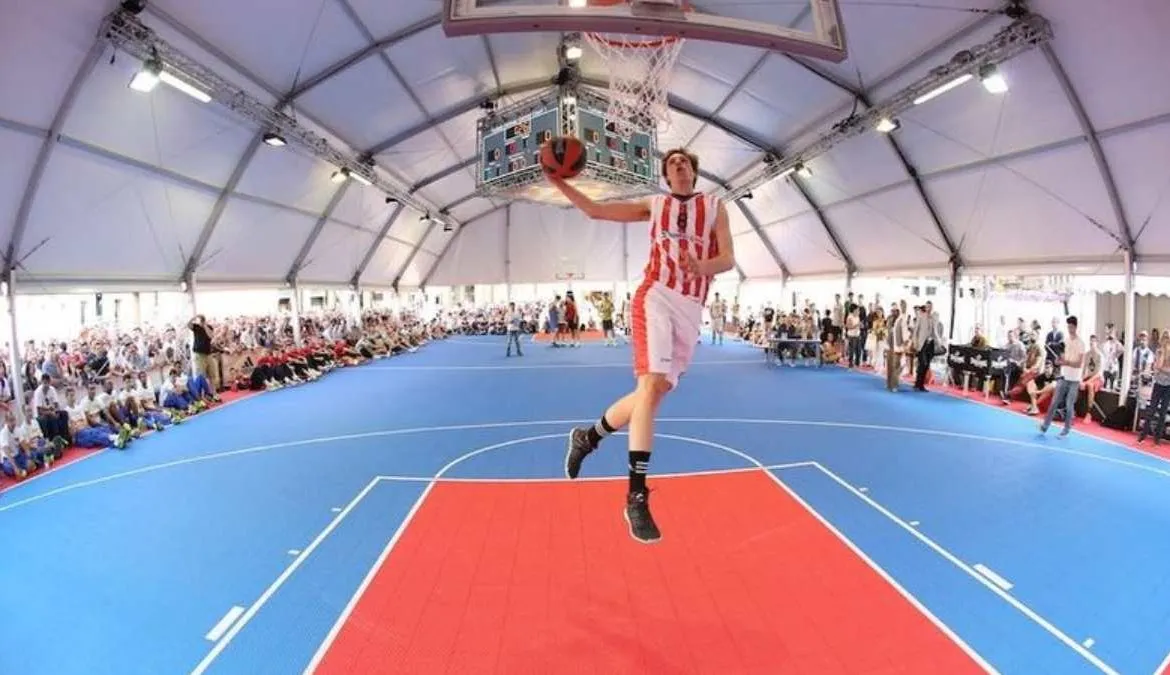
Modular sports flooring has gained significant traction among planners of institutional, municipal, and commercial athletic facilities. As demands grow for multi-use, low-maintenance, and cost-efficient surfaces, modular systems offer an increasingly appealing alternative to traditional flooring types. Whether you’re building a new indoor gymnasium or converting an outdoor area into a multi-sport court, understanding your options is critical.
In this guide, we take a closer look at Versacourt, a recognized leader in the modular sports flooring space. We’ll explore what sets their system apart, what to expect in terms of cost, and whether it might be the right fit for your facility.
Try our modular sports flooring cost calculator to get a tailored cost estimate for your indor or outdoor court installation project.
What Is Modular Sports Flooring?
Modular sports flooring consists of interlocking tile systems designed to support a range of athletic applications. Unlike poured-in-place surfaces or traditional hardwood, modular systems are pre-manufactured, portable, and quick to install.
Versacourt’s system is built using durable polypropylene tiles that snap together over a properly prepared base. The result is a firm, high-performance surface that can be used indoors or outdoors and configured for a wide variety of sports.
Typical applications include:
School and university gymnasiums
Parks and recreation facilities
Churches and community centers
Indoor/outdoor multi-sport courts
This flexibility makes modular flooring especially appealing to planners managing diverse programming or limited space.
Cost to Install a Versacourt Modular System
While we don’t have access to exact pricing from Versacourt, we can provide typical project-level estimates based on similar installations.
Most modular flooring projects cost between $20,000 and $130,000+, depending on a range of variables. This includes not just the tile system, but also surface preparation, game line painting, and optional accessories like nets or fencing.
Several factors influence where your project might fall within this range:
- Size and layout: Larger facilities or multi-court installations naturally require more materials and labor.
- Indoor vs. outdoor use: Outdoor courts may need additional sub-base work or drainage layers.
- Competition level: Courts built for higher-level play may incorporate shock-absorbing underlayments or sport-specific enhancements.
- Geographic location: Regional labor rates and shipping costs can impact the total budget.
- Accessories and branding: Custom logos, color schemes, lighting, and boundary fencing all add to the total.
✅ Looking for a tailored estimate? Use our Modular Sports Flooring Cost Calculator to input your specs and receive a custom project range.

Installation and Removal Process
One of the standout benefits of Versacourt’s modular system is the ease and speed of installation. Unlike poured or glued systems that require curing time and extensive site prep, modular tiles can typically be installed in a fraction of the time.
The system requires no adhesives, as the tiles snap together using a proprietary interlocking mechanism. Installation is straightforward and can typically be completed with basic hand tools. Most standard courts are ready for use within one to three days, depending on the site’s condition and the size of the project.
Step-by-Step Installation Process:
Site prep: Ensure a level and clean subsurface (asphalt, concrete, or wood base).
Layout planning: Mark the perimeter and layout pattern.
Tile assembly: Begin snapping tiles together from one corner, working outward.
Edge finishing: Install any necessary transition edges or ramps.
Accessory setup: Add net posts, hoops, or wall padding as required.
Final inspection: Check for secure tile locks and level surface.
Step-by-Step Removal Process:
Detach accessories: Remove all equipment and edge trims.
Tile breakdown: Start at the outer edge and carefully separate tiles.
Stacking and storage: Group tiles by section and stack for transport.
Clean and prepare: Store tiles in a dry environment until reuse.
Removal and reinstallation are typically completed in 1 to 2 days, making the system ideal for temporary or evolving sports spaces.
Components of the Versacourt System
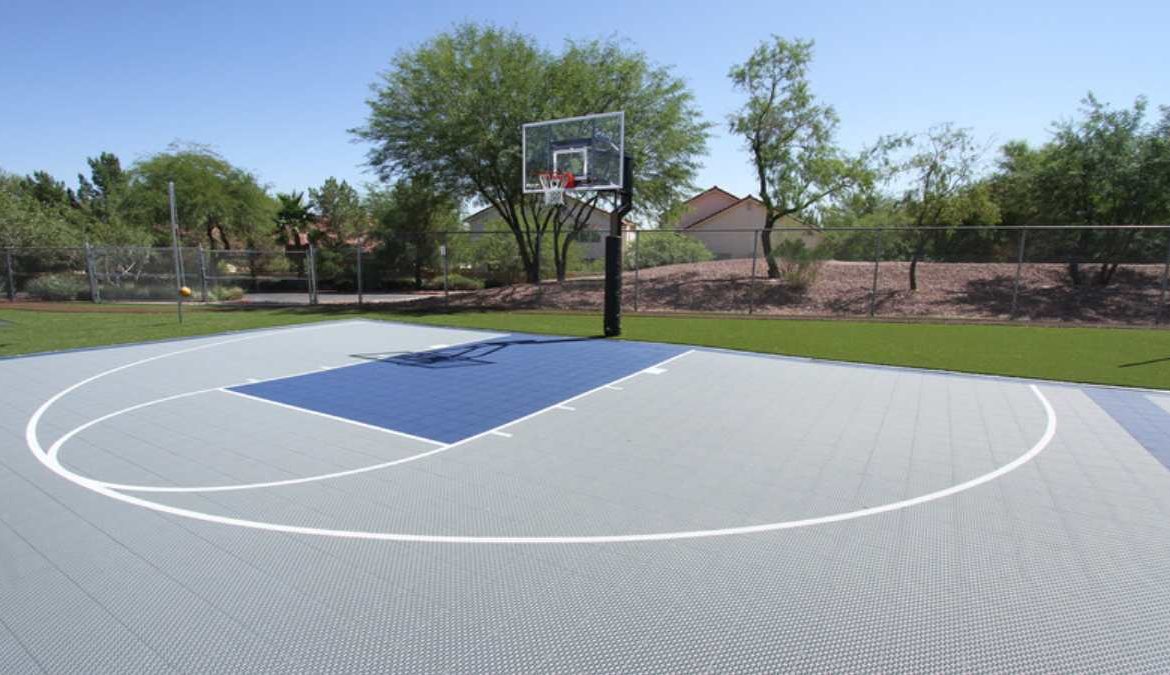
Versacourt’s modular system is engineered for durability, performance, and customization. It features UV-resistant polypropylene tiles that are impact-absorbing and weather-tolerant, along with an interlocking design that creates a seamless surface with built-in lateral forgiveness for player comfort.
Optional base layers can be added indoors to improve shock absorption and overall performance. Game lines are factory-applied and embedded directly into the tiles, ensuring long-term accuracy and durability. Each court is tailored to the specific needs of the facility, whether it’s designed for a single sport or multiple activities.
Maintenance and Longevity
Modular systems are known for being low-maintenance and highly resilient.
Cleaning: Routine sweeping or blowing is usually sufficient. For deeper cleaning, a pressure washer or wet mop can be used.
Repairs: Individual tiles can be removed and replaced without impacting the rest of the surface.
No resurfacing needed: Unlike acrylic or painted courts, Versacourt tiles don’t peel, bubble, or crack.
Long-term durability: Versacourt tiles are built to withstand years of high-traffic use and exposure to the elements. Manufacturer warranties offer added peace of mind.
For planners seeking a surface that minimizes downtime and avoids major resurfacing costs, this system offers strong long-term value.
Sport-Specific Applications
Versacourt designs its modular tiles to accommodate a wide range of sports, both indoors and outdoors, with each configuration tailored to the specific performance requirements of the activity.
For basketball, the surface offers excellent ball response and traction, while volleyball courts benefit from a cushioned, stable footing. Pickleball setups feature clear line markings and the right texture for gameplay. Tennis courts are designed with proper ball bounce, water drainage, and UV protection for outdoor play.
Futsal is supported by a consistent surface that matches the speed and demands of the game. Thanks to their modular nature, these systems can also be customized for multi-sport use, enabling a single facility to support diverse athletic programs on one court.
Design and Customization
One of Versacourt’s biggest advantages lies in its design flexibility.
Facility managers and architects can tailor the court to match branding, function, and aesthetics:
Color options: Wide palette available for school or team colors.
Logos and mascots: Integrated directly into the surface during manufacturing.
Game lines: Multiple sports can be accommodated with clearly marked zones.
Layout flexibility: From compact practice areas to full tournament courts, systems are designed to fit your space and needs.
This level of customization helps your court become a visual centerpiece for your facility.

Pros and Cons of Modular Sports Flooring
Advantages:
Fast installation and minimal downtime
Low ongoing maintenance
Suitable for both indoor and outdoor use
Customizable for multiple sports and branding
Durable in high-traffic and weather-exposed environments
Potential limitations:
Higher upfront cost compared to basic painted concrete or asphalt
Requires level and stable sub-base for optimal performance
May not match the aesthetic preference of traditional hardwood in some indoor applications
Understanding these trade-offs can help planners determine where modular flooring fits within broader facility goals.
Read more:
Conclusion
Modular sports flooring is a smart, forward-looking solution for modern athletic facilities. Versacourt’s system offers a balance of performance, flexibility, and visual appeal that suits a wide range of sports and settings.
If you’re in the planning stages of a new athletic facility or court conversion, it’s worth exploring how modular flooring might align with your goals.
Start by using our Modular Sports Flooring Cost Calculator to generate a tailored budget range, then visit Versacourt’s Supplier Page to take the next step in evaluating your options.
FAQ: Modular Sports Flooring
Welcome to our FAQ section on modular sports flooring installation. This resource answers common questions about planning, installing, and maintaining modular court systems for outdoor athletic facilities.
Most installations are completed in 1 to 3 days depending on site readiness, court size, and complexity.
Yes. Versacourt tiles are designed to handle seasonal temperature changes, moisture, and UV exposure without cracking or fading.
Line markings are embedded at the factory, but tiles can be replaced if you need a new layout. Multi-sport courts are usually planned during initial design.
Routine sweeping or hosing off debris is usually enough. Occasional deep cleaning can be done with a mop or pressure washer.
Yes. Tiles can be disassembled and reinstalled elsewhere, making it ideal for temporary or evolving spaces.
These are just some of the most frequently asked questions, but you probably have others. Ask us, and on the off chance we don’t know the answer, we promise that we know someone who does!