







Written By
Ryan Caravalho

Edited By
Antti Rydman
Home » LED Sports Lighting » LED Soccer Field Lighting Cost Guide (2026)
Written By
Ryan Caravalho
Edited By
Antti Rydman
Soccer Field LED Lighting Installation Costs (2026)
Several factors influence the total cost of installation, including:
Field size (full-size vs. small-sided)
Required brightness level (measured in foot-candles or lux)
Level of competition (recreational, youth, collegiate, or semi-pro)
Lighting fixture quality, efficiency, and lifespan
Infrastructure needs (number of poles, height, cabling, and controls)
Larger fields require more light fixtures and taller poles to achieve the necessary brightness. However, the intended use of the field plays a big role too. A full-size college practice field might cost less to light than a youth U14 competitive match field, due to the stricter lighting classification standards required for formal games.
Try our soccer field lighting cost calculator to get a customized cost estimate for your lighting project.
Soccer Field LED Retrofit Costs (2026)
Retrofit costs are generally lower than full system installations—especially when existing infrastructure can be reused. If your current system has metal light poles, there’s a good chance they can remain in place. That alone can reduce the budget significantly, eliminating the need for 4 to 8 new poles and their associated foundations.
If the electrical infrastructure—such as wiring, junction boxes, and control panels—is still in good shape, you may be able to connect the new LED system directly to it without additional groundwork.
If you are planning to upgrade your existing soccer field lighting system to LED, try our soccer field LED retrofit cost calculator to get an accurate cost breakdown.
Operating maintenance costs of a soccer LED lighting system
Those are the installation costs. Everything that you know about now will also factor into the operating expenses. The strength of the lights and their frequency and duration of use will determine the electricity bill and maintenance schedule. A highly competitive field will cost more per hour to light, but the lights may only be on a few hours a week. A lower-level field will cost less per hour, but the lights will be on five hours a night, six days a week.
In the end the operating costs of a soccer field LED lighting system boil down to the amount of wattage needed to light up the stadium, how many hours per day the lights are on and what is the current price of electricity per kilowatt hour. As a rough estimate you can expect the operating costs to range somewhere between $2,000 and $20,000 depending on the size of the field and the competition level.
Learn more about the key factors of LED sports lighting costs in our separate guide.
Kick Off Your LED Sports Lighting Project
We’ve created a set of tools designed to assist facility managers and project planners in initiating their projects and help connect them with the professionals in the industry.
What Influences the Cost of LED Soccer Field Lighting Installation?
When purchasing an LED soccer field lighting system, it’s essential to consider costs associated with the initial purchase, delivery, and installation. Operating costs include electricity and maintenance expenses, which vary depending on several factors.
New Installation or LED Retrofit?
The cost of transitioning to LED sports lighting from conventional HID lights can range from $70,000 to $350,000. The total cost depends on the chosen method of conversion, either LED retrofitting or replacing the entire lighting fixtures with LEDs. Retrofitting requires purchasing LED lamps that fit the existing fixtures, while replacing the fixtures entirely ensures optimal lighting quality and benefits of a modern LED system.
For an instant cost breakdown for your sports facility, utilize our LED retrofit cost calculator when planning the conversion.
Size of the Soccer Field
The size of the soccer field increases with the level of play, necessitating appropriate lighting coverage. It is crucial to match the floodlighting system precisely to the field’s dimensions and the operator’s requirements.
Competition Level
The lighting demands differ between various baseball clubs based on their competition level. Higher competition levels require more advanced LED floodlights, resulting in a higher purchase price. Lighting an MLB game, for example, differs significantly from lighting a high school game.
Soccer Pitch Floodlights Cost vs. HID Lighting
Multiple lighting options are available for soccer fields, with LED being the most cost-effective choice. LED soccer pitch floodlights offer lower power consumption and longer fixture life. Energy cost savings can range from 50-70% compared to HID or metal halide sports lighting, depending on the specific model.
Consider these factors when investing in LED soccer field lighting to ensure optimal performance and cost-effectiveness for your facility.
Soccer Field Lighting Installation Cost per Region
The cost of installing soccer field lighting systems can vary widely across the United States, influenced by factors such as field size, level of competition (recreational, club, or professional), lighting performance requirements, pole layouts, regional labor costs, electrical infrastructure, permitting processes, and local market conditions. The cost ranges below are derived from real soccer lighting project data within our internal database, combined with city and state-level construction cost index data to reflect regional pricing differences. This method provides a more accurate, location-specific estimate to support confident project planning.
Browse estimated soccer field lighting costs by state, based on the key variables that impact overall project cost. Select any city and state to explore detailed guides, localized cost insights, and planning recommendations.
Top Insights
- Most expensive cities: San Francisco, New York City, Boston, San Jose, San Diego
- Most affordable cities: Jacksonville, Columbus, San Antonio, Indianapolis, Oklahoma City
- Highest-cost states: Hawaii, Alaska, California, New York, Massachusetts
- Lowest-cost states: Mississippi, Arkansas, Alabama, West Virginia, Kentucky
The regional figures below are adjusted from SVC database regional median cost combined with ENR Consruction Cost Index.
Get a customized estimate for your project using our soccer field lighting cost calculator – it takes just two minutes to receive a tailored budget based on your specific project requirements.
Soccer Field Lighting Installation Cost per City
| City | State | Cost Range |
|---|---|---|
| Atlanta | GA | $231,701 – $371,494 |
| Austin | TX | $246,719 – $395,572 |
| Boston | MA | $302,499 – $485,006 |
| Charlotte | NC | $227,410 – $364,615 |
| Chicago | IL | $261,736 – $419,651 |
| Columbus | OH | $210,247 – $337,096 |
| Dallas / Fort Worth | TX | $240,283 – $385,253 |
| Denver | CO | $253,155 – $405,892 |
| Des Moines | IA | $203,811 – $326,777 |
| Houston | TX | $223,120 – $357,735 |
| Indianapolis | IN | $203,811 – $326,777 |
| Jacksonville | FL | $214,538 – $343,976 |
| Los Angeles | CA | $287,481 – $460,928 |
| Miami | FL | $257,446 – $412,771 |
| Minneapolis | MN | $242,428 – $388,693 |
| New York City | NY | $326,098 – $522,844 |
| Oklahoma City | OK | $188,793 – $302,699 |
| Orlando | FL | $225,265 – $361,175 |
| Philadelphia | PA | $261,736 – $419,651 |
| Phoenix | AZ | $233,846 – $374,934 |
| San Antonio | TX | $205,956 – $330,217 |
| San Diego | CA | $291,772 – $467,807 |
| San Francisco | CA | $338,970 – $543,482 |
| San Jose | CA | $296,062 – $474,687 |
| Seattle | WA | $229,556 – $368,054 |
| Tampa | FL | $285,336 – $457,488 |
| Washington DC | DC | $285,336 – $457,488 |
Soccer Field Lighting Installation Cost per State
| State | Cost Range |
|---|---|
| Alabama | $188,793 – $302,699 |
| Alaska | $278,899 – $447,169 |
| Arizona | $210,247 – $337,096 |
| Arkansas | $186,648 – $299,259 |
| California | $257,446 – $412,771 |
| Colorado | $225,265 – $361,175 |
| Connecticut | $240,283 – $385,253 |
| Delaware | $218,829 – $350,856 |
| Florida | $214,538 – $343,976 |
| Georgia | $205,956 – $330,217 |
| Hawaii | $289,626 – $464,368 |
| Idaho | $203,811 – $326,777 |
| Illinois | $223,120 – $357,735 |
| Indiana | $201,666 – $323,337 |
| Iowa | $199,520 – $319,898 |
| Kansas | $197,375 – $316,458 |
| Kentucky | $193,084 – $309,578 |
| Louisiana | $197,375 – $316,458 |
| Maine | $210,247 – $337,096 |
| Maryland | $231,701 – $371,494 |
| Massachusetts | $246,719 – $395,572 |
| Michigan | $208,102 – $333,657 |
| Minnesota | $218,829 – $350,856 |
| Mississippi | $184,503 – $295,819 |
| Missouri | $201,666 – $323,337 |
| Montana | $203,811 – $326,777 |
| Nebraska | $195,230 – $313,018 |
| Nevada | $218,829 – $350,856 |
| New Hampshire | $225,265 – $361,175 |
| New Jersey | $246,719 – $395,572 |
| New Mexico | $201,666 – $323,337 |
| New York | $253,155 – $405,892 |
| North Carolina | $203,811 – $326,777 |
| North Dakota | $214,538 – $343,976 |
| Ohio | $203,811 – $326,777 |
| Oklahoma | $195,230 – $313,018 |
| Oregon | $223,120 – $357,735 |
| Pennsylvania | $218,829 – $350,856 |
| Rhode Island | $235,992 – $378,374 |
| South Carolina | $201,666 – $323,337 |
| South Dakota | $197,375 – $316,458 |
| Tennessee | $201,666 – $323,337 |
| Texas | $205,956 – $330,217 |
| Utah | $212,393 – $340,536 |
| Vermont | $218,829 – $350,856 |
| Virginia | $220,974 – $354,295 |
| Washington | $235,992 – $378,374 |
| West Virginia | $190,939 – $306,139 |
| Wisconsin | $210,247 – $337,096 |
| Wyoming | $203,811 – $326,777 |
Soccer Field Lighting Requirements & Standards
We mentioned earlier that lumens are the basic unit of light. But when we’re mounting lamps on light poles around a soccer field, knowing how much light each lamp puts out doesn’t really tell us all that much. We’re interested in the lux: the lumens per square meter.
The lux levels depend on the strength of the lamps, the distance between the lamps and the pitch (which, in turn, is a function of how far the light poles are from the field and how tall they are), the beam angle of the fixtures, and how much each lamp’s beam overlaps with other lamps’ beams at the level of the field. Whew.
Soccer field lights for different levels of the game
Soccer’s governing bodies have established lighting classes for different levels of the game. Professional soccer fields need to be at a Class I level (1,000 lux). College and semi-pro teams may need either Class I or Class II lighting (500 lux). Going down into the youth and grassroots levels, and training grounds, Class III (300 lux) and IV (200 lux) lights are appropriate, respectively.
Soccer Field Lighting: classification of play
| Sports Facility | Class I | Class II | Class III | Class IV |
|---|---|---|---|---|
Illuminance | 100 fc. / 1,000 lux. | 50 fc. / 500 lux. | 30 fc. / 300 lux. | 20 fc. / 200 lux. |
Professional Sports | x | |||
College Sports | x | x | ||
Semi-Professional | x | x | ||
Sports Clubs | x | x | x | |
Amateur Leagues | x | x | x | |
High School | x | x | x | |
Training Facilities | x | x | ||
Elementary School | x |
Soccer Field Lighting Design and Layout
The smallest soccer players start out on the smallest soccer fields. Pitches for U6s can be as small as 45′ x 90′. The fields grow in parallel with the players until high school, when soccer fields reach the 80 yards x 120 yards dimensions seen in the pro ranks.
The dimensions of the field are the first major inputs into lighting design. U6 pitches can’t have dark spots any more than FIFA-sanctioned pro pitches can. Larger fields or larger complexes comprised of several smaller fields arranged one after the other will need to have more, brighter lights than smaller fields simply to illuminate the additional area.
How many lighting poles do I need?
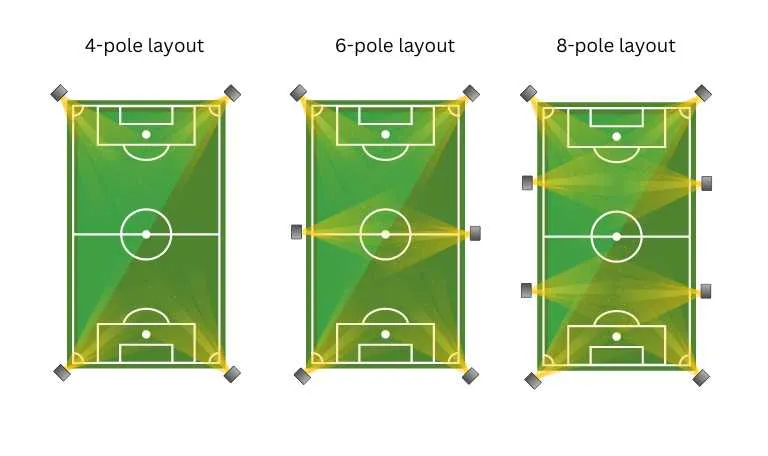
The dimensions of the soccer field (total area) and the level of competition are the two main factors that determine the number of lighting poles needed to light up your soccer pitch. A FIFA regulation-sized soccer field is 210-240 feet wide and 330-360 feet long, with a total area of 69,300 – 86,400 square feet. A high school soccer field of this size can probably get by with 4 poles, whereas, a collegiate-level soccer pitch would most likely opt for 6 poles. Professional-level MLS stadiums have to provide an excellent viewing experience for large-capacity crowds and TV audiences, which is why the lighting requirements shoot up. Soccer fields on this level tend to install 8 or more lighting poles to ensure optimal quality and uniformity of light.
Why a Photometric Study Is Essential for Soccer Field Lighting
Planning a soccer field lighting project takes more than just picking fixtures and setting a schedule. If the lighting doesn’t perform as expected after installation, it can lead to safety issues, poor visibility, and costly adjustments. That’s why a photometric study is a smart first step.
Lighting designers use CAD-based software to model how light will perform on your field—factoring in field dimensions, pole height, fixture type, lumen output, and beam angles. This helps ensure your setup meets IES lighting standards for soccer fields before anything is installed.
A typical photometric report includes:
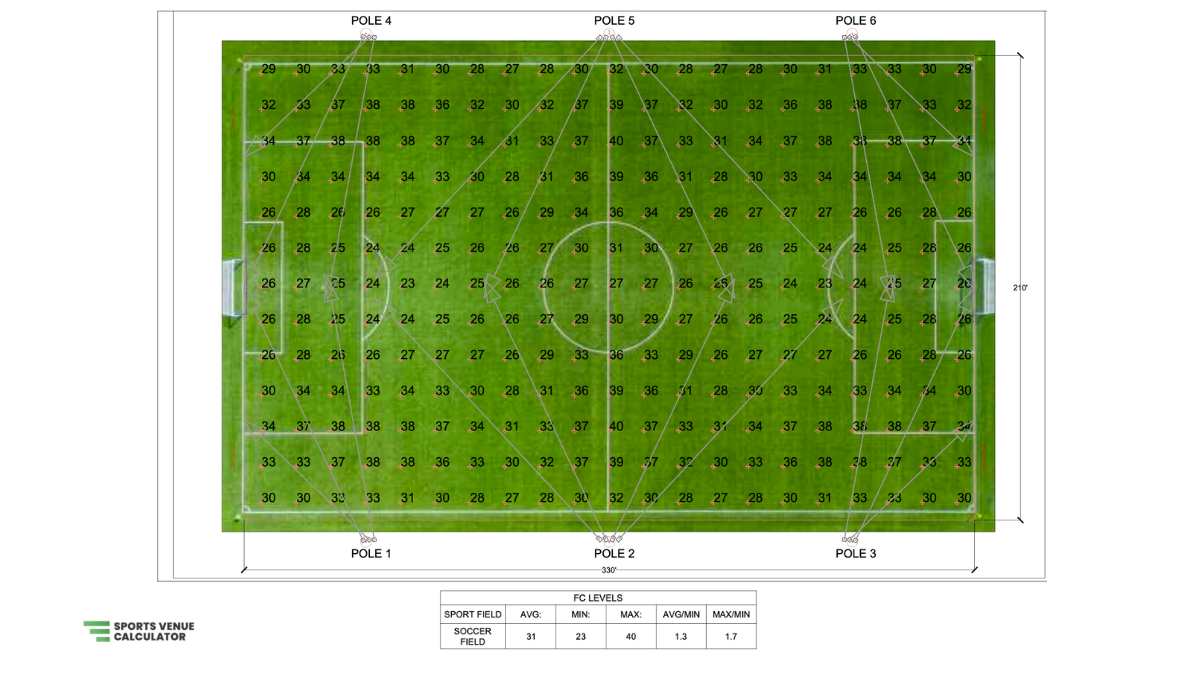
A 2D grid showing footcandle (fc) levels
3D renderings of light spread and pole placement
Summary of light levels (min, max, average)
Uniformity ratios for consistent coverage
False-color heatmaps for quick visual analysis
Fixture specs and mounting details
Before moving forward with installation, request a photometric study from a reliable U.S. sports lighting provider. It’s the best way to ensure top-tier performance and a game-ready field from day one.
Sample Photometric Study: High School Soccer Field
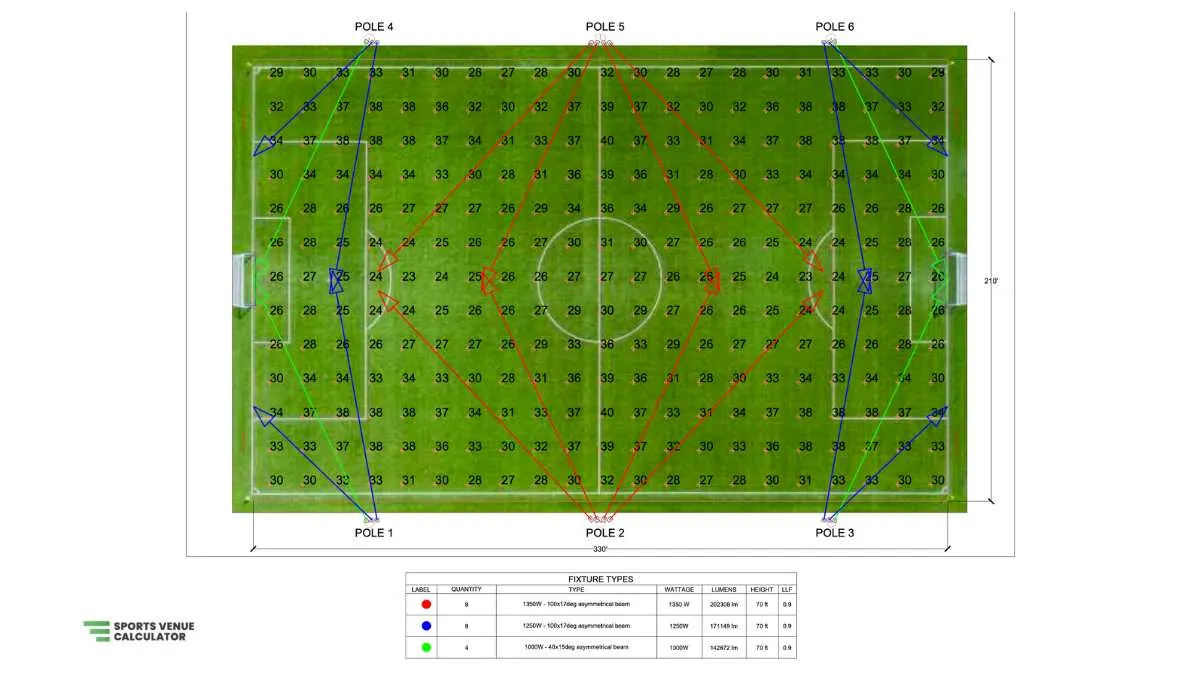
This sample photometric study shows how lighting professionals design a Class III (high school-level) soccer field to meet IES lighting standards. While not a permit-ready design, it gives a realistic preview of system performance and coverage.
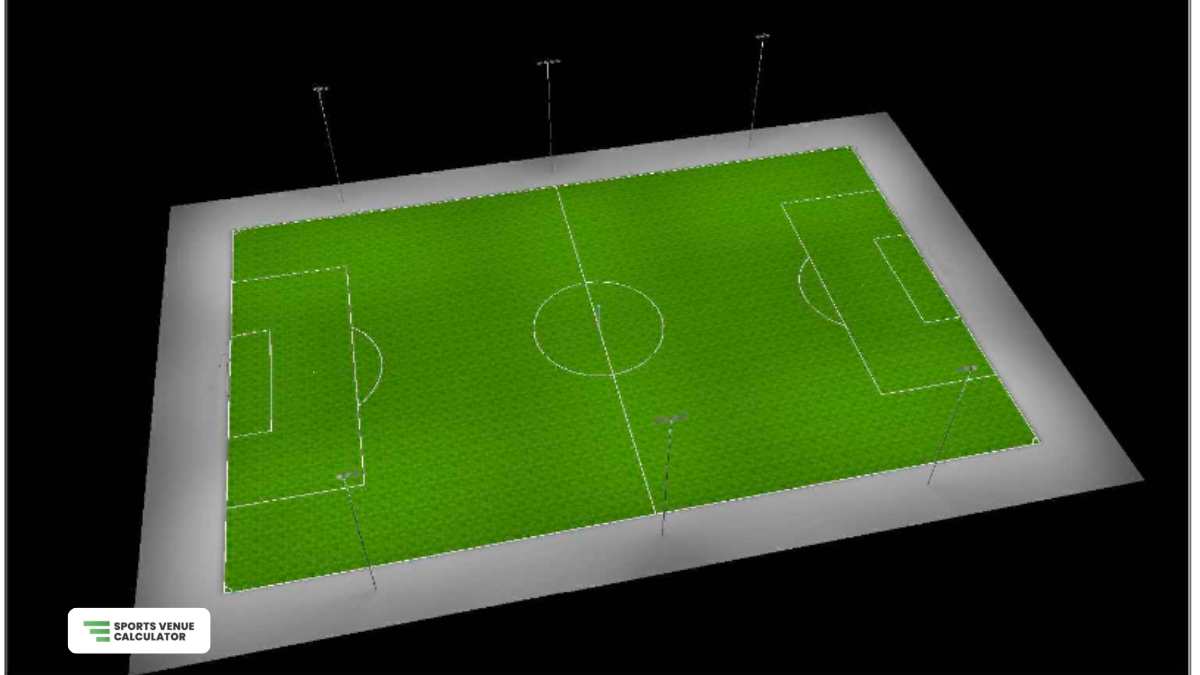
3D Lighting Layout Preview
The 3D renderings illustrate light pole placement, mounting heights, and how light is projected across the field. This helps visualize coverage zones, beam angles, and potential dark spots before installation begins.

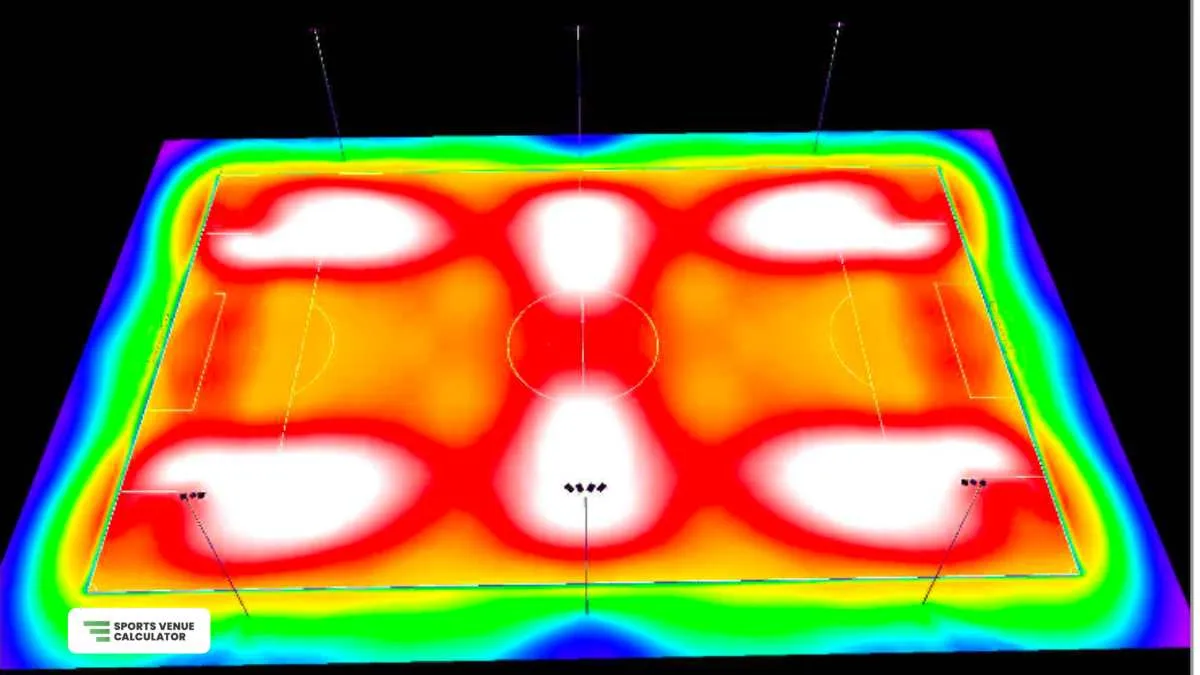
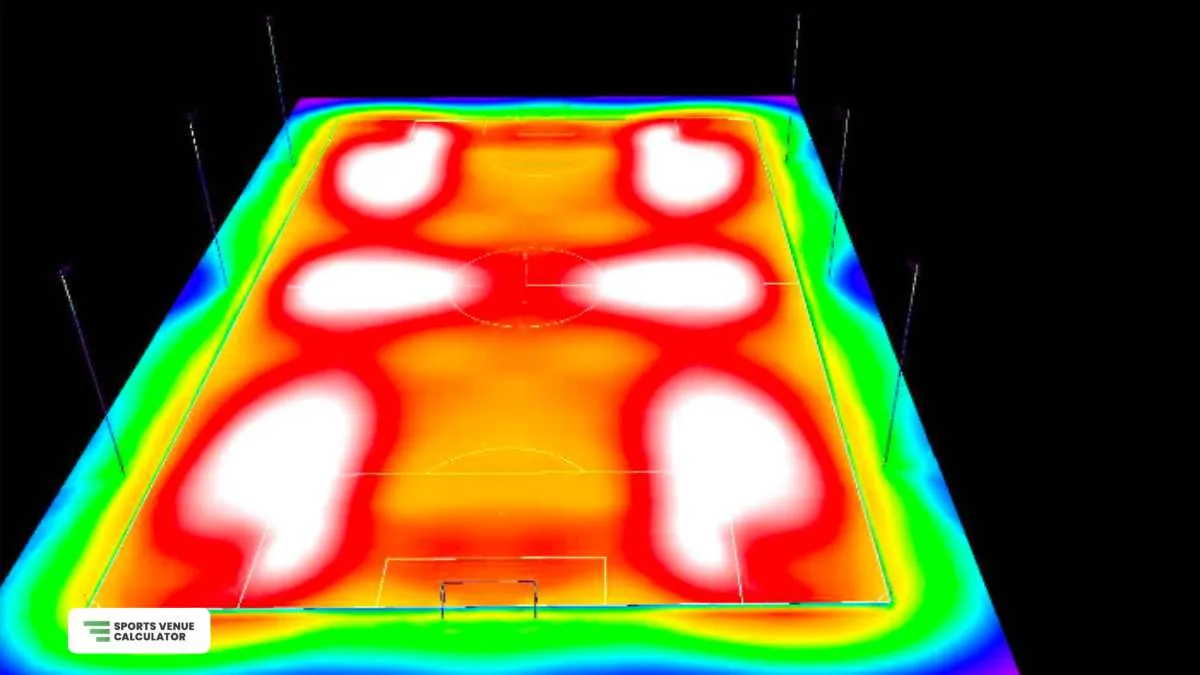
False Color Heatmap
The heatmap uses color gradients—from warm (bright) to cool (dim)—to highlight how light levels vary across the field. It’s a quick and effective way to assess light distribution and uniformity.
Optimizing Fixture Selection
A photometric study also guides fixture selection—calculating ideal wattage, lumen output, mounting height, and the number of fixtures needed to meet required lighting levels. The design shown here reflects those calculations to ensure consistent, game-ready lighting.
- 8 x 1350W LED light fixtures, mounted at 70 feet, beam angle: 100 degrees (horizontal) x 17 degrees (vertical)
- 8 x 1250W LED light fixtures, mounted at 70 feet, beam angle: 100 degrees (horizontal) x 17 degrees (vertical)
- 4 x 1000W LED light fixtures, mounted at 70 feet, beam angle: 40 degrees (horizontal) x 15 degrees (vertical)
What Type of Lighting Systems Are Used at Soccer Fields?
The most common type of soccer field lighting system in the United States is metal halide. For decades they have been the go-to solution to light up soccer pitches. In the last decade or so, a revolution has happened in sports lighting that has brought about the rise of LED lighting technology. It took lots of R&D to get LED tech efficient enough to light up large football fields and stadiums. The end results though are impressive.
LED football field lighting systems save up to 75% in utility bills, they last around five times longer than metal halides, and they offer superior illumination in terms of uniformity, glare, and convenience (no flickering, no warm-up time). They also have a significantly reduced impact on the environment since they do not use any toxic materials/gases to light up the luminaires.
LED soccer field lighting system features
Dimming
Easily adjust the brightness level from 0% to 100% with a simple click.
Instant On
No warm-up time required; the lights turn on and off instantly.
Flicker-free
High-frequency drivers ensure a steady lighting output, eliminating any flickering.
Scheduling
Set automated schedules for the light fixtures to switch on and off at specific times.
Glare control
LED soccer field lights are specifically designed to minimize glare, enhancing player visibility and safety.
LED Sports Lighting Buyer's Guide
Our comprehensive buyer's guide covers all the essential aspects including budgeting, design, funding, and installation considerations, simplifying your decision-making process.
Get the Free Guide
Soccer Field Lighting Fixture Options
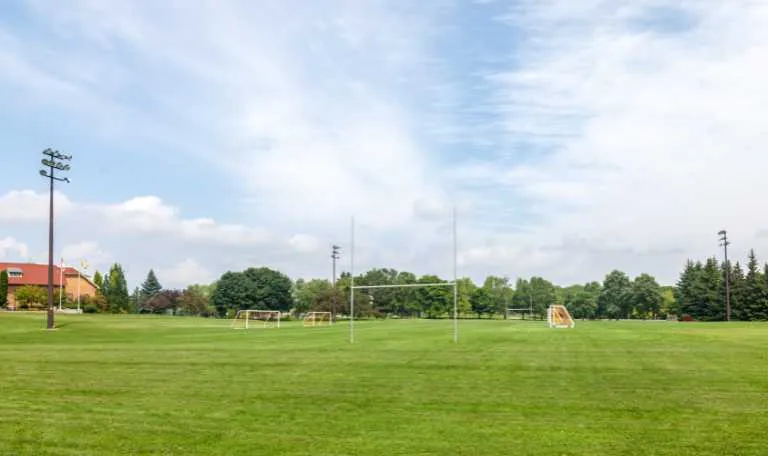
At every level of play, any new lighting system is going to feature LED lights. LED soccer field light fixtures provide uniform, glare-free light over a longer lifespan than conventional halide lamps. LEDs use less energy and require less maintenance, reducing both the day-to-day cost of use and the long-term operating expenses.
The brightness of a light is measured in lumens, and your electricity bill depends on how many watts you use. So we can think about “lumens per watt” as a back-of-the-napkin way of sketching out how much money you can save by installing an LED outdoor sports lighting system.
Looking at the chart below, we can see that for any amount of lumens (that is, any level of brightness over a given area), an LED lamp consumes about a quarter of the power that a halide lamp needs to produce that light level. If we’re paying by the watt, that’s a 75% savings. And since we’re paying for tens of thousands of watts over tens of thousands of square feet, we’re talking serious amounts of money!
LED soccer field light fixture conversion table
| Metal Halide wattage | HPS wattage | LED wattage | Average lumen output |
|---|---|---|---|
1500W | 1000W | 400W-600W | 110.000-140.000 |
2000W | 1500W | 500W-1000W | 240.000-270.000 |
4000W-7000W | 3000W | 1500W – 2000W | 400.000-520.000 |
Examples of LED soccer field light fixtures
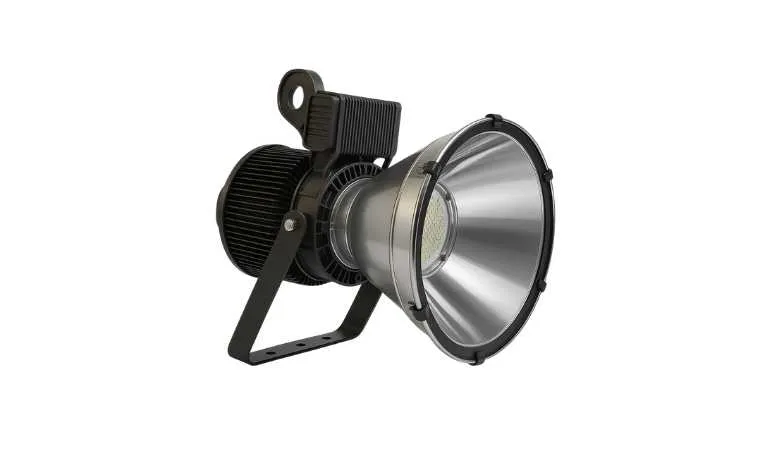
LED Floodlight Fixture for Soccer Fields
- Mounting height: 35 – 65 feet
- Wattage: 300W – 1000W
- Beam angle: 20 – 60 degrees
- Best for: Midfield lighting, sideline poles, fill lighting in multi-field
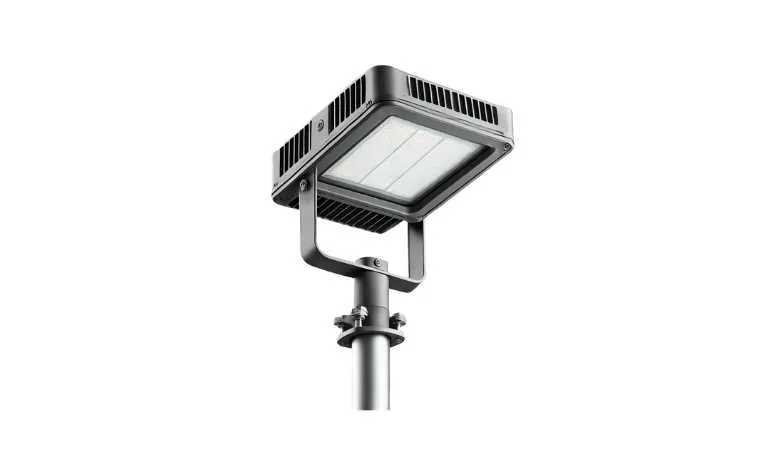
LED Shoebox Fixture for Soccer
- Mounting height: 25 – 35 feet
- Wattage: 200W – 500W
- Beam angle: Type III, IV
- Best for: Training fields, warm-up zones, auxiliary areas
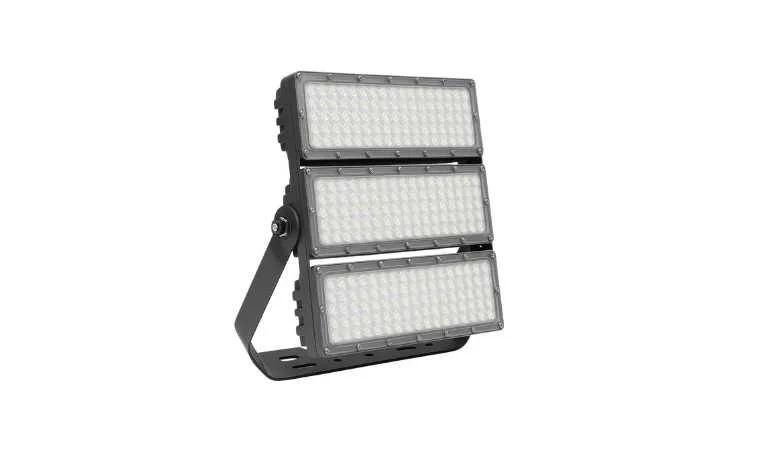
LED Modular Floodlight for Soccer
- Mounting height: 45 – 85 feet
- Wattage: 500W – 1600W
- Beam angle: 15 – 60 degrees
- Best for: Professional and competitive-level fields, FIFA-standard lighting
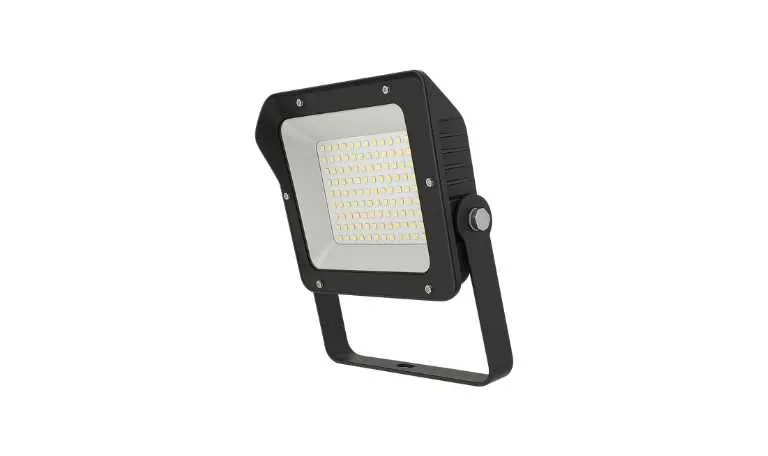
Asymmetric LED Floodlight for Soccer
- Mounting height: 35 – 55 feet
- Wattage: 300W – 1000W
- Beam angle: Type III, IV
- Best for: Fields with perimeter poles, urban or residential zones
How many lighting fixtures do I need for my soccer field?
The number of LED soccer lighting fixtures needed to illuminate your soccer field depends on the size and the competition level of the facility.
The bigger the total area that needs to be lit, the more lighting output and wattage are needed to reach the required lighting levels.
A FIFA regulation size soccer field measures 70 to 80 yards in width and 110 to 120 yards in length. The total area that needs to be illuminated adds up to 69,300 square feet.
- LED soccer field light fixture lumens per watt: 140
- Footcandles needed:
- Recreational: 20 fc.
- High school: 30 fc.
- College/Pro: 100 fc.
- Total lumens needed:
- Recreational: 1,386,000 lumens
- High school: 2,079,000 lumens
- College/Pro: 6,930,000 lumens
- Total wattage needed:
- Recreational: approx. 9,900 watts
- High school: approx. 14,850 watts
- College/Pro: approx. 49,500 watts
- Number of lighting fixtures needed:
- Recreational: 20 x 500w LED fixtures
- High school: 30 x 500w LED fixtures
- College/Pro: 50 x 1000w LED fixtures
Important Considerations About Soccer Field Lighting Design
Height of floodlight poles
We talk about all the factors that go into lighting system design, but that’s a bit too simple. All the different factors play off of each other – like a soccer team – with the decisions you make about one affecting the decisions you can and will make on others.
A great example of this is the height of the light poles. Smaller poles place the lights closer to the pitch, which means the light does not diffuse as much between the lamp and the ground. This may seem like a better option: smaller poles, fewer and less powerful lamps… less money, right? Well, no, not exactly.
Shorter floodlight poles bring the lamps more into the players’ and spectators’ lines of sight. Players tracking a goal kick high in the air or a goalkeeper watching a shot come over the wall may momentarily lose sight of the ball as it passes between them and a light. This could cause them to make a mistake or, more dangerously, have a mid-air collision with another player. By placing the lights on taller poles, the lamps are less likely to come into the direct sight of the players or fans, making for a better experience.
The acute angle of lamps on tall poles also reduces the amount of light spillage. Spillage is a waste of light and electricity – you’re paying for light that’s not going where you need it to go. It also contributes to light pollution, which could negatively affect your relationships with nearby houses, businesses and local governments.
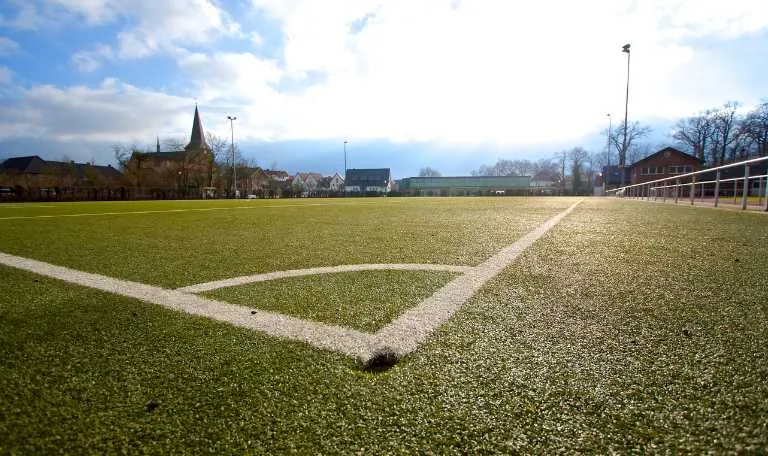
Lighting uniformity
We talk about all the factors that go into lighting system design, but that’s a bit too simple. All the different factors play off of each other – like a soccer team – with the decisions you make about one affecting the decisions you can and will make on others.
Best color temperature for sports lighting
Different lights have different temperatures, which have nothing to do with how hot the lamp or the light itself get. When we talk about the “temperature” of a light, we’re referring to the color of light a “black box” emits when it is heated to different temperatures.
At around 3000 degrees Kelvin (K), the “black box” glows a soft orange-yellow. Lights rated around 3000K for color temperature are considered “warm”: they have a warm, comforting character. Raise the temperature of the black box to 5000K, and the light starts to be clear and white. This range of color temperature is considered a bit “cooler.” Yes, you read that right. As the temperature of the black box goes up, our description of the light’s color temperature gets “cooler.” At 6000K or above, the light is stark white with a bluish tinge and is “cool.”
Soccer field lighting tends to be on the cooler side of things, usually in the 5000K range. This provides the most neutral experience for the in-stadium spectators; elevates the players’ level of attention and arousal; and looks the best on video. In fact, many broadcasters and streaming services require a minimum color temperature to ensure a high-quality video.
Retrofitting a Soccer Field Lighting System with LEDs
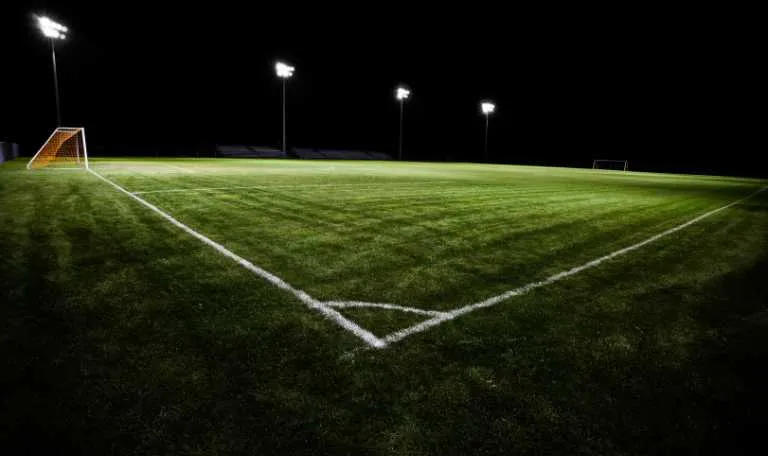
As explained above, LED is the technology to go for whether you are a sports complex, high school or a community. The question that remains is how to convert from conventional HID lighting to LED. The most common method is to retrofit LED lighting fixtures to your existing soccer field lighting infrastructure. The process simply entails replacing the old HID lighting fixtures with LED luminaires. This is a relatively quick and economical way of converting to LED. You should sitll always consult a professional sports lighting contractor to get their opinion.
Replacing the whole sports lighting system
Sometimes the existing infrastructure does not allow for a simple LED retrofit due to the fact that the new LED luminaires are not compatible with the rest of the system. In this scenario the only option is to replace all or part of the old sports lighting system (cross arms, poles, wiring etc.), which is a much more labor intense operation. To put it in medical terms, an LED retrofit would be an endoscopy, whereas, replacing the whole sports lighting system would be an open heart surgery.
If you are planning to retrofit your existing soccer field lighting system with LEDs, use our LED retrofit calculator to get a customized cost estimate for your project.
How to Finance a LED Soccer Lighting System Investment
One of the advantages of LED lighting systems is that they save money compared to their halide predecessors. Another advantage is that they can open up new revenue opportunities through expanded hours of operation, broadcasting and sponsorship. And a third financial advantage is that they may be eligible for a variety of grants and tax credits because of the positive impacts they have on the community and the environment.
Soccer Field Lighting Companies
Companies specializing in sports lighting solutions are proficient in installing or retrofitting LED lights for soccer fields. These professionals design and implement lighting systems tailored to the specific needs of soccer pitches, ensuring optimal visibility for players and an immersive viewing experience for spectators. Key considerations include light uniformity, glare reduction, and energy efficiency. Additionally, many of these companies offer advanced control systems for easy lighting adjustments. When thinking of an upgrade or a new installation, it’s crucial to select a company with a strong track record in soccer field lighting to guarantee the best outcomes.
Pro tip: If you are currently looking for a reliable and knowledgeable sports lighting vendor, try our sports lighting partner finder and get connected with suitable lighting partners.
Kick Off Your LED Sports Lighting Project
We’ve created a set of tools designed to assist facility managers and project planners in initiating their projects and help connect them with the professionals in the industry.
LED Soccer Field Lighting Q&A
What lights up a soccer field?
Soccer fields are typically illuminated by a combination of floodlights or stadium lights. These lights, positioned on tall poles or structures surrounding the field, provide the necessary brightness and coverage to illuminate the playing area. The specific type of lights used can vary, with traditional high-intensity discharge (HID) lamps like metal halide or newer LED (light-emitting diode) lights being common choices.
Floodlights or stadium lights are strategically placed to ensure uniform lighting across the field, minimizing shadows and providing optimal visibility for players and spectators. The number and arrangement of lights depend on factors such as field size, level of play, and lighting requirements.
How to set up lighting for a soccer field?
Setting up lighting for a soccer field involves assessing the field size and lighting requirements, planning the lighting design, choosing suitable lighting technology, determining mounting options, engaging a qualified electrician for installation, installing a control system, testing and making adjustments for optimal performance, and establishing a maintenance schedule. It is advisable to consult professionals to ensure compliance and achieve optimal lighting conditions.
How tall are light posts at a soccer field?
Light posts at a soccer field can vary in height depending on several factors, including the size of the field, lighting requirements, and local regulations. Typically, light posts at a soccer field range in height from 30 to 100 feet.
For smaller recreational fields or lower-level competitions, light posts may be shorter, ranging from 30 to 50 feet. These heights provide adequate illumination for smaller fields.
In contrast, professional or higher-level soccer fields may require taller light posts, often ranging from 70 to 100 feet. These taller posts help ensure sufficient and uniform lighting across the larger playing area.
How much do LED soccer field lights cost?
How to turn on LED soccer field lights?
The control panel for LED soccer field lights serves as the central operational hub for the lighting system. Typically situated in a secure area, it offers switches for light control, allowing for adjustments in brightness and timer settings. Advanced systems may incorporate digital touch screens, remote control capabilities, and integration with smartphone apps. Safety measures such as circuit breakers are included to protect against electrical faults. Regular inspections are essential to ensure the control panel functions properly. For detailed information about your specific system, it is recommended to consult the user manual or seek guidance from a professional.
How many lumens do I need to light a soccer field?
The lighting requirements for a soccer field can vary depending on the level of competition and field size.
Firstly, let’s consider the size of a standard soccer field, which typically ranges from 100 to 130 yards in length and 50 to 100 yards in width. The total area that needs to be illuminated for a FIFA regulation-sized soccer field is 69,300 – 86,400 square feet.
Next, the level of illumination required for a soccer field depends on the specific competition level. Professional and high-level collegiate fields often require higher illumination levels, typically ranging from 50 to 100 foot candles (lumens per square foot). Amateur or recreational fields may have lower illumination requirements, ranging from 20 to 30 foot candles.
The total amount of lumens needed to light up your soccer field, therefore, is a function of total area size x required foot candles:
- Collegiate soccer field: 3,465,000 – 8,640,000 lumens
- Recreational soccer field: 1,386,000 – 2,592,000 lumens
Meet the SVC Experts
Written by: Ryan Caravalho, Contributing Author
Ryan Caravalho has been writing for Sports Venue Calculator since 2022, specializing in clear, research-driven content for sports facility planners. With a background in tech, F&B, non-profits, and NGOs, he brings a broad, practical perspective to early-stage sports construction projects.
Read more from Ryan.
Edited by: Antti Rydman, Managing Editor
Antti Rydman is a Co-Founder and the Managing Editor of Sports Venue Calculator. A member of the founding team, Antti has led editorial operations since 2021, shaping the platform’s content strategy and overseeing its growth as a trusted resource for sports facility planning and construction.
Read more about Antti.