







Written By
Ryan Caravalho

Edited By
Antti Rydman
Home » LED Sports Lighting » LED Football Field Lighting Cost Guide (2026)
Written By
Ryan Caravalho
Edited By
Antti Rydman
2026 LED Football Field Lighting Installation Costs
Several variables affect total project cost, including:
Level of play (high school vs. college vs. professional)
Illumination levels required for competition or broadcast
Regional cost differences in labor and materials
Quality and efficiency of the lighting products
Reuse of existing infrastructure (poles, cabling, foundations)
If new infrastructure is required, such as poles and underground cabling, the total cost may be on the higher end of the range.
Get a customized cost estimate for your sports lighting project, by using our LED football field lighting cost calculator for new installations.
LED Retrofit Costs for Football Lighting Systems (2026)
The final price depends primarily on:
How much of the existing infrastructure—such as poles, fixtures, and wiring—can be reused
The retrofit method (full fixture replacement vs. lamp-only conversion)
In some cases, it’s possible to replace only the lamps within the existing fixtures, significantly lowering costs. However, this is not always feasible, as compatibility varies by product type and installation age.
Before moving forward, it’s essential to schedule a professional lighting audit to evaluate the current system and determine the most cost-effective retrofit approach for your facility.
If you are planning to upgrade your football field lighting system to LED, use our football field lighting cost calculator to get an accurate cost breakdown for your project.
Kick Off Your LED Sports Lighting Project
We’ve created a set of tools designed to assist facility managers and project planners in initiating their projects and help connect them with the professionals in the industry.
How to Estimate Football Field Lighting Installation Cost
As mentioned above there’s a long list of factors influencing the final cost of installing a new LED sports lighting system for your football ground. Because of the myriad of reasons affecting the price tag, in this article, we are willing to go as far as giving only a rough ballpark estimate. So, any way you look at it, installing new LED floodlights for your sports ground is an important investment decision.
Here’s a handy checklist that you can use when scoping the size of the project and estimating the cost with sports lighting construction companies:
- Can existing infrastructure (light poles, cabling, wiring) be used for the new LED lights?
- What is the level of competition of the main users of the football field?
- How many spectators attend the games?
- Will football games be televised?
- How many poles are needed for optimal illumination?
- What is the required level of wattage for the lighting fixtures?
- Is there enough space around the football field to install light poles considering 50,75,100 feet of setback?
We also written more about LED sports lighting costs in our separate guide.
How Your Location Affects the Cost of Football Field Lighting Installation
The cost to install football field lighting systems varies widely across the United States, driven by factors such as field size, level of play (youth, high school, or stadium), required light levels, pole configurations, regional labor rates, electrical infrastructure, permitting requirements, and local market conditions. The ranges below are built from real football lighting project data within our internal database, combined with city and state-level construction cost index data to reflect regional pricing differences. This approach provides a more precise, location-adjusted estimate to help you plan your project budget with confidence.
Browse estimated football field lighting costs by state, based on the key variables that influence total project cost. Select any city/state to access detailed guides, localized cost insights, and planning recommendations.
Top Insights
- Most expensive cities: San Francisco, New York City, Boston, San Jose, San Diego
- Most affordable cities: Jacksonville, Columbus, San Antonio, Indianapolis, Oklahoma City
- Highest-cost states: Hawaii, Alaska, California, New York, Massachusetts
- Lowest-cost states: Mississippi, Arkansas, Alabama, West Virginia, Kentucky
The regional figures below are adjusted from SVC database regional median cost combined with ENR Consruction Cost Index.
Get a more accurate estimate for your specific project using our football field lighting cost calculator—it takes just two minutes to receive a tailored budget based on your project details.
Football Field Lighting Installation Cost per City
| City | State | Cost Range |
|---|---|---|
| Atlanta | GA | $240,265 – $947,441 |
| Austin | TX | $255,838 – $1,008,849 |
| Boston | MA | $313,680 – $1,236,937 |
| Charlotte | NC | $235,816 – $929,896 |
| Chicago | IL | $271,411 – $1,070,257 |
| Columbus | OH | $218,019 – $859,715 |
| Dallas / Fort Worth | TX | $249,164 – $982,531 |
| Denver | CO | $262,512 – $1,035,167 |
| Des Moines | IA | $211,345 – $833,397 |
| Houston | TX | $231,367 – $912,350 |
| Indianapolis | IN | $211,345 – $833,397 |
| Jacksonville | FL | $222,468 – $877,260 |
| Los Angeles | CA | $298,107 – $1,175,528 |
| Miami | FL | $266,962 – $1,052,712 |
| Minneapolis | MN | $251,389 – $991,304 |
| New York City | NY | $338,151 – $1,333,435 |
| Oklahoma City | OK | $195,772 – $771,989 |
| Orlando | FL | $233,591 – $921,123 |
| Philadelphia | PA | $271,411 – $1,070,257 |
| Phoenix | AZ | $242,490 – $956,213 |
| San Antonio | TX | $213,569 – $842,170 |
| San Diego | CA | $302,556 – $1,193,074 |
| San Francisco | CA | $351,499 – $1,386,071 |
| San Jose | CA | $307,006 – $1,210,619 |
| Seattle | WA | $238,041 – $938,668 |
| Tampa | FL | $295,882 – $1,166,756 |
| Washington DC | DC | $295,882 – $1,166,756 |
Football Field Lighting Installation Cost per State
| State | Cost Range |
|---|---|
| Alabama | $195,772 – $771,989 |
| Alaska | $289,208 – $1,140,438 |
| Arizona | $218,019 – $859,715 |
| Arkansas | $193,547 – $763,216 |
| California | $266,962 – $1,052,712 |
| Colorado | $233,591 – $921,123 |
| Connecticut | $249,164 – $982,531 |
| Delaware | $226,917 – $894,805 |
| Florida | $222,468 – $877,260 |
| Georgia | $213,569 – $842,170 |
| Hawaii | $300,332 – $1,184,301 |
| Idaho | $211,345 – $833,397 |
| Illinois | $231,367 – $912,350 |
| Indiana | $209,120 – $824,624 |
| Iowa | $206,895 – $815,852 |
| Kansas | $204,671 – $807,079 |
| Kentucky | $200,221 – $789,534 |
| Louisiana | $204,671 – $807,079 |
| Maine | $218,019 – $859,715 |
| Maryland | $240,265 – $947,441 |
| Massachusetts | $255,838 – $1,008,849 |
| Michigan | $215,794 – $850,942 |
| Minnesota | $226,917 – $894,805 |
| Mississippi | $191,322 – $754,444 |
| Missouri | $209,120 – $824,624 |
| Montana | $211,345 – $833,397 |
| Nebraska | $202,446 – $798,307 |
| Nevada | $226,917 – $894,805 |
| New Hampshire | $233,591 – $921,123 |
| New Jersey | $255,838 – $1,008,849 |
| New Mexico | $209,120 – $824,624 |
| New York | $262,512 – $1,035,167 |
| North Carolina | $211,345 – $833,397 |
| North Dakota | $222,468 – $877,260 |
| Ohio | $211,345 – $833,397 |
| Oklahoma | $202,446 – $798,307 |
| Oregon | $231,367 – $912,350 |
| Pennsylvania | $226,917 – $894,805 |
| Rhode Island | $244,715 – $964,986 |
| South Carolina | $209,120 – $824,624 |
| South Dakota | $204,671 – $807,079 |
| Tennessee | $209,120 – $824,624 |
| Texas | $213,569 – $842,170 |
| Utah | $220,243 – $868,487 |
| Vermont | $226,917 – $894,805 |
| Virginia | $229,142 – $903,578 |
| Washington | $244,715 – $964,986 |
| West Virginia | $197,997 – $780,761 |
| Wisconsin | $218,019 – $859,715 |
| Wyoming | $211,345 – $833,397 |
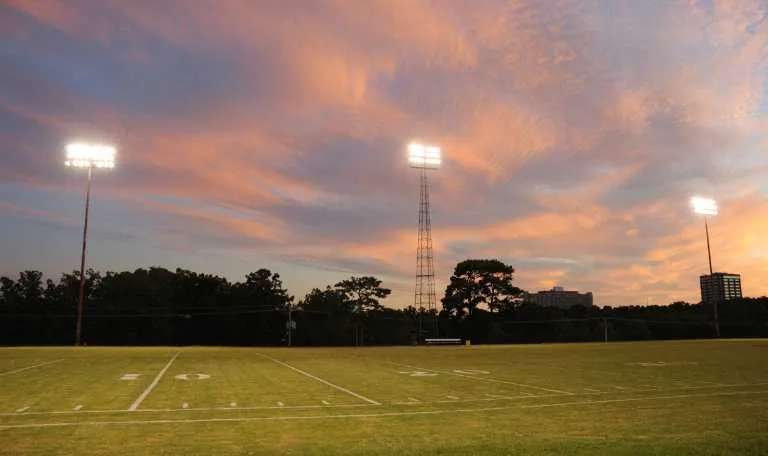
Retrofitting Your Existing Football Field Lighting System with LEDs
LED technology is without a doubt the future when it comes to lighting football fields. The long-term savings in operating costs and improved lighting quality are getting harder and harder to ignore for many sports facility operators. To give you an example, if your football field is installed with 1500W HID sports lighters, you can easily swap those with LED lighting fixtures in the range of 400W – 700W. Now do a quick count of how many fixtures your football field has and sum up the overall savings in operating costs for the whole sports facility. This investment decision purely from the financial point of view makes a ton of sense.
Most outdoor sports lighting systems can be quite easily upgraded to LED by retrofitting the LED luminaires directly to the existing lighting infrastructure. This is by far the fastest and cheapest way to convert to LED technology as you will not have to make big adjustments to the existing lighting system.
If you are planning to convert your sports lighting system to LED, try our LED retrofit cost calculator for football fields to get a customized cost estimate for the project.
LED Sports Lighting - How Much Does It Cost to Operate LED Lights for a Football Field?
When building and operating a football field facility, sports lighting is an important consideration. This is true both in terms of the initial cost of the LED floodlight and the cost of electricity and maintenance.
When purchasing a new LED floodlight system, the costs differ depending on the manufacturer and model. However, the follow-up costs should already be considered at this stage. For example, an LED floodlight consumes about half as much electricity as lighting with halogen lamps. The latter, for example, consumes 70,000 watts to generate 300 to 400 lux. An LED floodlight for the sports field, on the other hand, uses only 35,000 watts.
Maintenance costs also drop with LEDs. Their service life is significantly longer than that of metal halide lamps. LED lights are waterproof, heat-resistant, and shockproof. This means fewer replacements and repairs, which means fewer costs for equipment, labor, and downtime.
High school vs college football field running costs
The running costs of a lighting system at a football field is a combination of electricity costs and maintenance costs. Thanks to the long lifespan of LED lights the maintenance costs are close to zero. Electricity costs, on the other hand, can be calculated from the total wattage needed for the football ground and the electricity price per kilowatt.
The amount of wattage needed depends on the area that needs to be illuminated and the level of play. As explained before, the higher the competition level, the more lux, and wattage are needed.
Here’s a comparison between the running costs of a outdoor sports lighting system for a high school football field vs college football field:
| High school football field LED lighting cost | College football field LED lighting cost |
|---|---|
Field size (Sq ft): 57,600 | Field size (Sq ft): 57,600 |
Lux needed: 300-400 | Lux needed: 500-1000 |
LED lumens per watt (LPW): 130 | LED lumens per watt (LPW): 130 |
Wattage needed: 13,000W – 18,000W | Wattage needed: 22,000W – 45,000W |
Avg electricity cost per KWH: $0,12 | Avg electricity cost per KWH: $0,12 |
Operating cost per day (8 hours): $13 – $17 | Operating cost per day (8 hours): $21 – $43 |
Operating cost per month: $390 – $510 | Operating cost per month: $630 – $1,290 |
Operating cost per year: $4,680 – $6,120 | Operating cost per year: $7,560 – $15,480 |
As you can notice running costs for sports field lighting systems can take up a meaningful chunk of the overall budget, which is why it is important to run the calculations already at an early stage of the project.
However, compared to traditional metal halide or halogen lamps, going with LED will save you 50-75% in electricity costs and a whole lot of hassle and time when it comes to maintenance and changing light bulbs.
Read more about why LED lighting systems are perfect for high school football fields.
Football Field Lighting Standards and Requirements
Before you start designing a football field lighting system, it’s important to understand the performance standards that guide it. These standards ensure player safety, visibility, and a good experience for athletes and spectators.
Lighting is typically designed according to IES (Illuminating Engineering Society) classifications, which define minimum light levels and uniformity based on the level of play. These standards help ensure that the entire playing surface is evenly lit, reducing shadows and glare.
Football field lighting levels
LED technology is popular and used in sports facilities worldwide. LED floodlighting provides consistent illumination of sports fields and spectator areas. This holds, as well, for LED lighting on indoor playing fields.
There are many arguments in favor of LED lights. Atop the list are the long service life, better efficiency, and clear visibility. Although an LED floodlighting system is somewhat more expensive to purchase, in the long run, it saves on operating costs associated with LED sports lighting. LED also offers first-class quality. All surfaces are evenly illuminated, and glare is avoided.
LED floodlight systems also reduce light pollution. The light goes where it is needed: onto the playing field. By not shining or diffusing in other directions, residents or motorists are not affected by stray lights. Similarly, LED is also ideal for lighting parking lots and pedestrian walkways around the sport facility.
Sports Lighting: Classification of Play
| Sports Facility | Class I | Class II | Class III | Class IV |
|---|---|---|---|---|
Illuminance | 100 fc. / 1,000 lux. | 50 fc. / 500 lux. | 30 fc. / 300 lux. | 20 fc. / 200 lux. |
Professional Sports | x | |||
College Sports | x | x | ||
Semi-Professional | x | x | ||
Sports Clubs | x | x | x | |
Amateur Leagues | x | x | x | |
High School | x | x | x | |
Training Facilities | x | x | ||
Elementary School | x |
Thorough analysis of the sports facility situation
Especially if you want to equip an existing sports facility with an LED floodlight system, it is important to thoroughly analyze the existing situation. Within the scope of a photometric study, the size of the playing field and, if applicable, the existing lighting equipment such as light poles are taken into account. Based on these factors, a lighting concept is developed that provides uniform illumination and meets the lighting system requirements of the governing associations.
IES lighting standards: recommended illumination levels for football fields
| Football Class of Play | Lux | Foot candles |
|---|---|---|
I | ||
1000 | 100 | |
II | ||
500 | 50 | |
III | ||
300 | 30 | |
IV | ||
200 | 20 |
As you can see from the table above the correct illumination level depends on the level of play and the number of spectators that can attend an event. These are the official IES standards for sports lighting:
- Class I: Professional or college level (over 5.000 spectators)
- Class II: College or high school level (up to 5.000 spectators)
- Class III: High School or recreational level (up to 2.000 spectators)
- Class IV: Recreational or training (limited or no spectators)
From the college level upwards football games are considered major sporting events, with tens of thousands of spectators. The games are played at large stadia and are often broadcast in high definition, which raises the illumination requirements drastically.
College football is generally a major event and is often televised, which means that there are often tens of thousands of spectators. The larger the crowd the higher the recommended amount of footcandles for the sports facility.
Summing up football field lighting requirements for different levels of play
High school football field lighting requirements:
- Area of playing surface: 57.600 sq ft
- Lux needed: 200-300
- Foot candles needed: 20-30
- Min/max ratio (uniformity): 2.5 or less
College football field lighting requirements:
- Area of playing surface: 57.600 sq ft
- Lux needed: 500-1000
- Foot candles needed: 50-100
- Min/max ratio (uniformity): 2.0 or less
Professional football field lighting requirements
- Area of playing surface: 57.600 sq ft
- Lux needed: 1000
- Foot candles needed: 100
- Min/max ratio (uniformity): 2.0 or less
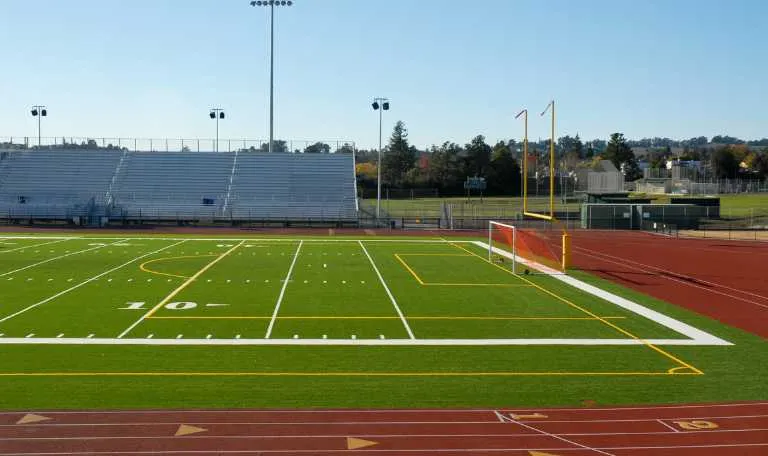
Football Field Lighting Design and Layout Guide
Once you know the required lighting levels, the next step is to design a system that meets those targets efficiently and cost-effectively. Good lighting design isn’t just about brightness—it’s about uniform coverage, energy efficiency, and long-term performance.
This section will cover the key decisions you’ll face during the design phase:
Choosing the right fixtures
Determining pole height and placement
Balancing beam angles and projection
Ensuring uniformity across the field
Football field lighting systems – what are my options?
Metal halide lighting has been the king of football field lighting systems for many decades. Their high output and excellent quality of light made them the better choice compared to other alternatives, for example, halogen-based technology. Metal halide systems are still the most common solution for a high school or college football field in the U.S. However, there has been another lighting tech revolution brewing for the last decade or so. The latest innovation in the sports lighting field is LED technology which is fully electric and does not use toxic materials/gases that are needed to light up metal halide systems and other legacy solutions.
LED lighting systems are getting more and more popular and nowadays athletic directors and sports facility managers consider LEDs as the first choice when considering installing a new lighting system or retrofitting an old metal halide system with LEDs.
LED lighting systems are more expensive to purchase and install, but the investment pays itself back in a matter of years. Considering, LED lighting systems last 5 times longer and consume up to 75% less energy, they are a no-brainer for most sports fields around the country.
The quality of light that LEDs produce is also superior to metal halide lighting systems. LEDs require no warm-up time, they do not flicker and they offer great glare control.
LED football field lighting system features
Adjustable lighting settings
Adjust the lighting level seamlessly from 0 to 100
No warm-up time
Switch your lights on and off instantly.
Flicker-free
LEDs do not flicker thanks to the high-frequency drivers they us to control illumination supply.
Scheduling
Set a schedule for your football field lights to switch on and off automatically at specific times.
Glare control
Improve safety and visibility on the field of play with the advanced anti-glare control that LED football field lights offer.
LED Sports Lighting Buyer's Guide
Our comprehensive buyer's guide covers all the essential aspects including budgeting, design, funding, and installation considerations, simplifying your decision-making process.
Get the Free Guide
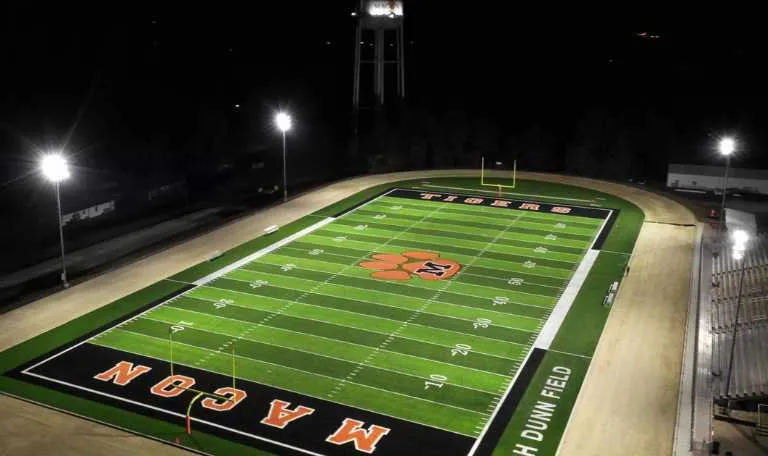
Go for LED football field light fixtures
Generally speaking football fields and stadia tend to use LED lighting fixtures with an output of around 500W-1500W.
LED lights are the best for Friday nights and any other day of the week. LEDs have all the qualities that players, coaches, administrators, and broadcasters insist upon for player safety and performance, cost efficiency, and fan experience.
We’ll get more into those benefits below and in the other articles in this section. But as a quick run down, LED lights cost less to operate than conventional halide or halogen lamps.
They produce very little glare, which helps the players see the ball and each other at the speed of play: a wide receiver won’t lose the ball in the lights while running a route, which means he has a better chance of a completion and of having the awareness to avoid a tackle.
The low glare also looks better on camera and minimizes light pollution, which will be important to the administrators and community stakeholders.
Finally (well, for now), LED lights are very easy to control. The coach or team manager can turn on just the lights they need for night practices throughout the week, turn on some more lights for the JV game on Thursday night and then blast the full panel for the weekend games.
Recommendations for converting metal halide light fixtures to LED football field lighting fixtures
- A 400-watt LED football field light fixture replaces a 1000-watt metal halide sports lighter.
- A 600-watt LED football field light fixture replaces a 1500-watt metal halide sports lighter.
- A 1000-watt LED football field light fixture replaces a 2000-watt metal halide sports lighter.
Examples of LED football field light fixtures
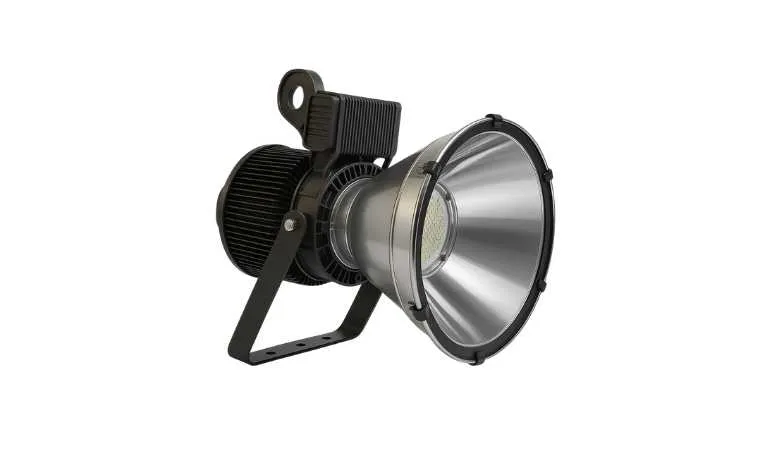
LED Football Field Floodlight Fixture
- Mounting height: 40 – 70 feet
- Wattage: 400W – 1500W
- Beam angle: 15 – 60 degrees
- Best for: Sideline poles, long-throw fill lighting on fields or bleachers
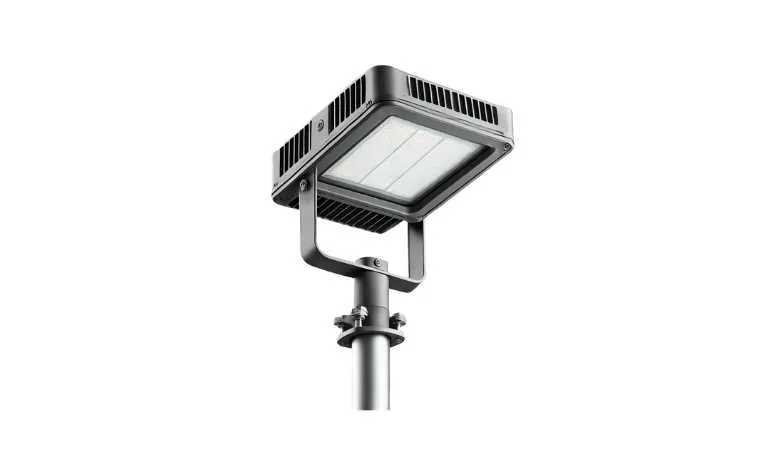
LED Shoebox Fixture for Football
- Mounting height: 25 – 35 feet
- Wattage: 200W – 500W
- Beam angle: Type III, IV
- Best for: Practise fields, warm-up zones
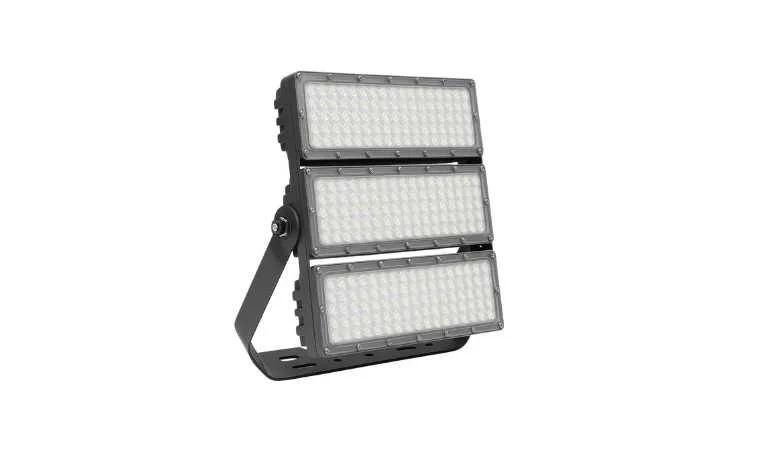
LED Modular Floodlight for Football
- Mounting height: 50 – 90 feet
- Wattage: 600W – 1800W+
- Beam angle: 15 – 60 degrees
- Best for: Stadiums, high school to NFL-level fields, broadcast quality
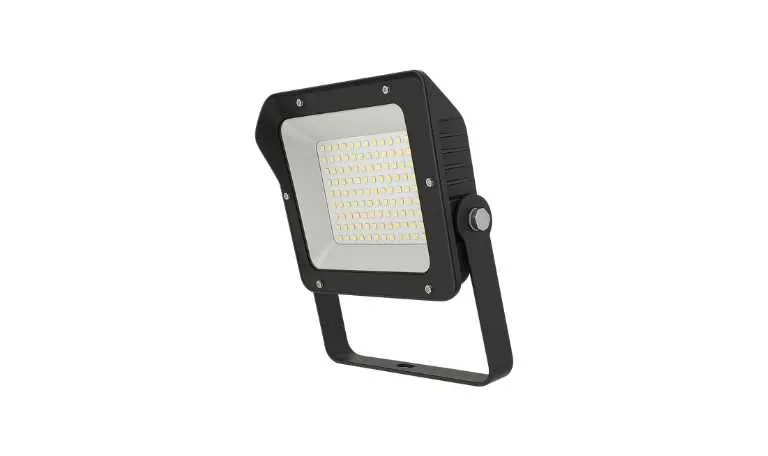
LED Asymmetric Floodlight for Football
- Mounting height: 40 – 60 feet
- Wattage: 400W – 1000W
- Beam angle: Type III, IV optics
- Best for: Fields with perimeter poles, reduced glare on sidelines
Football Field Dimensions
The gridiron never changes. From Pop Warner to the NFL, a football field is a football field. Admittedly, it can be a bit ridiculous sometimes to see little kids scurrying around a field 100 yards long and 53.5 yards wide, but they grow into it!
The only real differences in football fields across levels are the locations of the hashmarks. As you move up from high school to college to pro football, the hash marks move towards the center of the field. But other than that, it’s always the same 100 x 53.5 yards, plus the 10-yard end zones with the goal posts centered behind them.
Unless, of course, you go north of the border to Canada, where they have two 50-yard lines and put the goalposts ON the goal line! What a world we live in!
Football field lighting layout and light pole arrangement
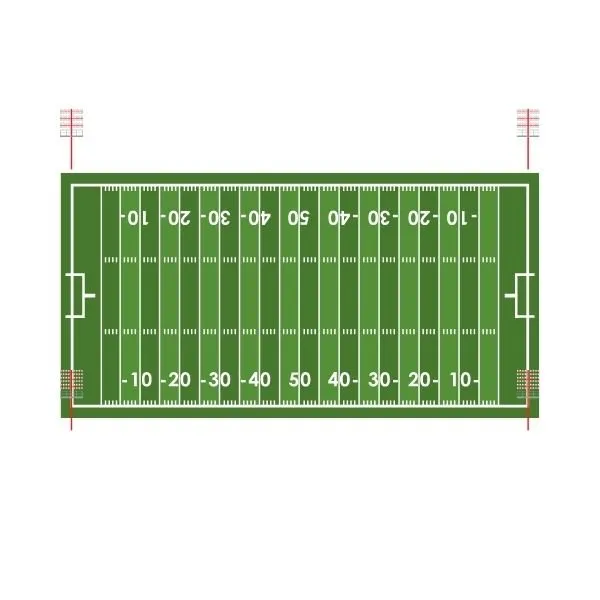
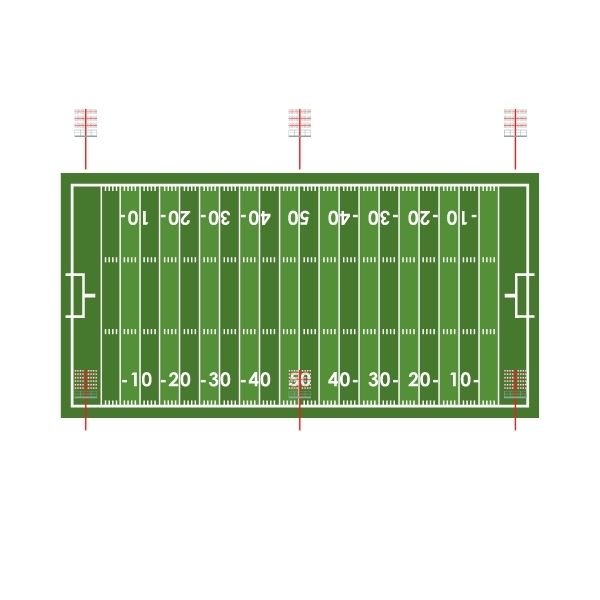
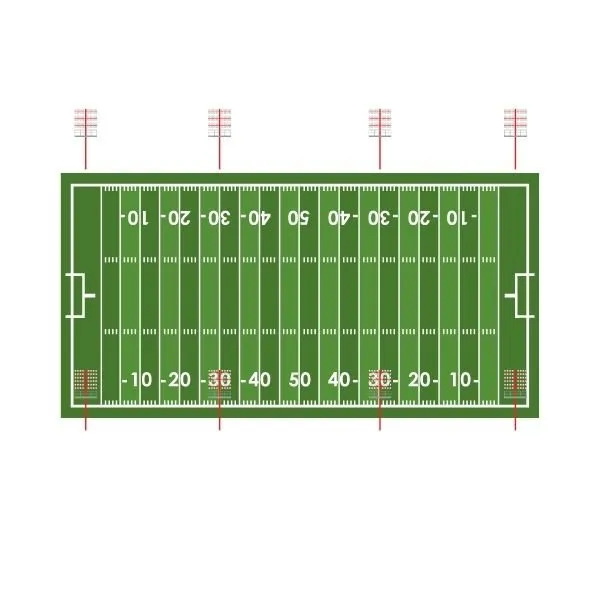
Since football fields are all the same size, the main design consideration for the number of light poles you’ll need is how bright the field needs to be. You can provide minimum levels of uniform light coverage for a recreational or high school field with four light poles. High school fields that attract large crowds or host games that are broadcast on TV or streaming may opt for six poles, as most colleges do. Well-resourced colleges or universities, then, will have eight poles plus any other fixtures on the field itself.
Football fields have an equal number of poles on each side of the field to eliminate shadows. With four poles, there will be two at or near the end zones. If you increase to six poles, the additional poles will line up with the 50-yard line. And with eight poles, most football fields will place one at each end zone and one around each 30-yard line.
For lighting quality and safety reasons, floodlight poles are positioned always 50, 75, or 100 feet outside of the playing field. Therefore, it is essential to check beforehand if the football ground has the required space around the playing field to set back the light poles as.
When it comes to the height of the light poles, there is no one size fits all number to give. Since football lights are designed to illuminate a large sports field the lamps have to be installed high. For a high school field, the correct height might be around 50-70 feet, and for a college or professional football field as high as 250 feet above the playing surface.
How many LED light fixtures do I need for my football field?
Estimating the number of LED fixtures your football field needs feels complicated, but in the end, it comes down to three things: 1) the total area that needs to be lit, 2) the efficacy of the LED fixtures, and, 3) the level of competition at your facility.
Size of the football field: 57,600 square feet
LED baseball field light fixture lumens per watt: 140
Footcandles needed:
- High school: 30 fc.
- College/Pro: 100 fc.
Total lumens needed:
- High school: 1,728,000 lumens
- College/Pro: 5,760,000 lumens
Total wattage needed:
- High school: approx. 12,000 watts
- College/Pro: approx. 40,000 watts
Number of football lighting fixtures needed:
- High school: 20 x 600w LED fixtures
- College/Pro: 20 x 2000w LED fixtures
How to achieve lighting uniformity for a football field
With two poles 100 yards apart on each side of the field, you might be wondering about how much light your players will have at the 50-yard line. That’s a great concern to have, and it’s why it’s so important to have a professional lighting designer as part of your facility construction team.
At every level of play, every square yard of the field needs to have the same level of brightness. Players can’t be throwing and running into darkness and then into light as they drive downfield.
A key metric in football field lighting is the uniformity min/max ratio. It measures how well the lighting is distributed across the field of play i.e. what is the maximum and minimum amount of footcandles present in the same area. The result is a ratio between the minimum and maximum values.
A min/max ratio of up to 3.0 is considered to be evenly distributed lighting without shadows or hot spots. The required level of min/max ratio depends on the level of play. For high school football, a ratio of 2.5 or below is acceptable, whereas, for college and professional football the ratio needs to be below 2.0.
Example of a lighting uniformity calculation:
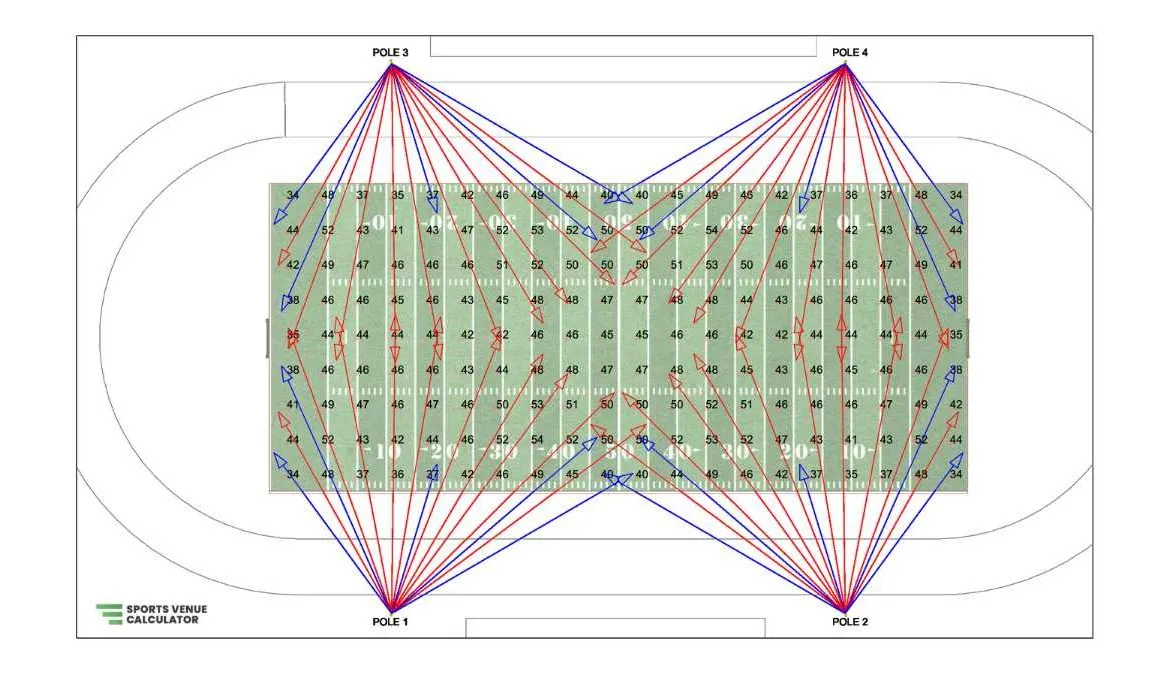
The diagram below shows how foot-candles are distributed across the football field. It helps the lighting designer calculate the minimum-to-maximum ratio, which is essential for meeting lighting standards set by organizations like the IES or the NCAA for example.
- Min. footcandles: 34
- Max. footcandles: 54
- Avg. footcandles: 45
- Avg./Min: 1.3
- Avg. / Max. 1.6

The beam angle
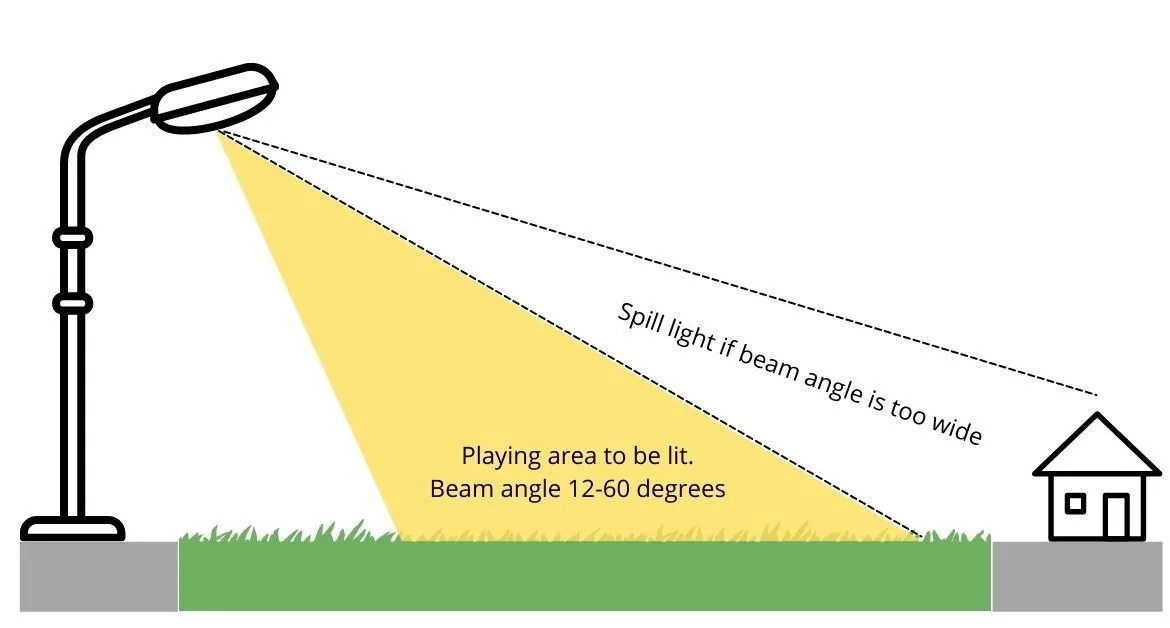
The beam angle and the angle of projection are the two calculations a lighting designer will make to meet the necessary luminance standard. The beam angle is the angle the light makes as it radiates out from the lamp. Think of it as going from a spotlight, which has a narrow beam angle, to a floodlight, which sends more diffuse light over a broader area.
Luminance levels decrease as light diffuses away from its source. Lighting fixtures that need to illuminate a wider area – think of the “inside” lamps on those poles at the end zones – need a larger beam angle. But they will also need to be stronger since the same amount of light needs to cover a larger area of the field.
The angle of projection
The angle of projection follows from the height of the light pole and how far back from the field it is. If the light pole is right behind the team area on the sidelines – as would be the case with a rec field, practice field or smaller high school field – then the angle of projection will be very low (very acute). If the light poles are behind the bleachers, then they will have a slightly higher angle of projection. Typically the beam angle used at football fields is between 12 – 60 degrees. This angle ensures that the playing area is well-lit at all times and there is minimal spill light outside of the field, which can annoy neighbors or traffic around the football ground.
Those are top-down considerations. But we also need to consider the angle of projection from the ground up: the players’ perspective.
The position of the poles and the angle of projection – the horizontal and vertical components – must account for the players’ sightlines. The lamps cannot be somewhere that the players will be looking straight into them – basically staring up into the projection angle – during the game. That would be a hazard for both player performance and safety.
Important Considerations for LED football field lighting design
One final (again, just for now – there are plenty more) technical consideration is the warmth of the light. Think about the stark white lights you encounter at the doctor’s office, or maybe your own office. Those are “cold” lights. They’re not very inviting when used indoors and they’re not very natural. You and your eyes just feel better when you step outside or into a different room.
Warm lights, on the other hand, feel – not by temperature, just by… feel – warm. When we’re talking about light warmth, warm lights are in the 2000-3000K range while cold lights are 4000K and higher. You can ask the lighting consultant about why we call it “warmth” and what those units are, or check out this article.
At the end of the day, football fields and sports fields in general tend to use cold lights that range between 5000K and 6500K. This is close to the color temperature of the sun (5780K) and provides a bright white light for the football field with a close-to-normal daylight vision that spectators and players are used to.
Ask for a Photometric Study for Your Football Field
So you have scoped out your lighting project, made a plan for executing each and every step of the project, and set a clear schedule for installation and delivery. What happens if after the lighting system is up and running you find out that the lighting levels are not of the required standard for your football field? To avoid this type of panic scenario professional lighting construction companies normally prepare a photometric study. This analysis is done with special CAD (Computer Aided Design) software.
You input all the details of the football field and the lighting system (dimensions, height, no. of poles, output of luminaires, beam angles, etc.) and the software renders a 2D and 3D simulation of your lighting system design.
The end results is a photometric study report that includes:
- 2D grid of FC levels
- 3D renderings of the lighting design
- Light level summary (min, avg, max)
- Uniformity ratios
- False-color heatmap
- Fixture and pole details
If you’re planning a sports lighting installation, request a photometric study from a trusted U.S. sports lighting provider today.
Example of a photometric study
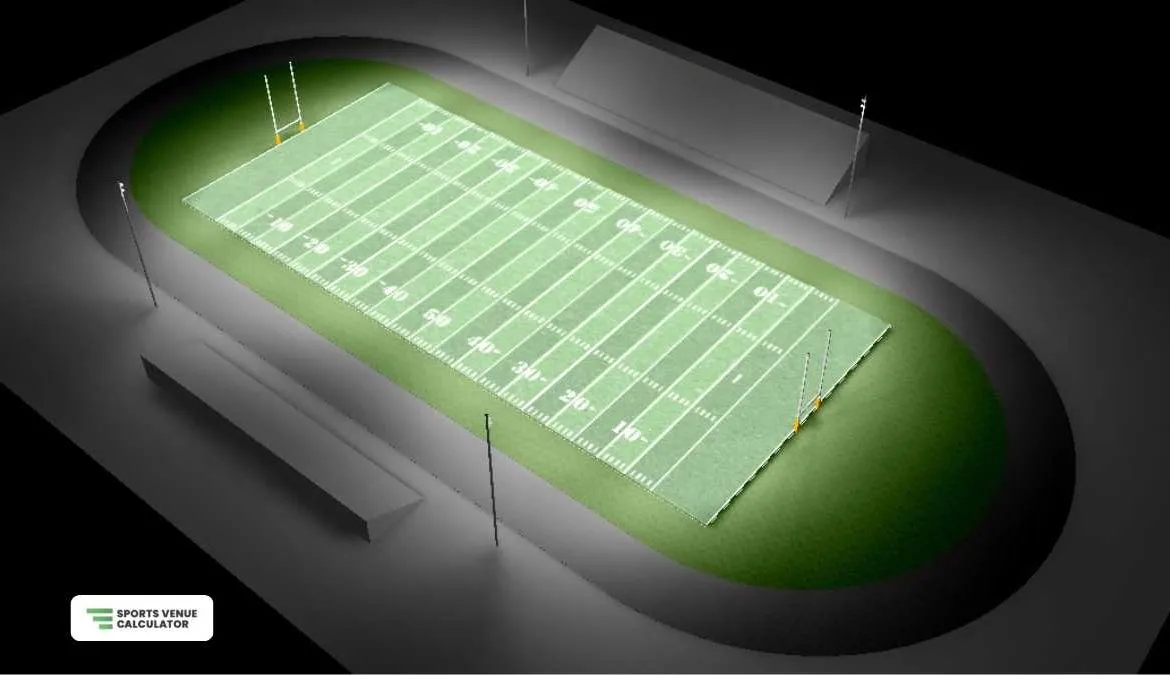
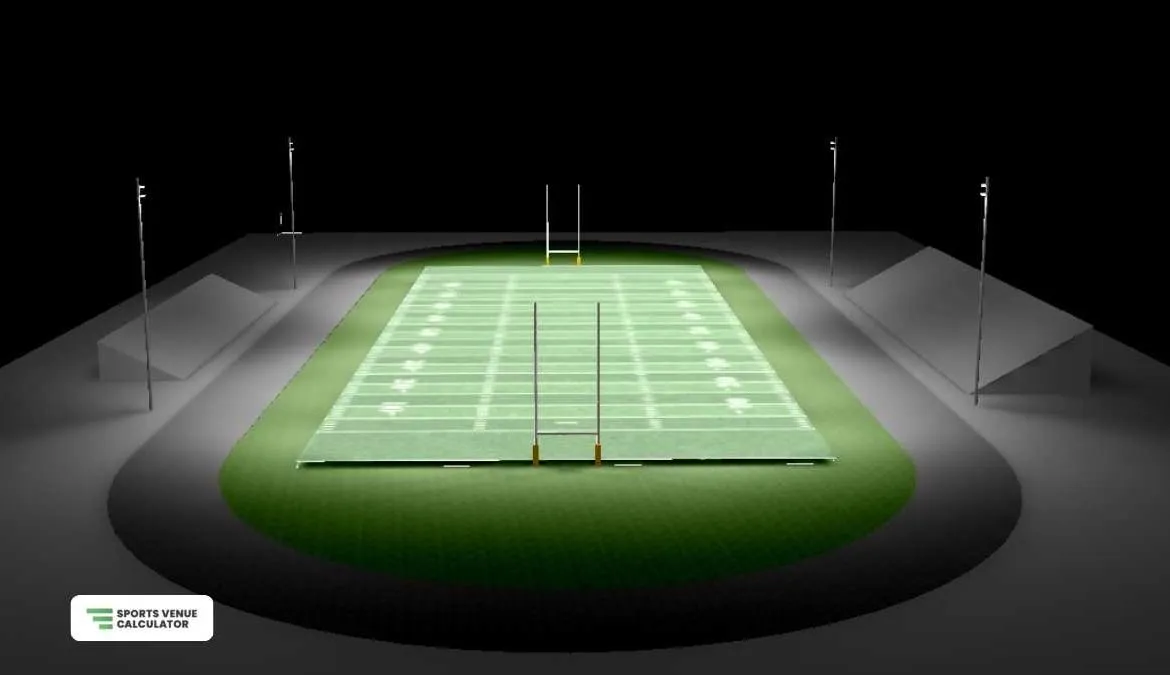
Below is an example of a photometric study designed for a Class III football field (high school level) based on IES standards. It’s not a permit-ready design, but it offers a realistic look at how lighting professionals plan coverage and performance.
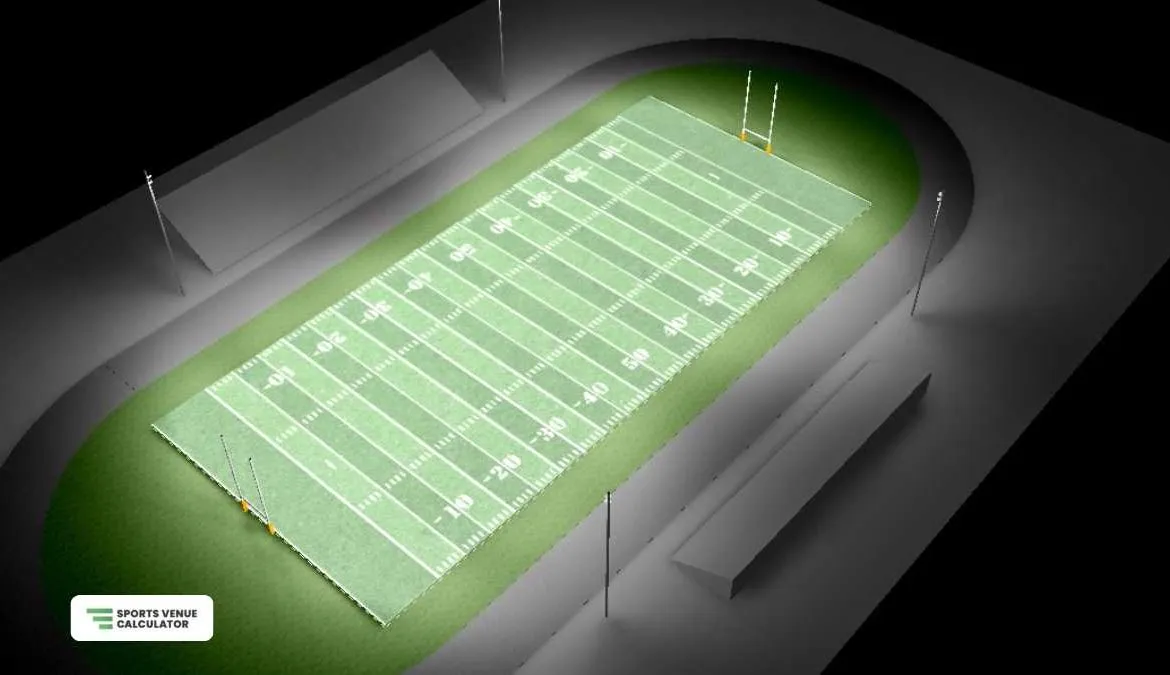
3D renderings of the lighting system and layout
The 3D renderings give you a visual overview of how the lighting system looks from different angles.
They show the positions of the light poles, fixture mounting heights, and how the light spreads across the field in a more realistic view.
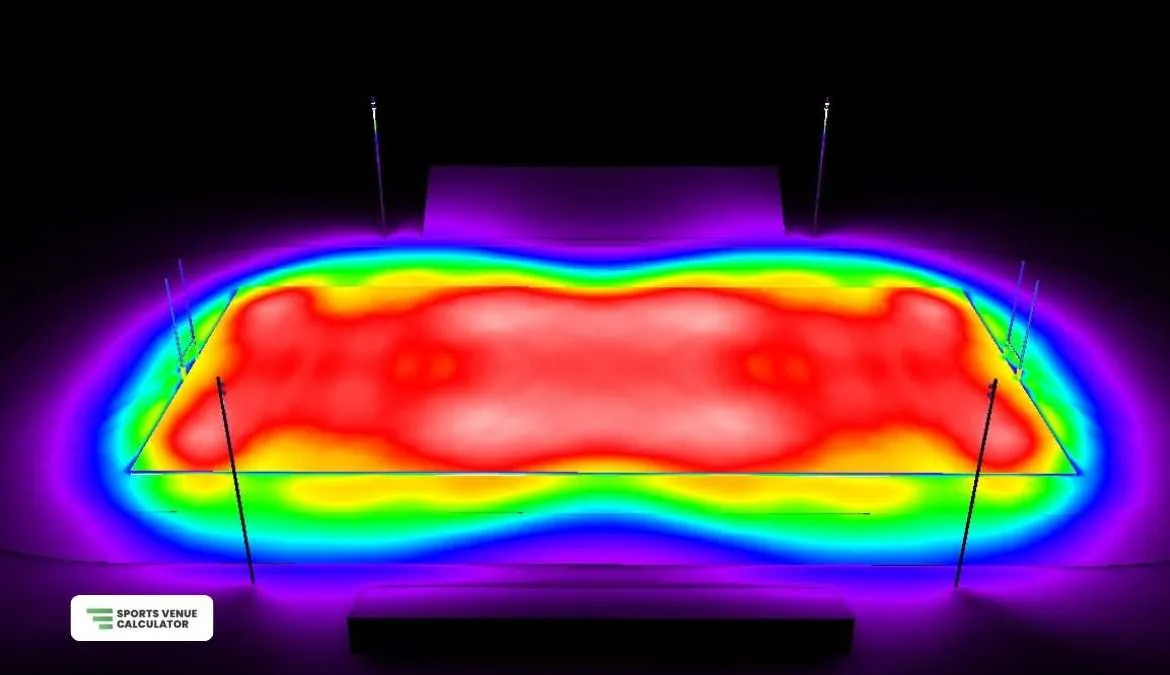
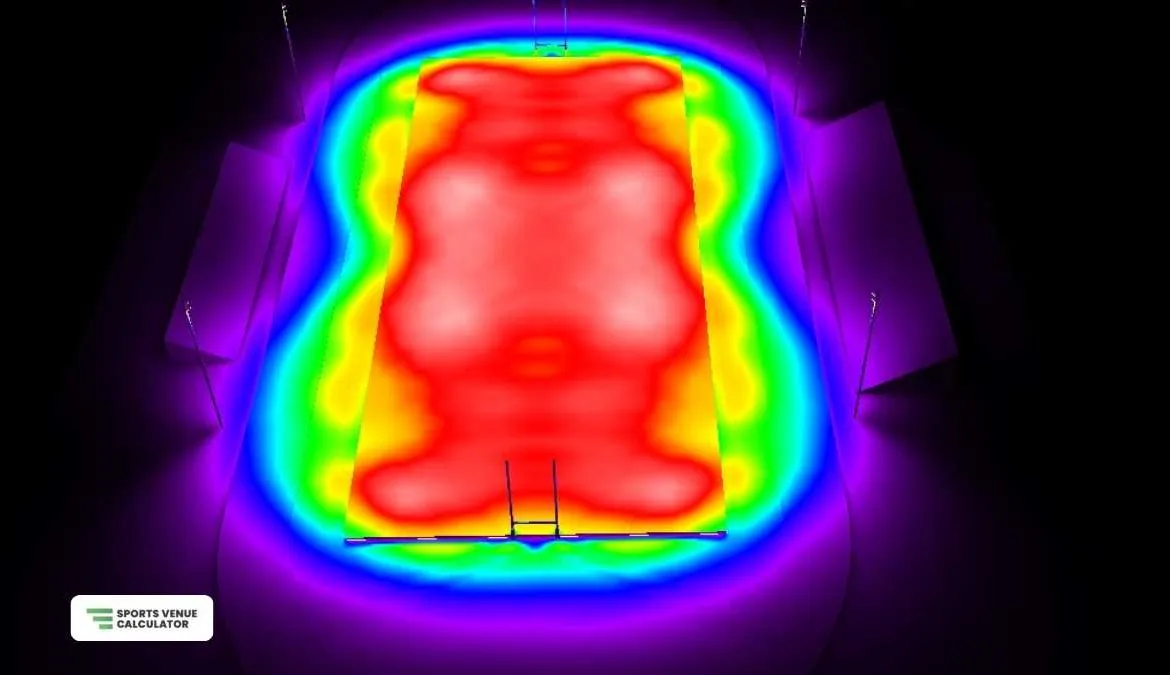
False color rendering
The image below is a false color rendering, also called a “lighting heatmap.” It shows how light levels vary across the field using color gradients—from high (warm colors) to low (cool colors).
Designing the Right Solution for the Field
The photometric study also allows the designer to choose the right type of lighting fixtures (wattage, lumen output), and calculate the mounting height, and the number of fixtures needed to reach the required lighting levels.
In the example below, the lighting engineer chose:
- 40 x 600W LED light fixtures mounted at 77 feet (beam angle: 15 degrees)
- 20 x 600W LED light fixtures mounted at 74 feet (beam angle: 30 degrees)
Advantages of an LED Football Field Lighting System
Extended usage times of the sports facility
For training and games at all levels, LED floodlighting allows longer usage times, especially in the winter. The increases the revenue generating potential of the facility and satisfies all potential users.
Safety for football players and spectators
High-quality lighting improves visibility. Players can recognize potentially dangerous situations earlier and avoid the risk of injury; and spectators also feel safer and have a more enjoyable experience at a well-lit facility.
Television broadcasts
For higher-tier games up to the professional leagues, impeccable lighting performance is a prerequisite for high-definition broadcasts and sports photography. Uniform lighting prevents distracting shadows and dark spots on the field.
Funding and Financing an LED Football Field Lighting System
As part of your budget planning, check whether it is possible to apply for lighting grants for the purchase and installation of an LED floodlight system.
Federal, state or municipal funds are often available for this purpose. After all, floodlights enhance the football field because it can then be used more in the evening hours and during the darker months of the year.
If your club or school still lacks money to finance sports field lighting, tap into the parents, students or club members to launch a fundraising campaign. Individuals from the community, former players and alumni can therefore get involved in the effort.
Football Field Lighting Companies
Companies specializing in sports lighting solutions are adept at installing or retrofitting LED lights for football fields. These experts design and implement lighting systems tailored to the unique requirements of football venues, ensuring optimal visibility for players and an enhanced viewing experience for fans. They prioritize factors such as light uniformity, glare reduction, and energy efficiency. Many also offer sophisticated control systems for effortless lighting management. When considering an upgrade or a new installation, it’s essential to choose a company with a proven history in football field lighting to ensure top-tier results.
Pro tip: If you are currently looking for a reliable and knowledgeable sports lighting vendor, try our sports lighting partner finder and get connected with suitable lighting partners.
Kick Off Your LED Sports Lighting Project
We’ve created a set of tools designed to assist facility managers and project planners in initiating their projects and help connect them with the professionals in the industry.
LED Football Field Lighting Q&A
How many lumens do I need to light a football field?
The lighting requirements for an American football field can vary significantly, with the total lumens needed ranging from 1,152,000 to 5,760,000. This variation depends on the level of competition the field is intended for.
To understand this better, let’s first consider the size of a standard football field, which is 160 feet in width and 360 feet in length. This gives us a total area of 57,600 square feet that needs to be illuminated.
The next factor to consider is the level of illumination required, which differs according to the competition level. For instance, Class I fields, which host collegiate or professional games, require between 50 and 100 foot candles (a measure of lumens per square foot).
On the other hand, Class II fields, typically used for high school or amateur games, need a slightly lower illumination level of 30 to 50 foot candles. Lastly, Class III fields, which are used for training or recreational purposes, require the least amount of light, between 20 and 30 foot candles.
In summary, the lumens needed to adequately light up a football field depend on both the size of the field and the level of competition it is intended for.
How much do LED football field lights cost?
How to turn on LED football field lights?
The control panel for LED football field lights, often located in a secure area, is the operational hub of the lighting system. It includes switches for light control, possibly with brightness adjustment and timer settings. Modern systems may feature digital touch screens, remote control capabilities, and even smartphone app integration. Safety features like circuit breakers protect against electrical faults. Regular inspections ensure the control panel’s proper functioning. Always consult the user manual or a professional for specifics about your system.
What are the lights on a football field called?
The lights on a football field are typically referred to as “stadium lights” or “floodlights”. In the context of LED technology, they may also be referred to as “LED stadium lights” or “LED sports lighting”.
How many field lights for a football field?
The number of lights required for a football field can vary greatly depending on several factors, including the size of the field, the level of play, and the type of lighting system used.
For a standard-sized football field, you might see anywhere from 4 to 8 large light poles, each equipped with multiple light fixtures.
For LED football field lights emitting 140 lumens per watt, a recreational field would typically require around 16 fixtures, each with a 500W capacity. In contrast, a collegiate-level field may need up to 20 fixtures, each with a capacity of 2000W.
How tall are light posts at a football field?
The height of light posts at a football field can vary greatly depending on the size of the field and the level of play. However, they are typically quite tall in order to provide adequate, evenly distributed lighting across the entire field.
For high school football fields, light poles are often between 50 and 70 feet tall. For larger fields, such as those used for collegiate or professional football, the light poles can be even taller, often ranging from 80 to 150 feet in height.
Meet the SVC Experts
Written by: Ryan Caravalho, Contributing Author
Ryan Caravalho has been writing for Sports Venue Calculator since 2022, specializing in clear, research-driven content for sports facility planners. With a background in tech, F&B, non-profits, and NGOs, he brings a broad, practical perspective to early-stage sports construction projects.
Read more from Ryan.
Edited by: Antti Rydman, Managing Editor
Antti Rydman is a Co-Founder and the Managing Editor of Sports Venue Calculator. A member of the founding team, Antti has led editorial operations since 2021, shaping the platform’s content strategy and overseeing its growth as a trusted resource for sports facility planning and construction.
Read more about Antti.