Home » Tennis Court » Tennis Court Construction and Resurfacing Guide for Maryland
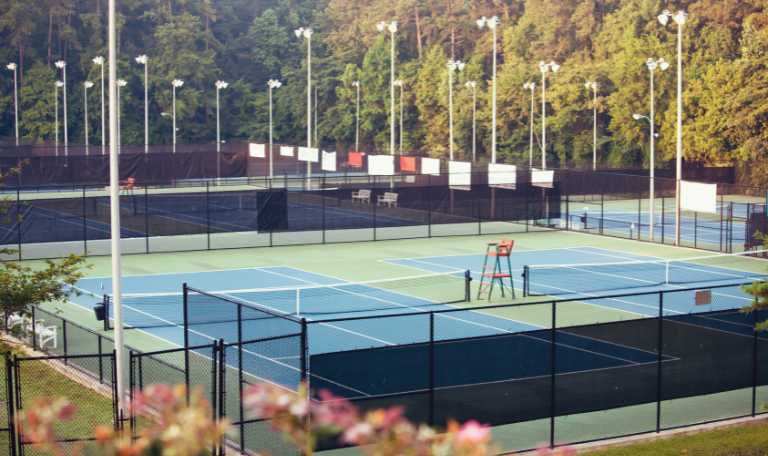
“Maryland, where the bay meets the mountains.” Tennis courts here must be designed to endure the state’s varied topography and weather patterns. Constructing and resurfacing tennis courts in Maryland provides a unique opportunity to create top-tier facilities that cater to the state’s diverse landscape and growing interest in the sport. By taking into account the local environment and weather conditions, project owners can develop courts that not only meet but exceed the expectations of both players and spectators.
This blog will serve as your comprehensive guide, covering everything from Maryland’s specific climatic considerations to understanding the building codes, obtaining necessary permits, estimating costs, and maintaining your tennis court for years to come.
Continue reading to ensure your project is positioned for success and longevity.
If you are currently planning a tennis court construction project in Maryland, try our tennis court cost calculator to receive a customized project estimate.
Cost Considerations for Tennis Court Construction and Resurfacing in Maryland
The cost of constructing or resurfacing a tennis court in Maryland can vary widely based on several factors, such as the materials you select, labor expenses, equipment requirements, and the complexity of your design. Building a new tennis court typically incurs higher costs due to the significant groundwork and foundation work needed to ensure the court’s durability in Maryland’s diverse climate. However, resurfacing an existing court can be a more cost-effective option, particularly if the existing base is still in good condition.
Estimating Costs in Maryland:
- New installations: Typically range from $21,000 to $155,000.
- Resurfacing: Generally costs between $5,000 and $13,000.
Try using our tennis court cost calculator to get a precise estimate customized to your specific project in Maryland.

Climate Considerations for Tennis Court Construction in Maryland
Seasonal Temperature Variations
Maryland’s climate poses challenges with its cold winters, where temperatures can drop as low as 29ºF in January, potentially causing frost heave and damage to court surfaces. To mitigate these effects, it’s important to use a well-compacted base and frost-resistant materials such as asphalt or concrete. During the hot summer months, with highs reaching up to 89ºF, court surfaces can become extremely hot, affecting playability and comfort. Using light-colored or heat-resistant materials can help manage these conditions.
Precipitation and Drainage
Maryland experiences moderate to heavy rainfall throughout the year, making effective drainage systems essential to prevent water accumulation and surface damage. Proper drainage can be achieved through perimeter drains, slope gradients, and the use of porous surface materials like synthetic turf, which allows water to drain away efficiently, reducing downtime after rain.
Sunshine and UV Exposure
With significant sunshine, especially in July, Maryland’s tennis courts are exposed to high levels of UV radiation. Incorporating shaded areas through natural landscaping or installed structures can improve player comfort and protect the court surface from direct sunlight during peak hours.
Wind and Weathering Considerations
Wind can significantly impact tennis court construction and playability in Maryland. With average wind speeds ranging from 7 to 10 mph, and gusts often exceeding 20 mph during stormy weather, it’s crucial to install windbreaks or strategically placed fencing to reduce wind speed on the court. Additionally, orienting the court in a north-south direction helps minimize the effect of crosswinds, considering that prevailing winds typically come from the west or northwest in Maryland.
Choosing the Best Tennis Court Company
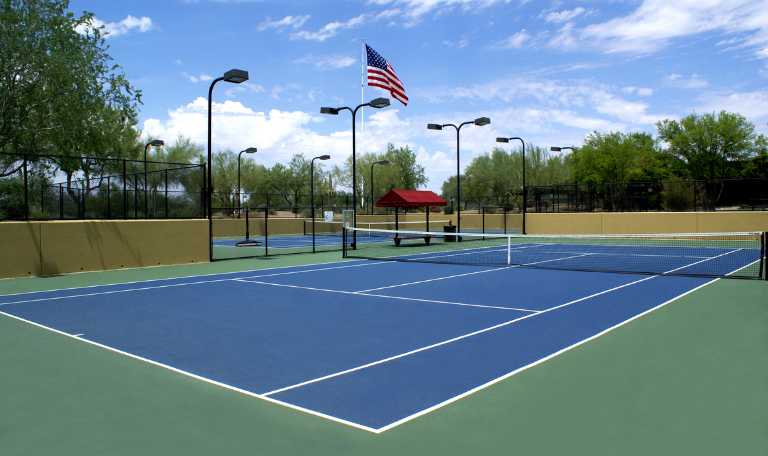
Selecting the right tennis court construction company for your project can feel overwhelming, given the wide range of options that vary in skill, expertise, professionalism, and experience. To help guide your decision, here are some key tips for choosing the best company for your needs:
1. Expertise in Maryland’s Climate
Look for a contractor who can recommend weather-resistant materials and design features like proper drainage systems to manage the region’s precipitation and freeze-thaw cycles.
2. Understanding of Local Regulations and Permitting
A contractor with local experience will help streamline the permitting process and ensure that your tennis court meets all necessary legal standards, reducing the risk of delays or non-compliance issues.
3. Knowledge of Maryland’s Earth Structure and Soil Conditions
A competent construction company should have a thorough understanding of local soil conditions and be able to perform necessary tests, such as soil compaction and drainage assessments. This knowledge allows them to design a court that remains stable and durable, even in areas with challenging soil conditions.
4. Industry Accreditations and Certifications
Look for contractors who hold certifications from recognized organizations, such as the American Sports Builders Association (ASBA), which ensure that they adhere to best practices in sports facility construction. These certifications also often indicate that the company stays updated with the latest industry trends and technologies.
5. Comprehensive Services and Support
A reputable tennis court construction company should offer a comprehensive range of services. This full-service approach ensures that all aspects of the project are managed efficiently and that you have a single point of contact for any questions or issues that arise during or after construction.
Top Tennis Court Construction and Resurfacing Companies in Maryland
ClassicCourt by Tarkett Sports
ClassicCourt, from Tarkett Sports, is a premium sports surfacing system built on post-tension concrete. Specifically designed to meet the demands of high-use tennis facilities, ClassicCourt combines structural strength with reliable play characteristics to deliver a surface that outperforms traditional asphalt courts. With an industry-leading 50-year structural warranty, ClassicCourt is trusted by schools, universities, parks, and private clubs looking for a long-lasting tennis court solution.
Tennis Court Systems by ClassicCourt
- Post-Tension Concrete Base – Reduces cracking and settling compared to asphalt, ensuring a consistently smooth playing surface.
- True Ball Response – Provides dependable bounce and footing for both recreational and competitive tennis.
- Extended Lifespan – 50-year structural warranty and 10-year surfacing warranty reduce long-term costs.
- Lower Maintenance – Engineered to minimize resurfacing and patchwork common to asphalt courts.
- Expert Installation – Constructed by PTI-certified professionals for precision and quality.
Why Choose ClassicCourt for Tennis?
- Backed by Tarkett Sports, a global leader in athletic flooring solutions.
- Member of the American Sports Builders Association
Delivers superior durability and performance year-round while offering a cost-effective alternative to asphalt with significantly reduced maintenance needs.
California Sports Surfaces
Since its inception in 1953, California Sports Surfaces (CSS) has been at the forefront of the sports surface industry, delivering high-performance products that cater to the needs of elite athletes. With a strong presence throughout New England, CSS has established itself as a trusted name in the region. As an active member of the American Sports Builders Association (ASBA) and holding certifications across all four ITF Court Pace categories, CSS has played a pivotal role in developing surfaces for some of the world’s most prestigious sporting events, including the Olympics and the US Open. Their dedication to innovation and quality has been recognized with numerous accolades, including five ASBA 2023 Outstanding Facilities of the Year awards.
Tennis Court Systems:
- DecoTurf®: Once the official surface of the US Open from 1978 to 2019, DecoTurf® offers various ITF pace ratings to accommodate players at every level.
- Plexipave: Used in major tournaments like the Australian Open (2008-2019) and the BNP Paribas Open, Plexipave is renowned for its durability and top-tier performance.
- Rebound Ace®: Known worldwide for its cushioned, multi-layered design, Rebound Ace® is ideal for sports like netball and basketball.
- Premier Sports Coatings®: These high-performance coatings are designed for residential courts, clubs, universities, and recreational facilities, ensuring long-lasting durability and reliability.
Certifications & Memberships:
- Active member of the American Sports Builders Association (ASBA)
- Certified across all ITF Court Pace categories 1-4
Get in Touch
- Learn more and contact California Sports Surfaces in our supplier directory.
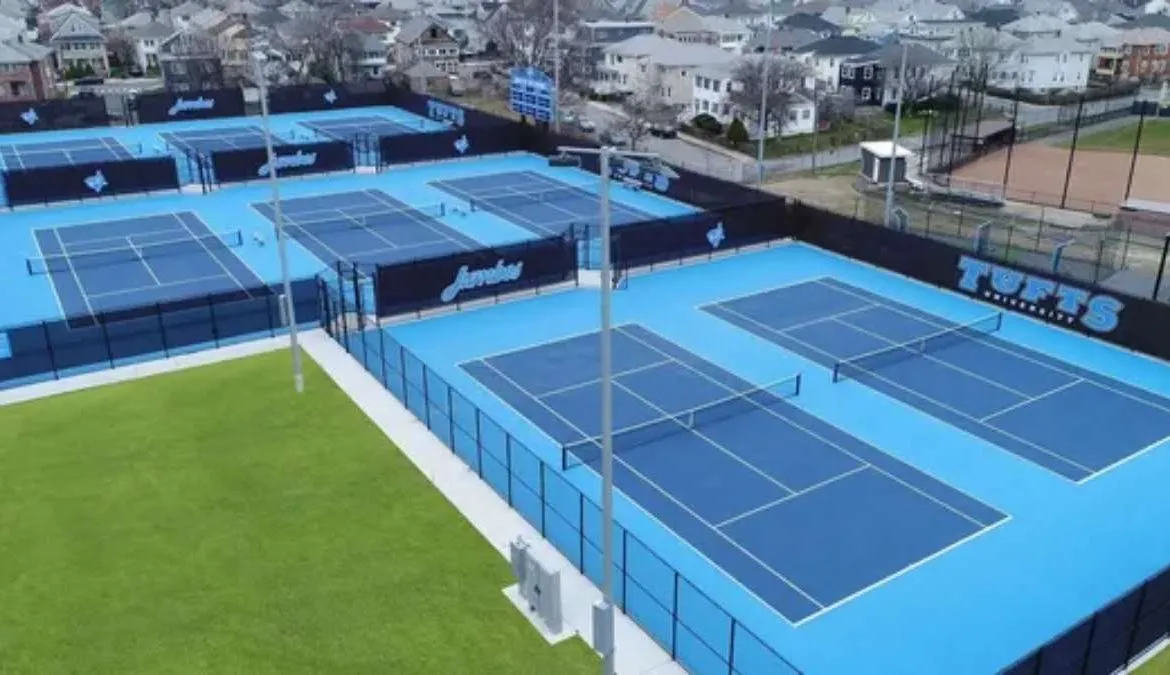
Featured project by California Sports Surfaces at the Delray Beach Open Tennis Center.
VersaCourt
VersaCourt is a leading provider of premium tennis courts, known for its innovative modular interlocking tiles that offer both durability and high performance. Their advanced tile systems create safe, customizable surfaces ideal for both residential and professional venues throughout New England. VersaCourt provides comprehensive design and installation services, working closely with clients to develop courts that meet specific aesthetic and functional requirements. Widely used in local schools, parks, and resorts, VersaCourt’s products are recognized for enhancing both safety and visual appeal. Their commitment to quality is underscored by their ISO 9001:2008 certification.
Tennis Court Systems:
- Consistent Ball Bounce: Designed to ensure reliable and consistent play.
- Enhanced Safety: Engineered with superior grip to reduce injury risk.
- Easy Maintenance: The modular design simplifies cleaning and allows for straightforward repairs.
- Customizable Design: Adaptable to various environments, whether residential or professional.
- Durability: Built to withstand diverse conditions, ensuring long-term performance.
- Versatile Installation: Offers options for both professional installation and DIY support.
Services Offered:
- Customized court design and installation services in New England
- DIY installation support
- Integration with additional features from The Recreational Group, including synthetic turf and playground surfacing
Certifications & Memberships:
- ISO 9001:2008 certified, emphasizing a commitment to quality management
Get in Touch
- Learn more and contact VersaCourt in our supplier directory.
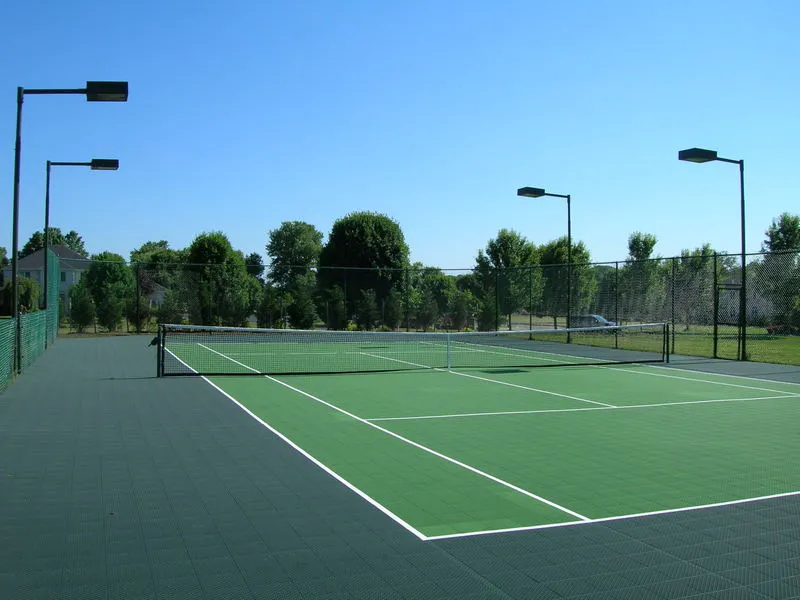
Outdoor Tennis Court Installation by VersaCourt
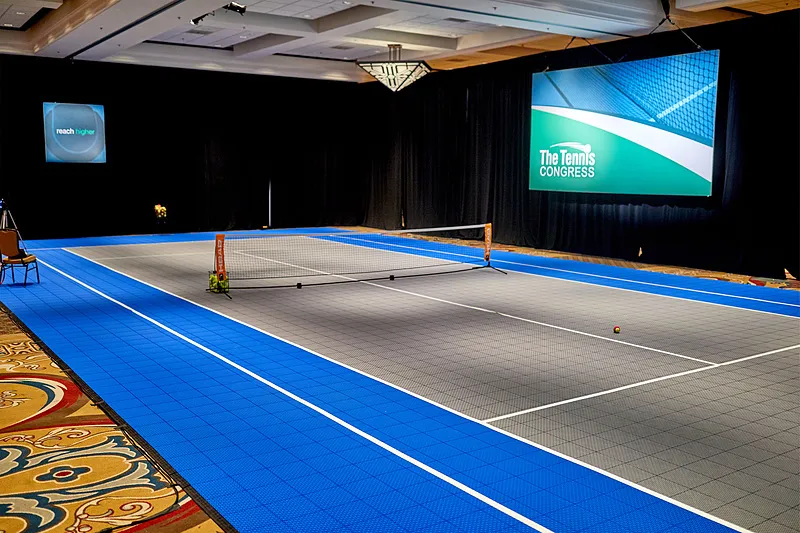
Indoor Tennis Court Installation by VersaCourt
Ecore Athletic
Ecore Athletic specializes in creating and manufacturing tennis court surfaces that enhance player performance through durable, ergonomic, and acoustically optimized materials. Their surfaces, designed for both indoor and outdoor courts, prioritize safety, comfort, and top-tier performance. Ecore Athletic is deeply committed to sustainability, focusing on reducing rubber waste and developing environmentally responsible products. Serving Maryland, they offer customized solutions tailored to meet the diverse needs of the state’s tennis environments.
Tennis Court System:
- TrueCourt: Designed specifically for outdoor tennis courts, TrueCourt provides exceptional durability and optimal shock absorption to withstand Maryland’s diverse weather conditions.
- TeamPlay M: Tailored for indoor courts, TeamPlay M offers consistent ball response and cushioning to enhance player safety and comfort.
Services Offered:
- Comprehensive design and installation services for tennis courts in Maryland.
- Tailored solutions to meet the unique requirements of each project.
Certifications & Memberships:
- Member of the American Sports Builders Association (ASBA)
- Holds certifications including FloorScore®, EPDs, HPDs, GREENGUARD Gold, and ISO 9001.
Local Building Codes and Permits for Tennis Court Construction in Maryland
Here’s a detailed overview of the key building codes and permit requirements that apply to tennis court construction in Maryland:
Building Codes
Maryland Building Performance Standards (MBPS) and International Building Code (IBC)
The MBPS, which incorporates the International Building Code (IBC) with state-specific amendments, governs essential aspects of construction, including structural integrity, fire safety, and occupancy limits. For tennis courts in Maryland, the IBC under MBPS ensures that the court’s foundation, fencing, and surrounding structures are built to meet rigorous safety standards and can withstand environmental stresses and the demands of regular use. Compliance with these codes is crucial to ensure the long-term durability and safety of your tennis court facility.
International Energy Conservation Code (IECC)
While primarily focused on energy efficiency for buildings, the IECC may impact any associated structures with energy needs, such as lighting or heating systems. Local jurisdictions can make the Energy Code more stringent but cannot reduce its requirements.
Maryland Accessibility Code (MAC)
The MAC ensures that facilities are accessible to individuals with disabilities. For tennis courts, this code would affect any accessible pathways, entrances, and seating areas, ensuring compliance with accessibility standards.
Local Modifications
Each local jurisdiction in Maryland may modify the International Building Codes to address local conditions, but modifications are restricted for the Energy Code and Accessibility Code. This means while local jurisdictions can impose stricter standards for energy efficiency and accessibility, they cannot relax these requirements.
Permits and Inspections
Permits
To commence construction, you must obtain the necessary permits from your local Department of Permits and Inspections. Typical permits for tennis court construction may include site development permits, building permits for any structures, and possibly permits for fencing and lighting installations.
Inspections
Inspections are required at various stages of construction to ensure compliance with building codes and permit conditions. This may include inspections of the foundation, structural elements, and final completion of the court. Your contractor should coordinate these inspections with the local Department of Permits and Inspections to ensure all aspects of the construction are reviewed and approved.
Contacting Local Offices
For specific information about building codes, permits, and inspections, contact your local Department of Permits and Inspections. They will provide detailed guidance on the requirements specific to your jurisdiction, including any additional local regulations or procedures.
Each county or city in Maryland may have its own office or department responsible for construction permits and inspections. It’s important to contact the appropriate local office to obtain accurate and updated information.
Suitable Tennis Court Surfaces for Maryland
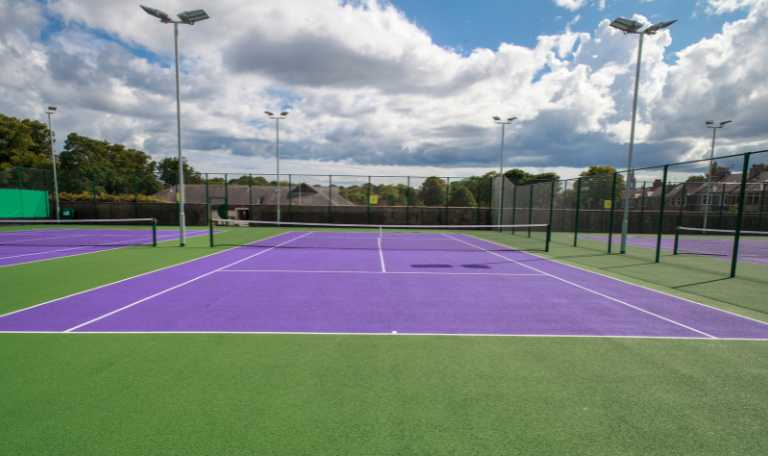
Selecting the appropriate surface for a tennis court in Maryland is crucial to ensure optimal playability and durability, given the state’s diverse climate conditions. Each surface type has its own advantages and is suited to different environmental factors and usage needs. Here’s an overview of the most suitable tennis court surfaces for Maryland:
1. Asphalt Courts
Asphalt is a robust and long-lasting material that can withstand Maryland’s temperature fluctuations and precipitation. It is resistant to cracking and can be resurfaced relatively easily. Asphalt courts are generally less expensive to install compared to other surface types, making them a cost-effective option for many projects.
While durable, asphalt courts require regular maintenance to address issues like surface wear and the potential for cracking over time, particularly due to freeze-thaw cycles in Maryland’s winters. Moreover, asphalt can become hot during Maryland’s warm summers.
2. Concrete Courts
Concrete provides a stable and solid surface that is well-suited to handle the state’s weather conditions. It is less prone to shifting or settling compared to other materials. Concrete surfaces generally require less maintenance than asphalt. Concrete courts have a higher initial installation cost compared to asphalt. However, their durability can offset this cost over time.
Maintenance Tips for Tennis Court Surfaces in Maryland
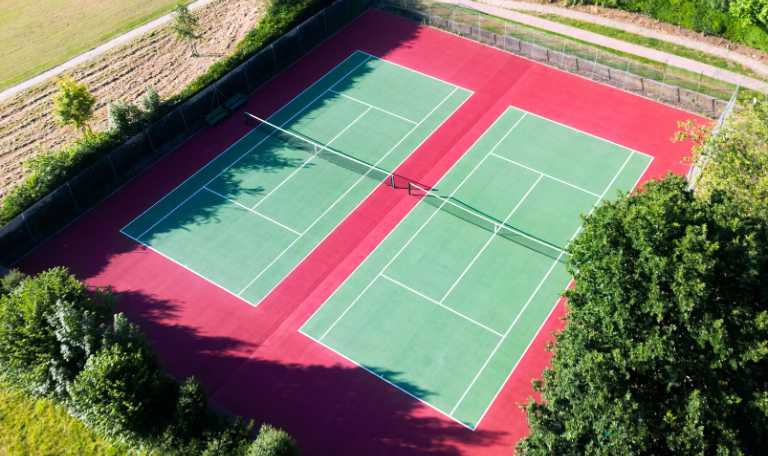
Regular inspections help identify and address minor issues before they become major problems, such as surface cracks, drainage issues, or damage from debris.
Keeping the court clean and free from debris, such as leaves and branches, prevents the accumulation of organic matter that can affect surface performance and drainage.
Seasonal care ensures the surface maintains its playing characteristics and remains safe and enjoyable for users.
Funding Opportunities for Tennis Court Construction & Resurfacing in Maryland
In Maryland, several funding options are available for tennis court construction and resurfacing. The state sometimes allocates funds through bond initiatives for community projects, including tennis courts. Local community organizations often play a role in funding and maintaining recreational facilities. Additionally, many county or city governments have programs dedicated to renovating outdoor courts, including tennis courts. Schools and educational institutions may also set aside funds for the construction or renovation of tennis courts as part of their broader infrastructure improvement efforts.
For more detailed information, check out our separate article where we cover tennis court grant opportunities extensively. Check out also our sports facility grants section for funding opportunities.
Getting Started
Constructing and maintaining a tennis court in Maryland is a significant undertaking that demands careful planning and consideration of the state’s diverse climate and regulatory requirements. Maryland’s variable weather, from hot, humid summers to cold winters, can significantly impact tennis court surfaces. Therefore, selecting the right materials and construction techniques is crucial for ensuring the court’s longevity and performance.
Navigating local building codes and obtaining the necessary permits in Maryland can be complex, which is why it’s vital to work with a local professional tennis court company. These experts possess in-depth knowledge of the most suitable materials and construction methods for Maryland’s environment and are well-versed in the state’s regulatory landscape.
Partnering with a local company ensures that your tennis court project is executed to the highest standards, resulting in a durable, high-quality court that complies with all legal and environmental requirements. Whether you’re building a new court or resurfacing an existing one, understanding the costs, materials, and ongoing maintenance involved is essential for the success of your project.