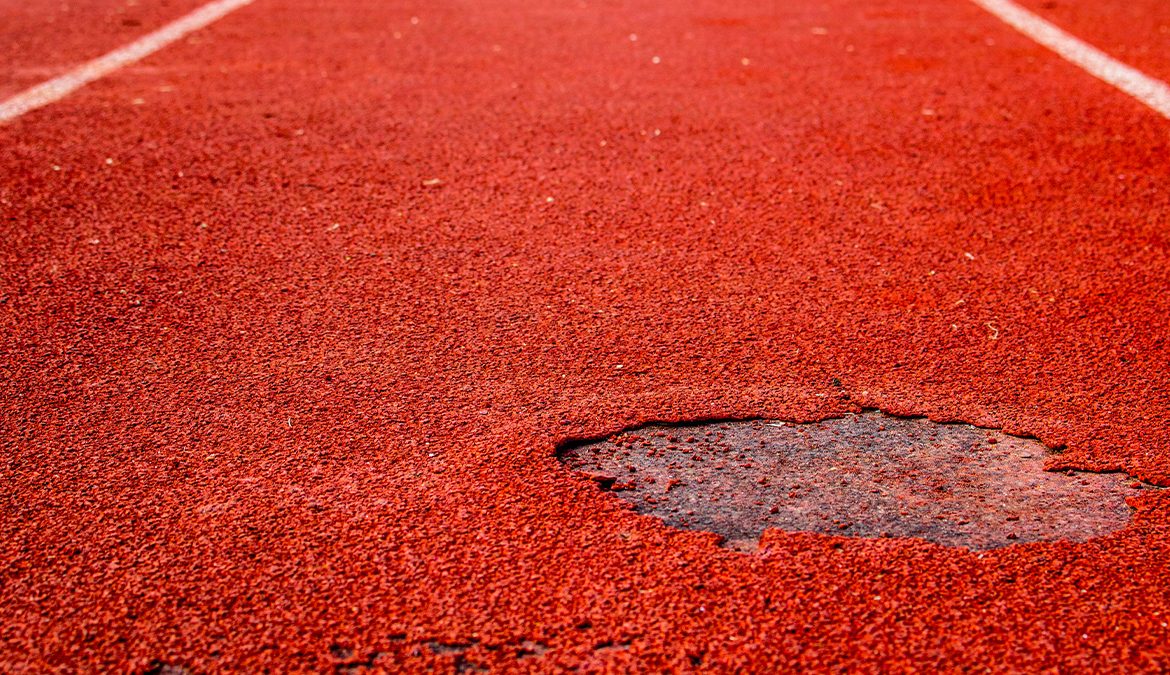
Running tracks are engineered performance surfaces, but they don’t stay that way on their own. Dirt, organic growth, rubber abrasion, and environmental exposure slowly change how a track drains, grips, and responds under load. Maintenance machines are tools that slow this degradation and, when used correctly, extend a track’s usable life by years.
This guide explains how maintenance machinery supports performance, safety, and lifespan; how different machine types are used day-to-day versus seasonally; and how facilities decide between in-house maintenance and outsourced services.
Why Maintenance Machines Matter for Track Performance and Safety
Track maintenance is not cosmetic. It directly affects athlete safety, compliance with performance standards, and long-term surface durability. As contaminants build up, surfaces become slippery when wet, drainage slows, and wear accelerates in high-use areas.
Maintenance machines are designed to preserve the core characteristics that tracks are built for:
- Consistent traction and grip
- Predictable force reduction
- Proper surface drainage
- Uniform texture across lanes
Without the right machines, maintenance becomes reactive. Crews respond to visible issues such as slick patches or discoloration rather than addressing the root causes. Well-equipped programs use machinery to continuously control surface condition, reducing risk and long-term costs.
Cleaning, Sweeping, and Washing Equipment
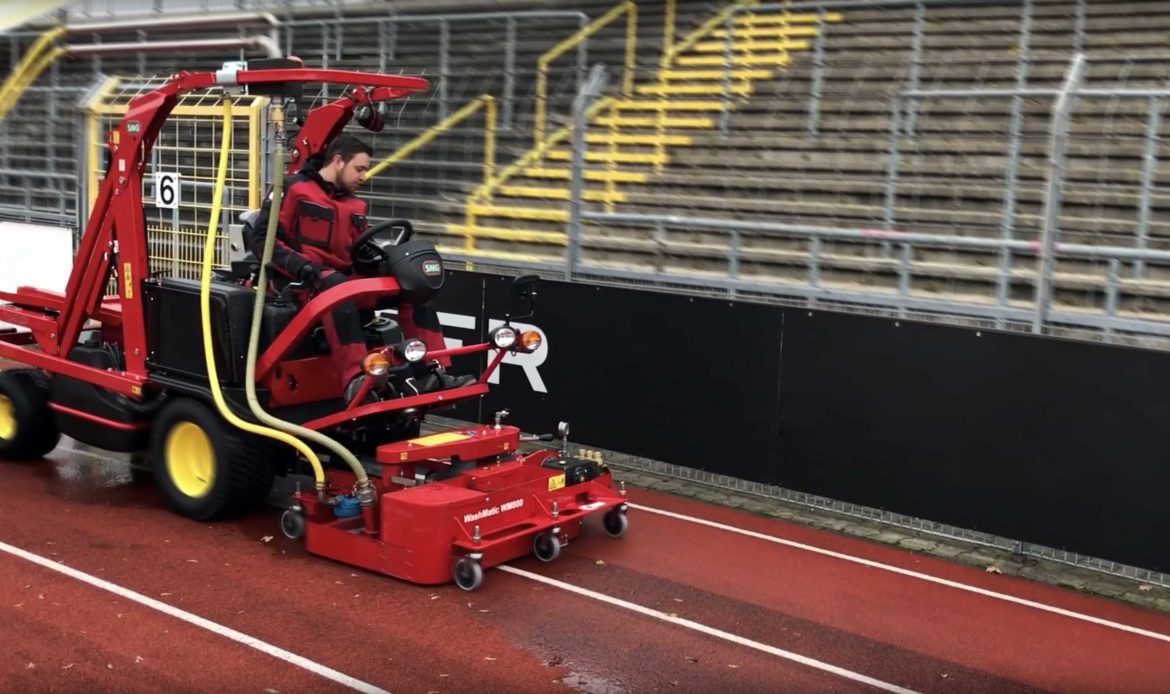
Routine cleaning machines form the foundation of any track maintenance program. Dust, sand, leaves, rubber particles, and other airborne debris constantly settle on track surfaces. If left untreated, these materials migrate into the surface texture and restrict drainage.
Purpose-built track cleaning machines typically combine:
- Mechanical sweeping to remove loose debris
- Controlled brushing to loosen surface particles
- Vacuum or low-pressure washing to extract contamination
Unlike generic street sweepers or pressure washers, track-specific equipment is designed to clean without damaging the surface or altering its texture.
In practice, these machines are used:
- Weekly or bi-weekly during peak seasons
- After storms or high-traffic events
- Ahead of competitions or inspections
Consistent cleaning reduces the need for aggressive corrective work later and helps maintain uniform performance across the entire oval.
Algae, Moss, and Contamination Removal
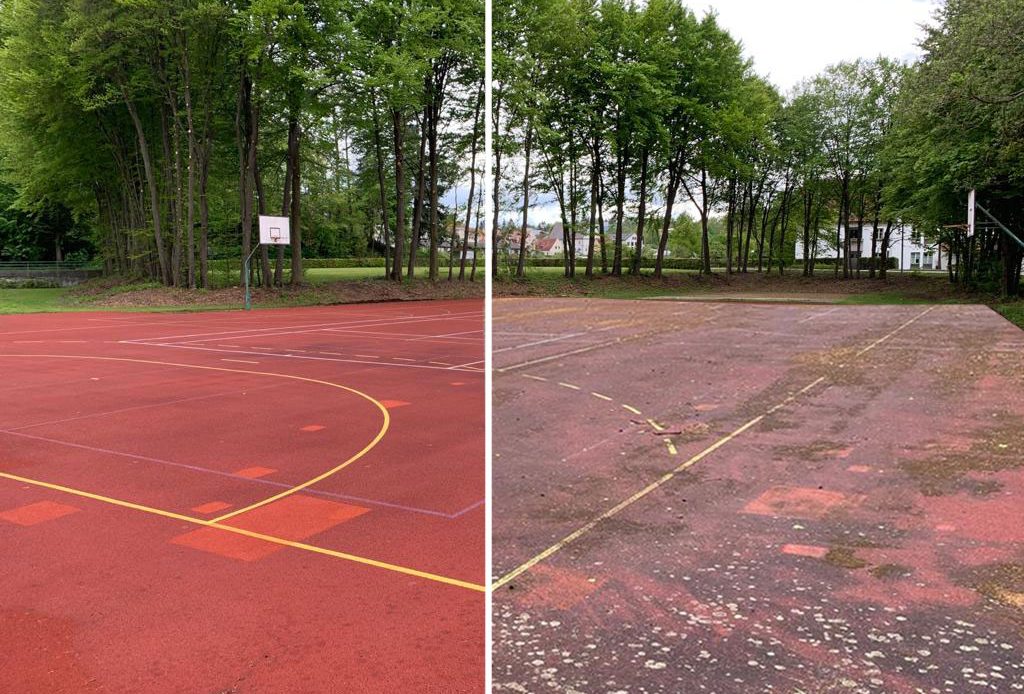
In shaded, damp, or poorly drained areas, running tracks are prone to algae, moss, and biofilm growth. These contaminants are more than an appearance issue — they significantly reduce traction and increase slip risk, especially in wet conditions.
Specialized maintenance machines address this problem by:
- Mechanically loosening organic growth
- Extracting contamination from surface texture
- Allowing controlled application of cleaning treatments where required
This controlled approach is critical. High-pressure washing can damage synthetic track systems the moment it’s misused. Purpose-built machines remove growth while preserving the integrity of the surface.
These machines are most often deployed:
- In early spring and late fall
- On north-facing curves and shaded straights
- Around drainage edges and transitions
Facilities that neglect organic growth often see minor traction issues turn into safety concerns, making this category of machinery as much about risk management as surface care.
Daily Maintenance vs. Periodic Deep Cleaning
Successful track programs separate routine maintenance from deep restorative work, and the machines used for each serve very different purposes.
Daily or routine maintenance equipment is designed for:
- Light debris removal
- Surface sweeping
- Fast turnaround between events
These machines prioritize speed, ease of use, and minimal setup. They are often operated by in-house staff and used frequently with relatively low surface impact.
Periodic deep-cleaning machines are used less often, but with much greater effect.
They address:
- Embedded contaminants
- Compacted surface texture
- Drainage performance issues
Deep cleaning is typically performed annually or biannually and often requires higher extraction capacity and experienced operators. Facilities that rely only on routine cleaning often experience a gradual performance decline, while those that schedule periodic deep cleaning maintain track quality far longer.
In-House Maintenance vs Outsourced Services
A key operational decision is whether maintenance is handled internally or outsourced to specialists.
In-house maintenance programs often make sense when:
- Facilities operate year-round
- Staff are available and trained
- Maintenance needs are predictable
- Budgets favor capital investment over service fees
These programs usually focus on routine cleaning and light surface care, with deep interventions contracted out periodically.
Outsourced maintenance services are more common when:
- Facilities manage only one or two tracks
- Staff resources are limited
- Deep cleaning or restoration is required
- Certification or inspection deadlines are approaching
From a contractor’s perspective, maintenance machines support recurring revenue and long-term client relationships. From a facility’s perspective, they determine how much control exists over surface condition.
How Maintenance Machines Fit Into the Track Lifecycle
Maintenance equipment sits between installation and resurfacing. While it doesn’t create the surface, it determines how long that surface performs as intended.
Within a complete track machinery ecosystem, maintenance machines work alongside:
- Installation and resurfacing equipment
- Inspection and testing tools
- Repair and patching systems
Facilities that invest in proper maintenance often delay resurfacing by years. Those that don’t typically face premature renewal costs, regardless of how well the track was originally installed.

Common Problems Caused by Inadequate Maintenance Equipment
Many issues attributed to “aging tracks” are actually maintenance failures.
Common problems include:
- Slippery lanes caused by untreated algae buildup
- Reduced drainage from the clogged surface texture
- Accelerated wear due to abrasive debris
- Uneven performance across lanes
These issues are rarely solved with cosmetic fixes. They require machines designed to clean, extract, and restore the surface correctly.
Maintenance Machines Protect Track Investments
Running tracks represent significant investments, but their lifespan is largely determined after installation. Maintenance machines are the tools that protect that investment by preserving performance, safety, and compliance year after year.
For facility operators, the right machines reduce risk and extend resurfacing cycles. For contractors, they enable recurring service work and predictable long-term value. In both cases, track maintenance machinery is not optional — it’s the difference between managing a surface and reacting to its failure.