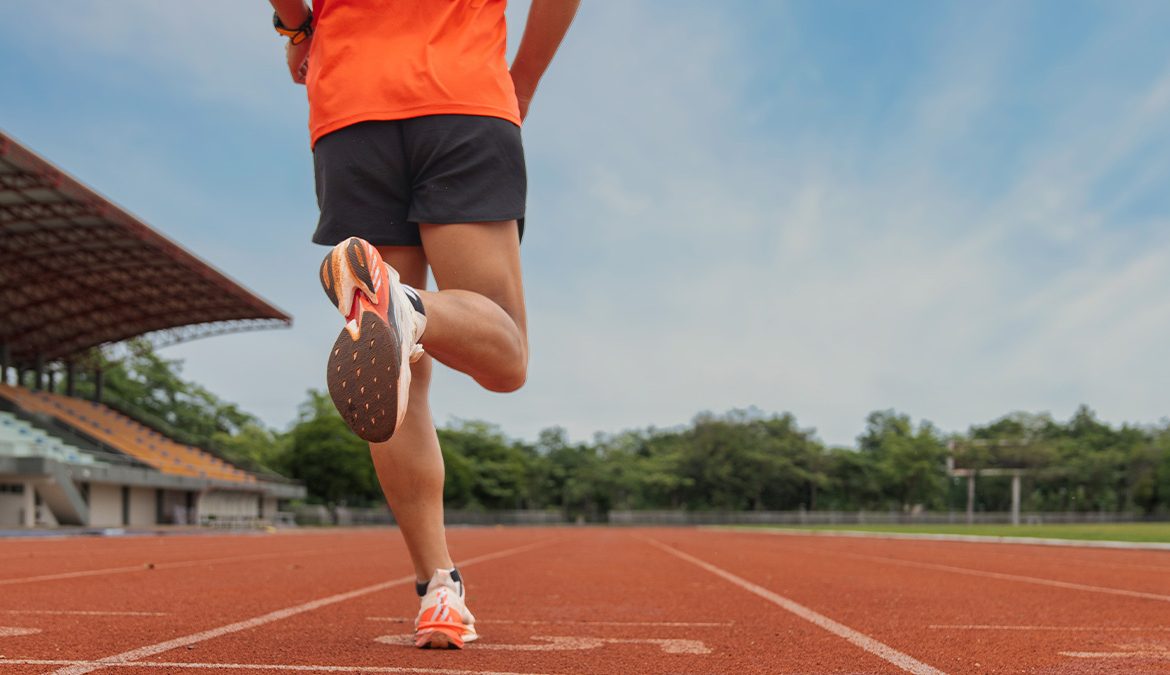
The defining characteristics of a running track — speed, grip, force reduction, durability, and visual consistency — are created during installation and resurfacing.
While base preparation establishes geometry and stability, the machines used to mix, pave, coat, and mark the surface translate a prepared base into a finished performance system.
This guide focuses on the machines used to install and resurface synthetic running tracks, explaining how each category fits into real contractor workflows.
You’ll learn what these machines do on the jobsite, how they affect performance and longevity, and what to look for when selecting equipment for new construction versus renewal projects.
Mixing Equipment: Where Surface Consistency Begins
Every elastic running track system relies on accurately mixed materials. Polyurethane binders, rubber granules, mineral fillers, and coatings must be combined in precise ratios to achieve consistent elasticity, strength, and appearance across the entire oval.
Mixing equipment is used at the point where raw materials become a performance surface. These machines produce homogeneous mixtures that can be applied reliably without separation, dry spots, or inconsistent cure behavior.
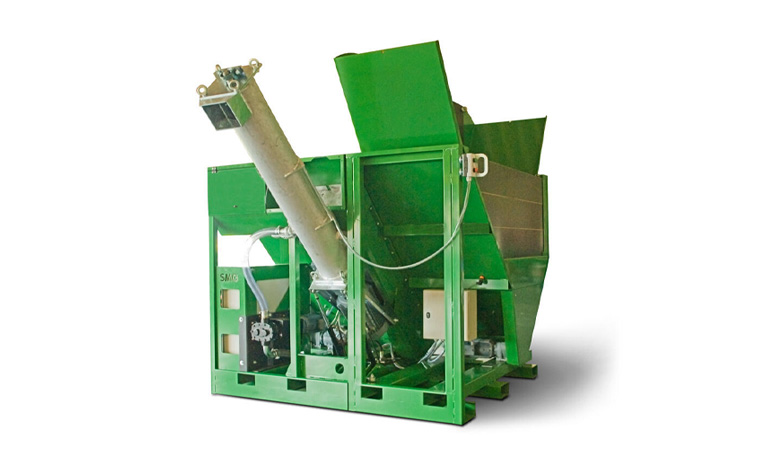
On large track installations, continuous mixing systems are commonly used. These machines are designed to process high volumes of binder and granulate simultaneously, delivering a steady output that feeds paving machines without interruption. Their value lies in consistency and throughput: material ratios remain stable even as production rates increase.
For smaller projects, repair work, or staged resurfacing, batch mixing systems are often preferred. These machines enable contractors to quickly mix controlled quantities while maintaining process visibility. Batch mixers are especially useful when handling multiple material types or feeding smaller pavers into finishing equipment.
From a contractor’s perspective, mixing equipment directly affects:
- Elasticity and force reduction consistency
- Color uniformity across the lane
- Adhesion between layers
- Installation speed and crew coordination
Poor mixing is one of the fastest ways to compromise a track system, which is why experienced installers treat this category as foundational rather than optional.
Shaping the Running Surface with Paving and Screeding Machines
Once the materials are mixed, paving and screeding machines take over to form the running surface. These machines spread elastic layers to precise thicknesses while following the geometry of straight, curved, and transition sections.
Modern track pavers are designed to work across variable widths, allowing installers to adapt to different track layouts, school facilities, and competition venues. Curve-control systems help maintain accuracy through bends, while adjustable screeds and compaction settings reduce the need for manual correction.
Paving and screeding machines are typically used to:
- Apply elastic layers evenly across the full track width
- Maintain consistent thickness from lane to lane
- Handle curves, transitions, and radii smoothly
- Reduce hand finishing at seams and joints
From an operational standpoint, paving equipment sits at the intersection of productivity and finish quality. Machines that allow installers to adjust screed angle, layer thickness, and compaction behavior on the fly help crews respond to changing conditions without stopping production.
For contractors, the right paving equipment:
- Reduces labor intensity on large projects
- Improves surface uniformity
- Lowers the risk of visible defects
- Shortens overall installation timelines
This category is often the most visible indicator of a contractor’s technical capability in the track market.
Spray Coating and Finishing Equipment for Defining Texture, Grip, and Wear
Spray coating machines are used to apply structured coatings, seal layers, and surface textures that define how a track feels underfoot. These machines play a particularly important role in resurfacing and renewal projects, where new coatings must integrate cleanly with existing layers.
Spray systems are used for:
- Applying structured spray coatings for grip and texture
- Sealing elastic layers before marking
- Renewing worn track surfaces without full replacement
Professional spray equipment allows operators to precisely control material flow, spray pattern, and layer thickness. This level of control is critical when working with viscous materials or coarse aggregates, where uneven application can quickly lead to performance complaints.
Well-designed spray systems:
- Minimize overspray and material waste
- Produce a consistent texture across the track
- Reduce manual touch-up work
- Improve visual uniformity on resurfaced tracks
In resurfacing projects, spray equipment often determines whether the finished surface feels like a short-term fix or a genuine performance upgrade.
Line Marking Machines: Precision That Determines Compliance
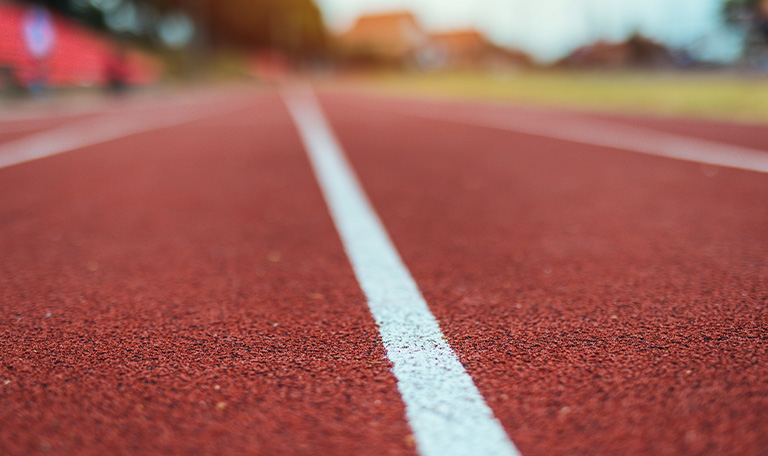
Line marking is one of the final steps in track installation and resurfacing, but it is also one of the most scrutinized. Lane markings, start lines, exchange zones, and event indicators must meet strict dimensional and alignment requirements.
Dedicated line marking machines are designed to apply precise markings without overspray or feathering, even on textured surfaces. Portable, airless systems are especially valuable for professional crews because they combine accuracy with ease of transport between job sites.
Line marking machines are used to:
- Apply consistent line widths across straights and curves
- Maintain sharp edges without bleeding
- Work efficiently on large ovals and straightaways
Errors at this stage can delay inspection, certification, or handoff, making reliable marking equipment a critical part of the installation and resurfacing workflow.
Installation vs. Resurfacing: Same Categories, Different Priorities
While installation and resurfacing rely on the same core machine categories, the priorities shift depending on the scope of work.
New installations typically emphasize:
- High-output continuous mixing
- Paving efficiency across the full oval
- Consistent layer build-up from start to finish
Resurfacing and renewal projects focus more on:
- Precise material control
- Surface blending and compatibility
- Minimal disruption to existing layers
Contractors who handle both scopes benefit from machines that can adapt between full builds and renewal work without requiring separate fleets.
Why Installation & Resurfacing Machines Define Contractor Capability
Installation and resurfacing machines ultimately determine what types of track projects a contractor can pursue. These machines influence production rates, finish quality, and compliance with performance standards — all of which affect competitiveness in bidding and long-term reputation.
For contractors looking to move beyond basic repairs and into full track construction or certified resurfacing, investing in the right installation equipment is often the turning point.
These machines don’t just complete the job — they set the ceiling for what’s possible.