When facility planners hear the words “fabric” or “membrane,” they often picture temporary event tents or short-lived installations. That assumption is costing many projects both performance and budget. Modern tensile architecture — championed by specialists like SMC2 — has evolved into a proven, high-performance building solution that sports and recreation facility developers across North America are increasingly turning to for permanent structures.
A Design That Adapts to Any Project
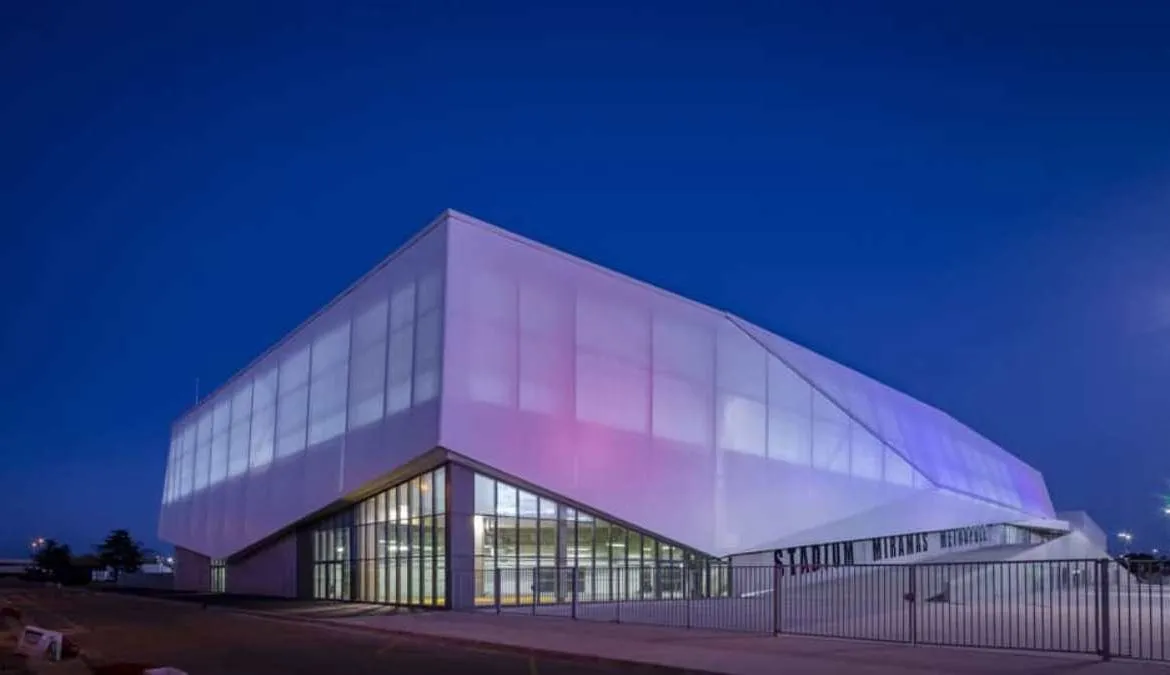
One of the most compelling advantages of fabric structures is their geometric freedom. Where concrete and steel impose rigid constraints, textile membranes follow complex curves and bold forms, giving each facility a distinctive visual identity while serving a clear functional purpose.
For sports facility planners, this translates into real benefits. SMC2 tensile roofing systems can span very large distances without intermediate support columns — a critical advantage for multi-sport complexes, athletics halls, and covered outdoor courts where unobstructed sightlines and playing surfaces matter. Whether covering a community basketball facility, a covered skating rink, or a full athletics complex, the membrane is engineered to the structure’s purpose rather than the other way around.
Built-In Climate Performance
A tensile membrane isn’t just a roof — it’s an active building envelope. Facility planners evaluating long-term operating costs should pay close attention to three performance characteristics:
- Natural light diffusion: The membrane’s translucency spreads daylight evenly throughout the facility, significantly reducing daytime artificial lighting requirements and associated energy costs.
- Solar heat management: Textile membranes reflect a substantial portion of incoming solar radiation, keeping interior temperatures comfortable even during peak summer conditions — without heavy HVAC loads.
- Urban heat island mitigation: The reflective white surface limits heat absorption, a growing consideration for municipalities and institutions with sustainability mandates.
SMC2 builds all three of these performance characteristics into every project from the outset, rather than treating them as optional upgrades.
Durability That Matches Traditional Construction
The longevity question is where tensile architecture most often surprises first-time specifiers. Purpose-engineered membranes resist UV degradation, mold, and pollution, with service lives commonly reaching 20 to 30 years or more depending on specification.
Structurally, SMC2 systems are engineered to handle the real demands of North American climates — heavy snow loads, high winds, and freeze-thaw cycles. Combined with double inverse curvature geometry, membranes remain correctly tensioned across decades of use without deformation. The track record at the largest scale confirms the material’s credibility: tensile roof solutions are now standard on major stadiums worldwide, bringing that same engineering rigour to facilities of every size.
Is a Tensile Structure Right for Your Facility Project?
Tensile architecture is worth serious consideration for any facility planner looking to balance construction speed, long-term durability, energy efficiency, and architectural impact — particularly for covered courts, sports complexes, athletics facilities, and multi-use recreational structures.
Explore SMC2’s tensile structure portfolio and project references: smc2-construction.us
Get an instant cost estimate for your sports dome or tensile structure project: Use the Sports Structure Cost Calculator →