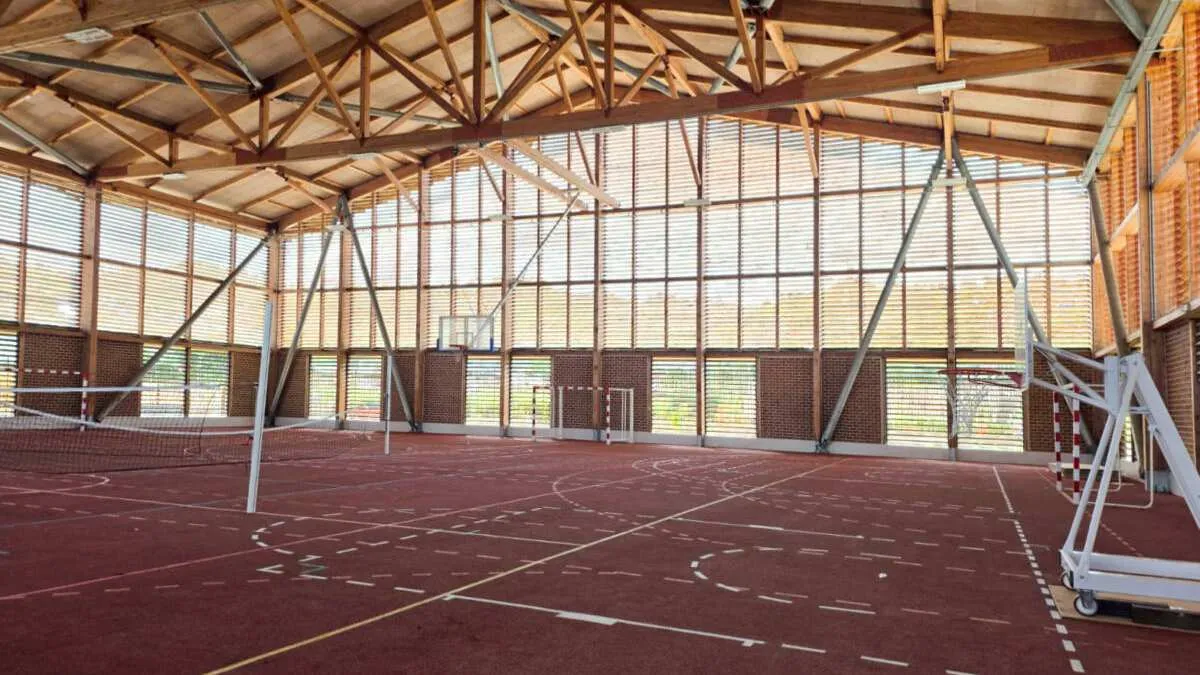
Material selection is one of the most important decisions in sports facility construction. It directly impacts performance, cost, construction timelines, and long-term sustainability. While steel and concrete have traditionally been the default, companies like SMC2 are increasingly demonstrating why wood sports facility construction is a more strategic choice for many projects.
With decades of experience delivering sports structures, SMC2 applies engineered timber systems to meet modern performance standards while improving efficiency and environmental outcomes.
Is Wood a Good Material for Sports Facility Construction?
Wood is a strong and sustainable material for sports facility construction, offering high structural performance, faster construction timelines, and lower environmental impact compared to traditional materials like steel and concrete.
A Material Aligned with Modern Sports Facility Construction Priorities
Today’s projects are no longer driven by upfront cost alone. Project owners and planners must balance:
- Construction cost and lifecycle value
- Environmental impact
- Build timelines
- User experience
Engineered wood aligns with all of these priorities. As a renewable material, it reduces environmental impact while maintaining structural strength. When properly designed, timber systems can perform at the same level as traditional materials.
SMC2 integrates these considerations early in the design phase, ensuring that material selection supports both performance and long-term cost efficiency.
👉 Key takeaway: Wood supports both sustainability goals and long-term project value without compromising performance.
Structural Performance of Wood in Sports Facilities
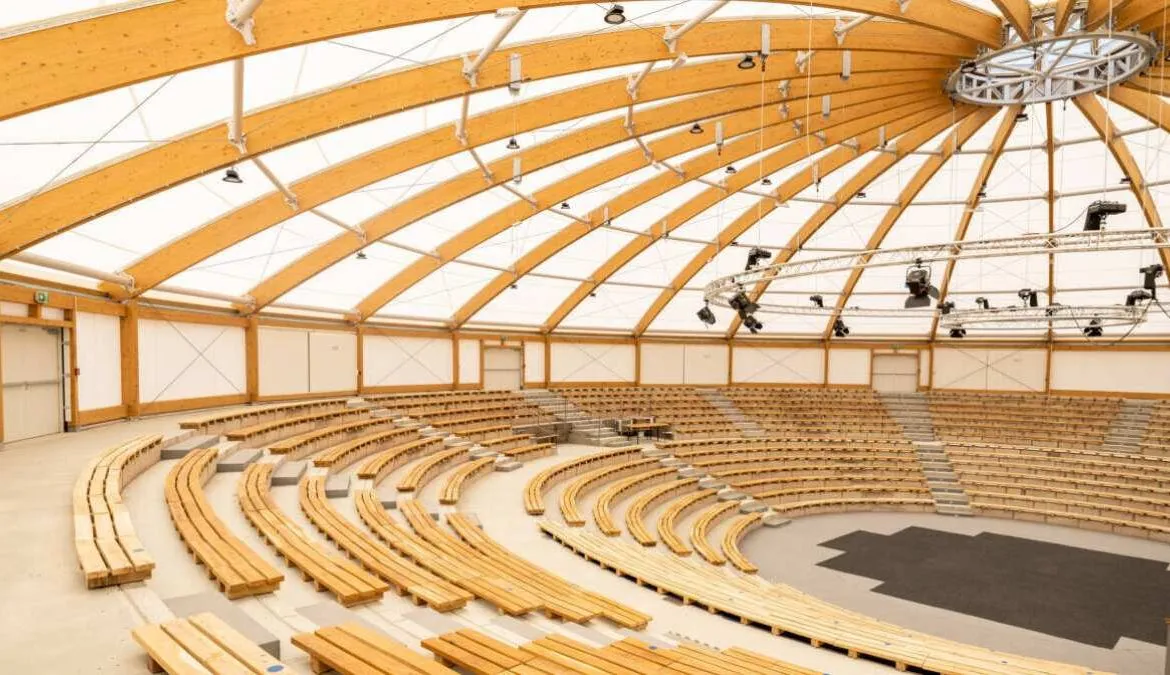
A common misconception is that wood cannot match steel in structural capacity. In reality, engineered timber systems such as glulam are specifically designed for large-span sports structures.
This enables:
- Wide, column-free playing areas
- High load-bearing capacity
- Long-term structural durability
SMC2 uses these systems to design indoor and covered sports facilities that meet modern technical and operational requirements.
👉 Key takeaway: Engineered wood can deliver the same structural performance as traditional materials in sports facility construction.
Faster Construction and Lower Project Risk
Construction speed is a critical factor in sports facility projects, especially for schools and municipalities working with fixed timelines.
Wood construction benefits from prefabrication, which allows:
- Faster on-site assembly
- Reduced labor requirements
- Greater construction accuracy
By integrating design, engineering, and manufacturing, SMC2 helps reduce delays and improve predictability across the construction process.
👉 Key takeaway: Wood construction can significantly reduce build time and improve project certainty.
Environmental Benefits of Wood Sports Facility Construction
Sustainability is becoming a key requirement in sports facility development.
Wood stands out because:
- It is renewable and sourced from managed forests
- It stores carbon rather than emitting it
- It requires less energy to produce than steel or concrete
This makes timber construction a strong option for projects aiming to reduce their environmental footprint.
👉 Key takeaway: Wood is one of the most environmentally efficient materials used in sports facility construction.
How Wood Improves User Experience in Sports Facilities
Material choice also affects how a facility looks and feels.
Wood structures provide:
- Natural aesthetics that enhance visual appeal
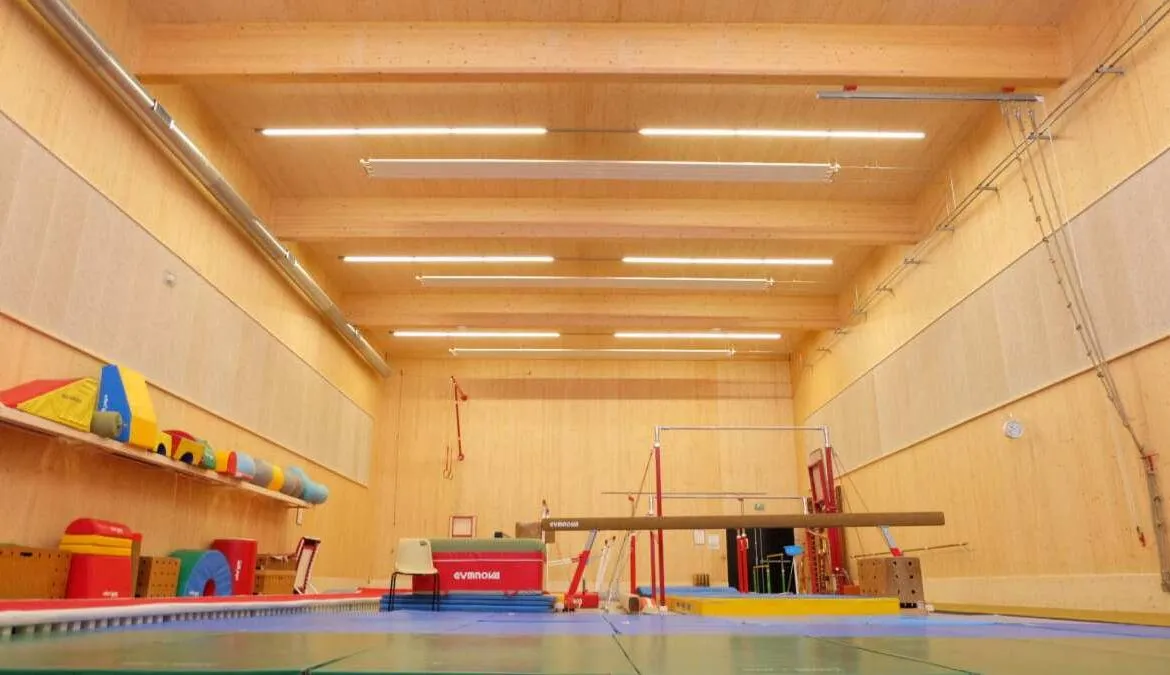
- Improved acoustics compared to steel structures
- A more comfortable indoor environment
These qualities are particularly valuable for schools and community sports facilities, where user experience is a key factor.
👉 Key takeaway: Wood enhances both the functionality and experience of sports facilities.
Is Wood More Cost-Effective for Sports Facilities?
Wood can reduce overall project costs by lowering construction time, minimizing foundation requirements, and improving long-term operational efficiency.
While upfront costs may vary, wood construction often delivers better value over the lifecycle of the facility through:
- Reduced foundation costs (lighter structure)
- Lower maintenance requirements
- Potential energy efficiency benefits
SMC2 approaches each project with a lifecycle perspective, helping align material choices with both short-term budgets and long-term ROI.
👉 Key takeaway: Wood construction often leads to lower total cost of ownership, even if upfront costs are similar.
When Is Wood the Right Choice for a Sports Facility?
Wood is typically the best choice when:
- Fast construction timelines are important
- Sustainability is a project priority
- The facility is covered or semi-enclosed
- Aesthetic quality matters (schools, community projects)
This makes it particularly suitable for indoor sports facilities, covered courts, and multi-use structures.
👉 Key takeaway: Wood is ideal for projects balancing performance, speed, and sustainability.
Final Takeaway
Wood is no longer just an alternative—it is becoming a preferred solution in modern sports facility construction, combining performance, efficiency, and sustainability.
Key advantages include:
- Strong structural performance for large-span facilities
- Faster construction timelines through prefabrication
- Lower environmental impact compared to steel and concrete
- Improved user experience and natural aesthetics
- Better long-term cost efficiency and lifecycle value
Through its expertise in engineered timber systems, SMC2 demonstrates how wood can meet modern project demands while delivering long-term value for both contractors and facility owners.
Learn more about wooden sports structures on the SMC2 website: smc2-construction.us or get in touch with their representatives via their business profile page.