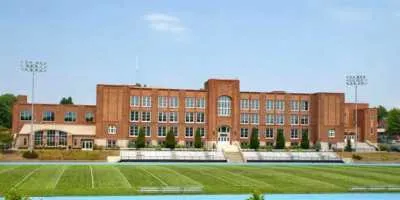

When planning a sports facility, most attention goes to the surface—turf, courts, or track systems. But what sits underneath plays an equally critical role in long-term performance, maintenance costs, and durability.
To better understand how base systems impact sports facility outcomes, we spoke with experts from UltraBase Systems, a manufacturer specializing in modular interlocking base systems for fields and courts.
In this conversation, we explore the limitations of traditional concrete and stone bases, how weather affects performance over time, and what differentiates modular systems from an engineering and lifecycle perspective.
Watch the full interview below if you prefer watching or listening instead of reading.
Why Traditional Base Systems Create Long-Term Challenges
Most sports fields and courts are built on concrete, asphalt, or compacted stone bases. While these systems are widely used, they often introduce issues over time—particularly as environmental conditions change.
As Kelly Waldrop, Director at UltraBase Systems, puts it:
“I’ve always heard there’s two types of concrete—cracked concrete and concrete that’s going to crack.”
Cracking is not just a cosmetic issue. It typically signals movement in the base, which can lead to:
- Uneven playing surfaces
- Structural instability in certain areas
- Water infiltration that worsens over time
Once cracks form, they rarely stop. Even after resurfacing, the underlying issue often returns, leading to repeated maintenance cycles.
How Weather and Drainage Affect Field Performance
Climate plays a major role in how base systems perform—especially in regions with seasonal variation. According to Nancy Alexander, Senior Sales Manager at UltraBase Systems:
“In climates with freeze and thaw cycles… that constant changing of conditions can definitely affect the traditional way of installing a concrete court.”
Temperature fluctuations, moisture, and freeze-thaw cycles can all accelerate degradation in rigid base systems. Drainage is another critical factor. Traditional hard bases typically rely on surface-level drainage systems, which can be limiting.
Nancy explains:
“In climates with freeze and thaw cycles… that constant changing of conditions can definitely affect the traditional way of installing a concrete court.”
Poor drainage can lead to:
- Water buildup beneath the surface
- Base erosion
- Reduced playability after rain
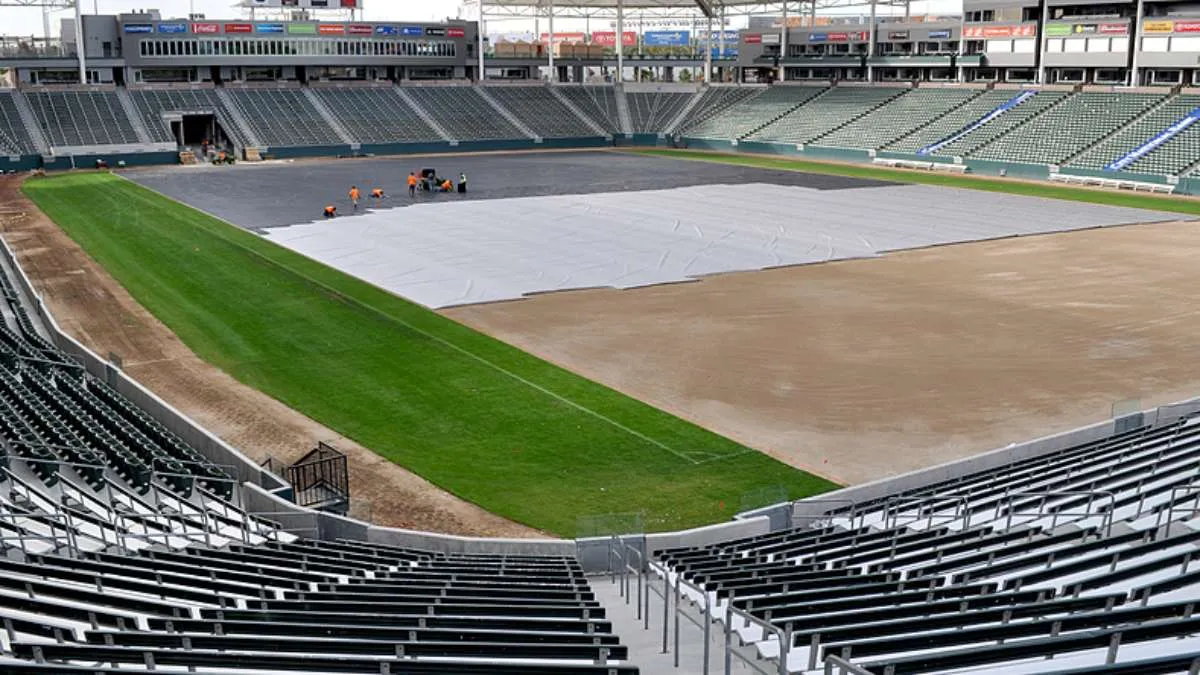
What Makes Modular Base Systems Different
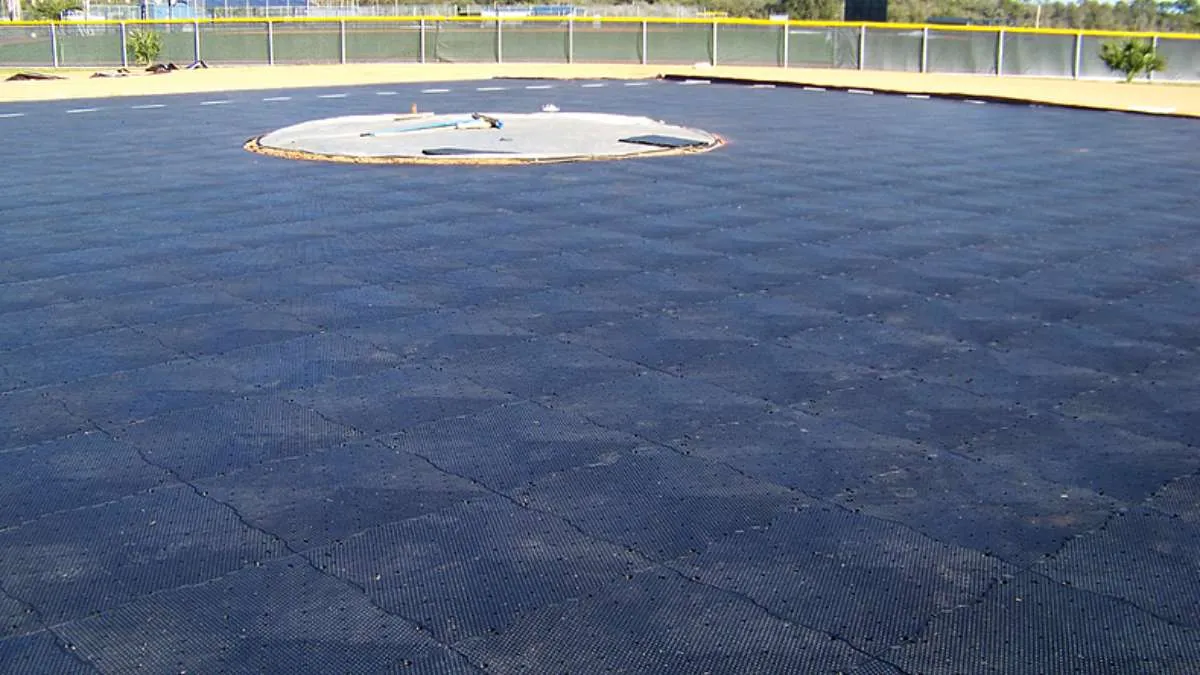
From an engineering standpoint, modular base systems are designed to address the limitations of rigid foundations.
Chad Larsen, General Manager at UltraBase Systems, highlights four key differences:
- Drainage: Allows vertical water flow through the system
- Airflow: Helps keep surfaces dry and usable
- Structural stability: Interlocking panels distribute loads effectively
- Flexibility: Accommodates expansion and contraction without cracking
“Our system allows for stability and structural rigidity while still allowing for horizontal movement… which prevents cracking.”
This combination is particularly important in outdoor applications, where temperature and moisture constantly affect the structure.
Performance Under Load and Real-World Use
Sports facilities must handle continuous foot traffic and, in some cases, heavy equipment loads.
Unlike traditional bases, modular systems distribute load across interlocking panels and supporting layers, reducing deformation over time.
Chad explains: “It creates a much more stable base system that will deform less under load.”
This has practical implications for both performance and maintenance, especially in high-use facilities.
Long-Term Durability: What Happens After 10–20 Years?
One of the most important questions for project owners is how base systems perform over time.
Nancy shared a real-world example:
“He pulled the turf up… and said the panels were in excellent condition, as if they were just laid—and they had been there for 20 years.”
Unlike traditional bases, which can degrade as materials shift or break down, modular systems are designed to maintain their structure over time.
Another key advantage appears at the end of a turf lifecycle.
Kelly notes:
“At turf end of life… the new turf can go right back on it… we didn’t have to do any work except lay the turf and move on.”
This reduces:
- Renovation time
- Labor costs
- Disruption to facility operations
Cost Considerations: More Than Just Materials
When comparing base systems, focusing only on material cost can be misleading.
Nancy explains: “It’s not just about the cost of the materials… it’s the overall cost—labor, time, logistics.”
Traditional systems often involve:
- Heavy equipment
- Longer installation timelines
- Higher labor requirements
- Site disruption
In contrast, modular systems reduce installation complexity.
A recent time trial highlighted this difference:
- UltraBase system: ~2.5 hours
- Traditional base: ~6.5 hours
- Savings: ~12 labor hours
This has a direct impact on project cost and contractor efficiency.
“Time is money… if they can get two or three times as many jobs done in the same period, it’s an obvious win.”
Where Modular Base Systems Make the Most Sense
While modular systems can be used in a wide range of applications, they are particularly valuable in projects with logistical or space constraints.
Examples include:
- Urban environments (e.g., rooftops in cities like New York or Chicago)
- Facilities with limited access for heavy equipment
- Projects requiring fast installation timelines
- Multi-use or flexible spaces
Nancy highlights rooftop applications as a clear example:
“How do you haul rock up there? Whereas you can easily get the panels up… less mess, less cost.”
Key Takeaways
Traditional base systems such as concrete and compacted stone often develop issues over time, including cracking, movement, and structural degradation. Weather conditions—especially freeze-thaw cycles and heavy rainfall—can accelerate these problems, particularly when drainage is limited.
Modular base systems offer a different approach by improving drainage, allowing controlled flexibility, and maintaining structural stability under varying conditions. This leads to better long-term durability, reducing the need for frequent repairs or full base replacement.
In addition, faster and more efficient installation processes can significantly lower overall project costs, making modular systems a practical and cost-effective option for both contractors and facility owners.
Full Interview Transcript
The following transcript has been lightly edited for clarity, readability, and flow. Minor adjustments have been made to remove repetitions and filler words, while preserving the original meaning and intent of the conversation.
Antti:
Okay, thank you for taking the time to speak with me today. Today we’ll be talking about base systems for athletic facilities. The goal of this conversation is to better understand the role of base systems in sports facility construction and how different approaches perform over time. I’d like to touch on a few areas, especially including some of the challenges with traditional bases, how weather affects long-term performance, what makes the UltraBase system different from an engineering perspective, and what you’ve seen in real installations years after construction. At the end, we’ll also briefly discuss costs and where this type of system tends to make the most sense in sports projects.
So we have the pleasure of being accompanied by subject matter experts from UltraBase Systems, a company specialized in modular interlocking base systems for fields and courts.
Introductions
Antti:
Let’s do a quick round of introductions. First, we have Kelly Waldrop. Hi Kelly.
Kelly:
Hey, how you doing, Antti? It’s great to be here.
Antti:
Can you briefly let us know who you are and what you do at UltraBase?
Kelly:
Yeah, my name is Kelly Waldrop. I’m the Director of UltraBase and I’ve been with the company just about two years. I’ve gained a lot of experience over that time, and we’ve got a great team that helps educate me and has been with UltraBase for a long time.
Antti:
And then we have Nancy Alexander. Hi Nancy.
Nancy:
Hi there, Antti. Good morning. My name is Nancy. I’ve been with the company about six years. I started under the founder, Dave Barlow, who was basically my mentor. Everything I’ve learned came from him. I’m the Senior Sales Manager, and I’ll do my best to answer any questions you throw at me.
Antti:
And last but not least, Chad Larsen. Hi Chad.
Chad:
Hello, great to be here. Appreciate you having me. My name is Chad Larsen. I’m the General Manager of UltraBase Systems. I have about six years of experience in the surfacing industry, including artificial turf and modular interlocking panel systems.
Challenges with Traditional Base Systems
Antti:
Let’s start with traditional concrete bases. From your experience, what problems tend to appear years after installation?
Kelly:
Concrete works in some applications, but over time you can experience issues. I’ve always heard there are two types of concrete: cracked concrete and concrete that’s going to crack. That’s one of the main challenges.
There are also upfront hurdles—permits, restrictions from municipalities or HOAs, higher installation costs, and a messy installation process. It can take longer as well. With UltraBase, we can install with minimal base material, often without permits, and the system is mobile and easy to remove if needed.
Antti:
How do cracks affect the playing surface?
Kelly:
A crack usually means the base has moved. That can make the surface uneven. Water can get into the crack, freeze, expand, and make things worse. Over time, it can wash out the base underneath, which leads to bigger problems.
Antti:
What about resurfacing?
Kelly:
Once a crack starts, it usually doesn’t stop. Even if you resurface, the crack often comes back. It becomes an ongoing issue.
Weather and Drainage Impact
Antti:
Nancy, which weather conditions tend to cause the most damage?
Nancy:
Freeze-thaw cycles are a big factor—especially in regions like the Northeast and Midwest. You can have very hot summers and then heavy snow in winter. That constant change affects traditional concrete installations.
Antti:
What happens when drainage is poor?
Nancy:
With concrete, water has limited drainage paths. With our panels, water flows vertically through the system and into the soil. That’s a major advantage compared to traditional hard surfaces.
Engineering Differences
Antti:
Chad, how does UltraBase differ from traditional systems?
Chad:
There are four key differences: drainage, airflow, structural stability, and flexibility. The system allows expansion and contraction with temperature changes, which prevents cracking and other issues.
Antti:
How does it perform under heavy loads?
Chad:
The interlocking panels combined with a high-strength underlayment create a very stable system. It distributes weight effectively and reduces deformation under load.
Long-Term Performance
Antti:
What have you learned from long-term installations?
Nancy:
I recently spoke with a customer who installed panels 20 years ago. When they removed the turf, the panels were still in excellent condition—like they were just installed.
Antti:
How does that compare to traditional bases?
Nancy:
Traditional materials like crushed rock and sand break down over time. With our panels, that doesn’t happen.
Antti:
What about turf replacement?
Kelly:
That’s one of the biggest advantages. At end-of-life, you can remove the turf and install new turf directly on the panels. There’s no need to rebuild the base, which saves time and money.
Cost Considerations
Antti:
How do costs compare?
Nancy:
It’s not just about material cost. You have to consider labor, equipment, and time. Concrete requires more people, more steps, and curing time. Our system is faster and requires less labor.
Chad:
We did a time trial on a 1,000 sq ft project. UltraBase took about 2.5 hours, compared to 6.5 hours for traditional installation—that’s about 12 labor hours saved.
Best Applications
Antti:
Where does this system make the most sense?
Nancy:
Urban environments are a great example—like rooftops in cities. It’s much easier to install panels than transport heavy materials like rock or concrete.
Closing
Antti:
That’s all the questions I have. Thank you for the insightful discussion.
Nancy:
Thank you, Antti. It was a pleasure.
Kelly:
Thank you.
Chad:
Appreciate it.