The construction sector now faces two pressures at once: it must shrink its own environmental footprint while producing buildings that can cope with a warming world. For SMC2, that twin objective has shaped the way the company designs its sporting, educational, and leisure venues for many years.
A Different Way of Building for What Lies Ahead
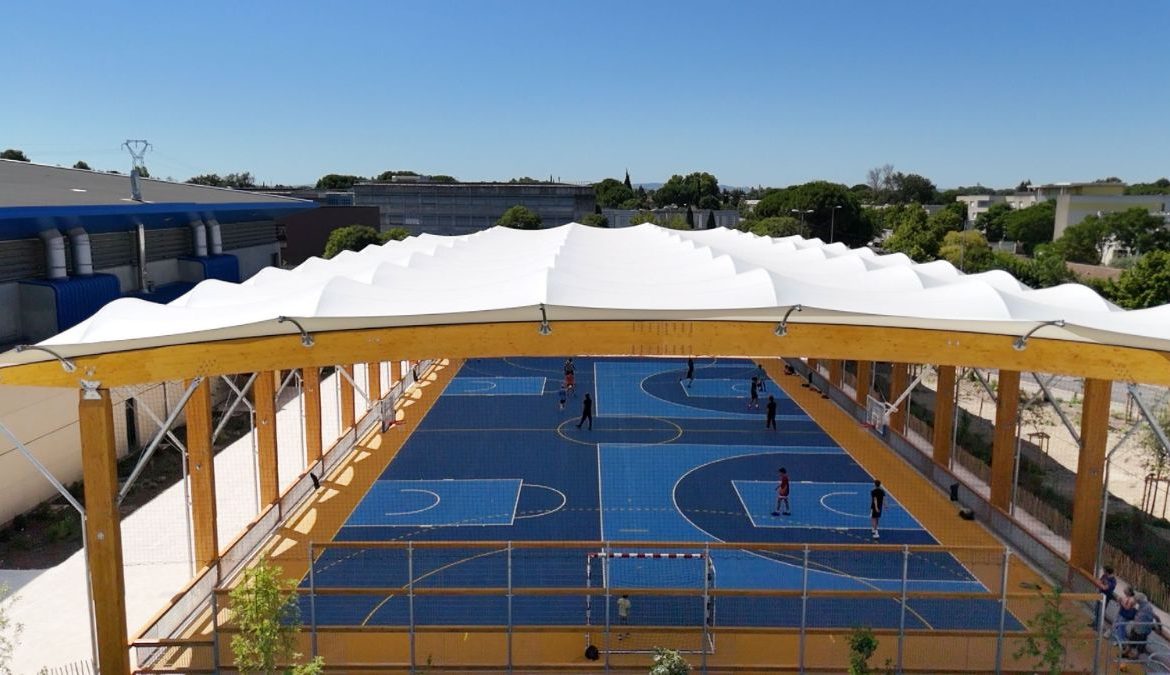
SMC2’s approach pairs timber framing with tensioned textile membranes, a combination built to deliver durability without sacrificing environmental performance or the comfort of the people using the space. The aim reaches past carbon reduction alone. These buildings are meant to be genuinely pleasant to occupy, to hold up under extreme heat, and to keep serving their communities for decades rather than years.
Timber Framing and a Lighter Carbon Load
Where a building’s carbon footprint is concerned, the choice of materials does much of the heavy lifting. SMC2 relies on wood as its main structural element, and wood carries a distinct advantage: as a renewable material, it locks away the carbon that trees absorb while growing. That stored carbon meaningfully lowers the emissions embodied in the finished structure.
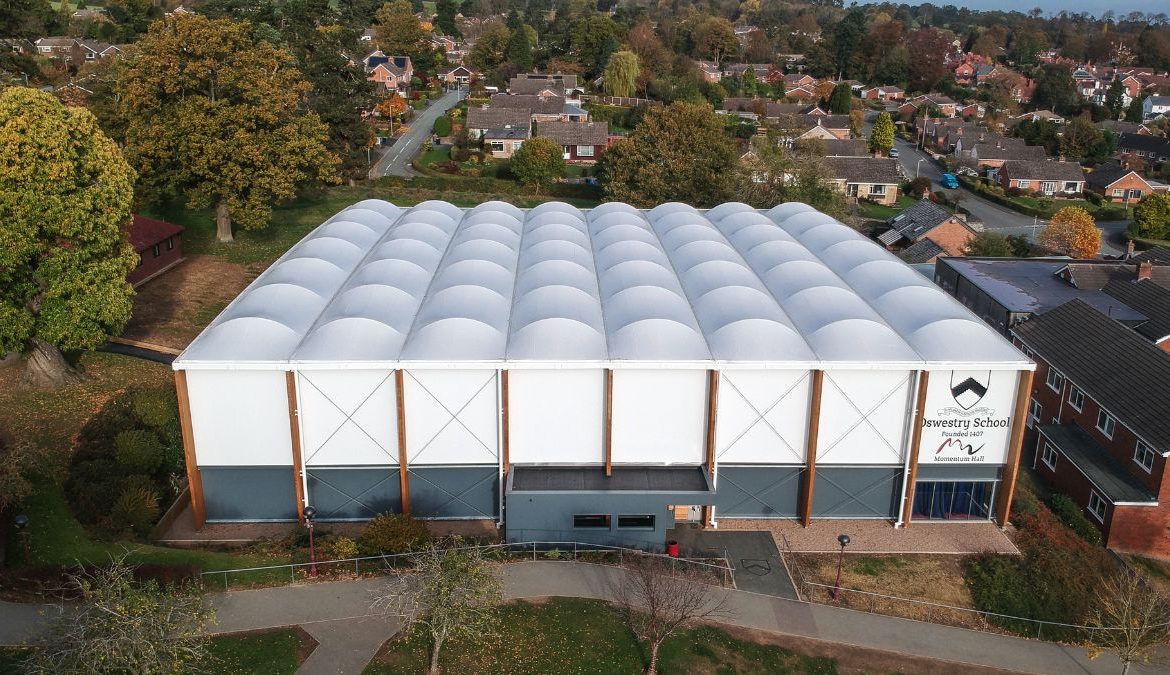
The point is well demonstrated by a study of a gymnasium in Oswestry, in the United Kingdom. When a steel-framed version was measured against one built from glued-laminated timber, the construction-phase footprint fell from 730 tonnes of CO₂ equivalent to only 148 — a difference of 538 tonnes. To put that figure in perspective, it equates to leaving roughly 1,353 barrels of oil untouched.
Textile Membranes That Help Keep Cities Cool
Cutting emissions, on its own, is no longer the whole task. Urban areas also have to become more resilient to heat waves that arrive more often than they once did.
Here the textile membrane earns its place. Its surface is highly reflective, bouncing back a large share of incoming solar radiation — the albedo effect — so the building traps far less heat than a dark roof would. Where dark materials soak up solar energy, the membrane largely turns it away.
The membrane brings a second benefit as well: it lets light through. Because daylight filters evenly into the interior, the space feels more comfortable to be in, and less artificial lighting is needed during daytime hours.
What the System Actually Changes in Practice
Set two comparable projects side by side — one using a timber frame with textile roofing, the other steel frame with steel roofing — and the contrast is straightforward. Looking only at the material-production stage (life-cycle phases A1 to A3), the steel building accounts for 45 tonnes of CO₂ equivalent. The timber alternative, by contrast, stores the equivalent of 15 tonnes across its service life.
Both options do the same essential job: sheltering athletes so they can train and compete whatever the season. And if the two genuinely perform the same function, the more environmentally sound choice becomes the obvious one.
Sustainability Across the Whole Life Cycle
Responsible building also means leaving the surrounding environment as intact as possible. SMC2 structures sit on a modest footprint and use foundations matched to each site’s conditions — micropiles or screw piles, depending on what the ground calls for — which keeps excavation and site disturbance to a minimum.
Depending on the setting, the buildings can also carry green façades or form part of wider efforts to return hard urban and school surfaces to permeable ground.
Building less, but building better, has become one of the most reliable routes to cutting the sector’s environmental impact over the long term. Because the infrastructure put up today will define the cities of the coming decades, SMC2 designs its structures to answer environmental demands, user needs, and the broader pressures of a changing climate all at the same time.
Learn More About SMC2
Facility planners can find SMC2 in the Sports Venue Calculator supplier directory, where it’s possible to explore their structures in more detail. For the complete portfolio of past projects and the full product range, the SMC2 website is the place to look.
Weighing up a sports dome, tensile structure, or another type of covered facility? Our free cost calculator returns an instant estimate and puts you in touch with suppliers such as SMC2 who can help turn the plan into a finished build.