
Written By
Ryan Caravalho

Edited By
Antti Rydman
Written By
Ryan Caravalho
Edited By
Antti Rydman
Selecting lighting for a sports facility is rarely as simple as choosing a fixture and mounting height. Different sports, field sizes, and levels of play all place different demands on lighting performance, from glare control and uniformity to output and long-term reliability.
For contractors and installers, this means evaluating systems based on how they will perform once installed, not just how they look on paper. For project owners, it often comes down to balancing performance expectations with cost, operating efficiency, and long-term value.
Duvon Lighting offers a range of lighting systems designed for specific applications, including sports fields, courts, indoor facilities, and off-grid environments. Rather than approaching lighting as a one-size-fits-all solution, its product lines are structured around how different facilities are actually used.
This article provides an overview of Duvon Lighting’s core product categories and how each system fits into real-world project scenarios.
What Defines Duvon Lighting’s Approach to Sports and Facility Lighting
Across its product categories, Duvon Lighting takes a system-based approach to lighting design. Instead of focusing on individual fixtures, the emphasis is on how optics, output, mounting, and controls work together to deliver consistent performance across the entire surface.
That shows up in a few key ways:
- Optics are designed to control glare and direct light precisely where it is needed
- Systems are built around photometric design, not assumed layouts
- Product lines are segmented by application, rather than repurposed across different environments
- Output and distribution are aligned with real usage scenarios, not just maximum brightness
For contractors, this means installations are less about adapting generic fixtures and more about implementing systems that are already aligned with the project’s requirements.
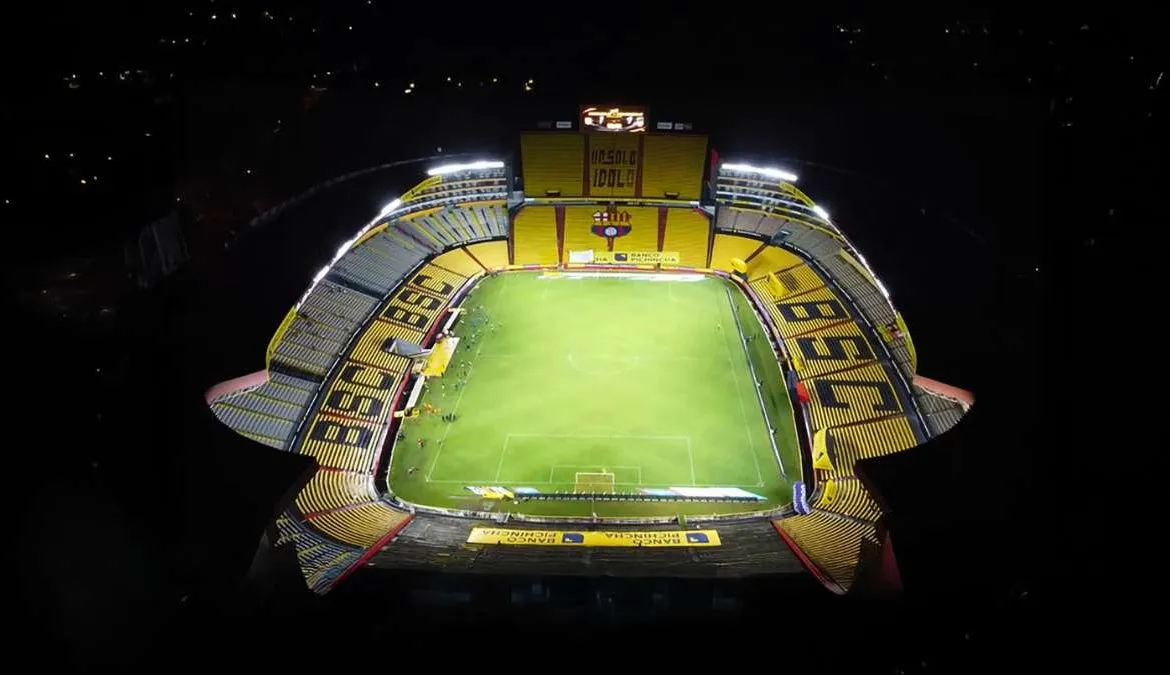
Stadium and Sports Field Lighting Systems from Duvon Lighting
Duvon’s field lighting systems are designed for football, soccer, baseball, and multi-sport facilities, where coverage, uniformity, and glare control are critical.
Core Field Lighting Systems
The Union™ LED Sports Field Lighting series sits at the more accessible end of the lineup. With outputs ranging from 300W to 600W and replacing up to 1500W HID systems, it is typically used in school and municipal projects where reliable performance is required without overbuilding the system.
The Liberty™ LED Sports Field Lighting series steps up in output and flexibility. With configurations from 800W to 1200W and up to 144,000 lumens, it is designed for multi-sport environments that require stronger uniformity and broader coverage across larger playing surfaces.
Stadium and High-Performance Systems
For larger venues, Duvon Lighting offers systems designed for higher levels of play and more demanding performance standards.
The Vanguard™ Broadcast-Grade Stadium Lighting system is engineered for high-mast installations and televised environments. It focuses on flicker-free output, long-throw optics, and precise control, which are critical for broadcast visibility and consistent field coverage.
The Apex™ LED Stadium Lighting system is built for large-scale venues requiring higher output levels, with configurations reaching up to 216,000 lumens. It is typically used in competitive facilities where uniformity, control, and fixture-level adjustability are priorities.
Practical Takeaway
- Union is best suited for cost-conscious field upgrades
- Liberty provides flexibility across a range of field types
- Vanguard and Apex are designed for higher-performance and broadcast-level applications
The key difference across these systems is not just output, but how precisely that output can be controlled across the field.
Sports Court Lighting Systems from Duvon Lighting
Applications
This category focuses on tennis, pickleball, and basketball courts, where lighting challenges are different from large fields. Mounting heights are lower, player sightlines are more sensitive, and glare becomes a much more immediate issue.
Core Court Lighting Systems
The Freedom™ LED Sports Court Lighting system is designed for higher-level competition environments. With outputs up to 104,000 lumens and configurations from 500W to 800W, it supports multi-court layouts and environments where visual clarity is critical.
The ProCourt™ LED Sports Court Lighting system targets clubs, schools, and municipal courts. With 300W to 400W configurations and asymmetric optics, it focuses on delivering consistent illumination while minimizing glare and spill beyond the court.
The Patriot™ Series is designed for recreational environments. With lower output levels ranging from 100W to 200W, it is typically used where cost, simplicity, and controlled lighting are more important than competition-level intensity.
Practical Takeaway
- Freedom is designed for competitive play and higher output requirements
- ProCourt balances performance and control for multi-use environments
- Patriot is suited for recreational courts and smaller installations
In court lighting, the difference between these systems is often less about brightness and more about how well glare and distribution are managed.
Indoor Sports Lighting Systems from Duvon Lighting
Applications
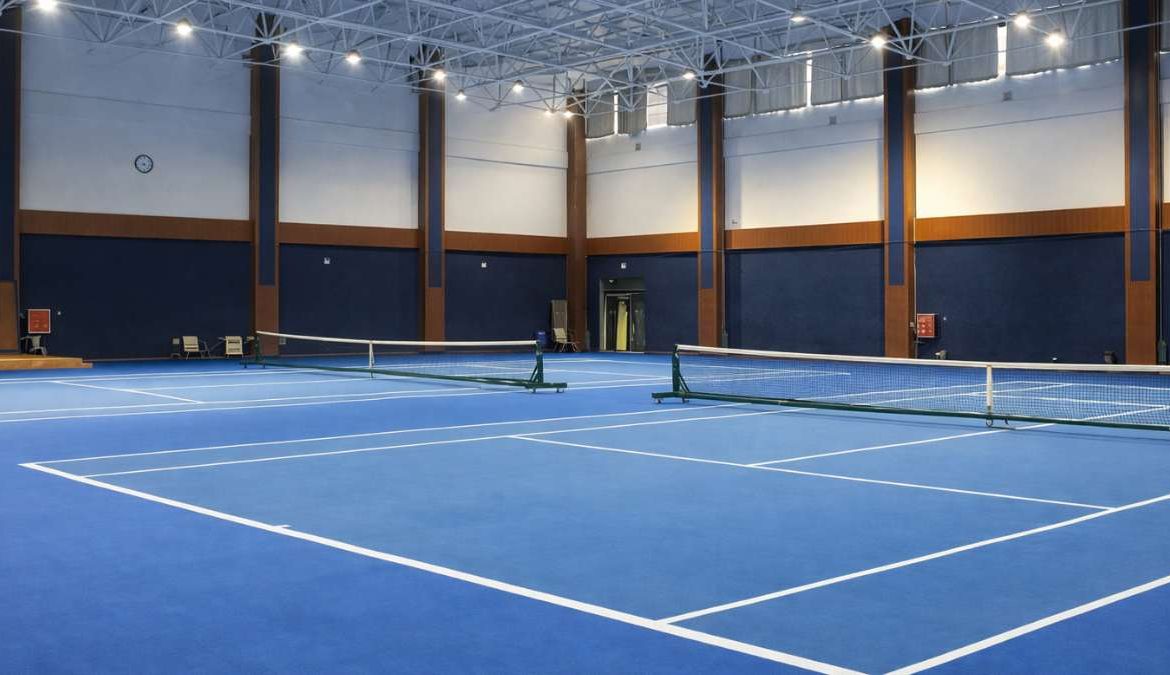
Indoor systems are used in gymnasiums, training facilities, and multi-purpose athletic spaces where ceiling height, fixture placement, and glare control all affect performance.
Core Indoor Lighting Systems
The CoreBay™ LED High Bay system is designed for recreational indoor environments, offering outputs up to 30,000 lumens with configurations between 100W and 200W.
The TitanBay™ LED High Bay system introduces more industrial durability and broader light distribution, making it suitable for facilities that combine sports and general-use spaces.
The Forge™ High Bay is positioned as a higher-performance indoor solution, designed for facilities that require stronger output and more consistent coverage.
The Atlas™ Linear LED High Bay system adds flexibility through linear configurations and asymmetric optics. This makes it particularly useful in spaces where lighting needs to be directed across courts or specific zones rather than uniformly across an entire area.
Key Considerations
Indoor lighting performance depends heavily on:
- Fixture placement relative to ceiling height
- Glare control for player comfort
- Uniform distribution across playing surfaces
- Thermal management for long-term reliability
Duvon Lighting’s indoor systems are structured to address these variables directly, rather than relying on general-purpose high bay fixtures.
Solar and Off-Grid Lighting Solutions from Duvon Lighting
Duvon Lighting also offers solar and off-grid solutions through its dedicated division, designed for projects where trenching or grid access is not practical.
These systems are commonly used for:
- Parks and recreational spaces
- Pathways and perimeter lighting
- Smaller court applications
The key consideration with solar lighting is aligning system capacity with actual usage. Battery storage, runtime expectations, and lighting levels must be planned together to ensure consistent performance.
Key Performance Factors Across All Duvon Lighting Systems
Regardless of the application, several performance factors determine how a lighting system will perform once installed:
- Horizontal and vertical foot-candle levels
- Uniformity ratios across the playing surface
- Glare control at player and spectator sightlines
- Light spill at the property line
- Optical distribution patterns
- Control systems for scheduling and dimming
These factors are interconnected. A system that performs well on paper but does not balance these elements can still create issues in real-world use.
Matching Duvon Lighting Systems to Project Type
The table below connects common project types with the lighting systems typically suited to those applications.
| Project Type | Recommended Duvon Lighting System | Primary Focus | Why It Fits |
|---|---|---|---|
High school field | Union or Liberty | Balanced performance and cost | Provides reliable coverage without overbuilding |
Municipal complex | Liberty | Uniformity and spill control | Supports multiple fields with controlled output |
Competitive stadium | Apex or Vanguard | High output and precision control | Designed for performance and broadcast requirements |
Tennis or pickleball courts | ProCourt or Freedom | Glare control and visual clarity | Matches court-level sightline needs |
Recreational courts | Patriot | Simplicity and efficiency | Lower output with controlled distribution |
Indoor gym | CoreBay or Atlas | Even distribution and glare control | Adapts to ceiling height and layout constraints |
Choosing the Right Duvon Lighting System for the Job
Selecting the right lighting system depends on a combination of technical and practical factors:
- Size and layout of the field or facility
- Level of play and performance expectations
- Budget and long-term operating costs
- Local regulations related to glare and light spill
- Mounting constraints and structural considerations
- Maintenance expectations over time
In most cases, the right system is not the one with the highest output, but the one that aligns most closely with how the facility will actually be used.
Common Questions About Sports and Facility Lighting
What lighting is required for a sports field?
Lighting requirements depend on the level of play, with higher levels requiring greater light output, tighter uniformity, and stricter glare control.
How are lighting levels measured?
Lighting is typically measured in foot-candles, both horizontally across the field and vertically for ball tracking and visibility.
What is glare in sports lighting?
Glare occurs when light sources interfere with visibility, particularly when players look upward or across bright fixtures. It is one of the most important factors in sports lighting design.
When is solar lighting a viable option?
Solar lighting is typically used where grid access is limited or impractical, particularly in parks and recreational settings.
Final Thoughts on Duvon Lighting Systems
Lighting systems play a central role in how sports facilities perform over time. From installation through ongoing use, the difference between a system that works well and one that creates challenges often comes down to how well it was designed for the specific application.
Duvon Lighting’s product lineup reflects a structured approach to these challenges, with systems designed around specific use cases rather than generalized solutions.
For contractors and project owners, that distinction becomes most visible after installation, when performance, consistency, and long-term reliability begin to matter most.
Meet the SVC Experts
Written by: Ryan Caravalho, Contributing Author
Ryan Caravalho has been writing for Sports Venue Calculator since 2022, specializing in clear, research-driven content for sports facility planners. With a background in tech, F&B, non-profits, and NGOs, he brings a broad, practical perspective to early-stage sports construction projects.
Read more from Ryan.
Edited by: Antti Rydman, Managing Editor
Antti Rydman is a Co-Founder and the Managing Editor of Sports Venue Calculator. A member of the founding team, Antti has led editorial operations since 2021, shaping the platform’s content strategy and overseeing its growth as a trusted resource for sports facility planning and construction.
Read more about Antti.