
Duvon Lighting Product Overview: Sports, Court, and Facility Lighting Systems

Author picture

Written By
Ryan Caravalho

Author picture

Edited By
Antti Rydman

Home / LED Sports Lighting / Duvon Lighting Product Overview: Sports, Court, and Facility Lighting Systems
duvon lighting project byron center in michigan
4PADEL Hotel Du Collectionneur | Paris, FR (Photo Credit: MejorSet)
Author picture

Written By
Ryan Caravalho

Author picture

Edited By
Antti Rydman

Selecting a padel court is not simply a design decision. The type of court chosen will influence how the facility performs, how it is experienced by players and spectators, and how well it holds up over time in its specific environment.

Differences in structure, visibility, wind resistance, and installation flexibility can significantly impact both the short-term success and long-term viability of a project. For developers and operators, these factors shape everything from user experience to maintenance and operational consistency. For project owners, they directly affect cost, durability, and how the court fits within the broader facility.

MejorSet has built a range of court systems designed for different use cases, from high-end clubs and tournament venues to residential and recreational installations. With experience across international markets and official involvement in professional padel, the company’s lineup reflects a mix of performance-focused engineering and architectural design.

This article reviews MejorSet’s primary court types, focusing on how each model performs in real-world scenarios and where it is best suited.

Table of Contents

What to Evaluate When Reviewing a Padel Court

Before looking at specific models, it helps to understand what actually differentiates one court from another.

Key factors include:

  • Visibility and spectator experience
    • Panoramic designs remove visual obstructions and improve viewing angles, which is especially important for clubs and event venues.
  • Structural design and wind resistance
    • Outdoor courts must be engineered for local conditions, particularly in exposed or coastal environments.
  • Indoor and outdoor adaptability
    • Some courts are designed to perform equally well in both settings, while others are optimized for specific environments.
  • Portability and installation flexibility
    • Portable or modular systems can be critical for rooftops, temporary venues, or locations with limited construction options.
  • Customization and branding
    • Color schemes, lighting configurations, and visual elements play a larger role in club and commercial settings.


These factors provide a framework for understanding how different MejorSet courts fit into different types of projects.

The Net Padel Club in South Africa installed by MejorSet
The Net Padel Club | South Africa (Photo Credit: MejorSet)

MejorSet’s Approach to Court Design

Across its lineup, MejorSet focuses heavily on panoramic and structural court systems. The goal is not just to meet standard dimensions, but to refine how the court performs visually and structurally in different environments.

Most models are designed for both indoor and outdoor use, with variations in reinforcement, framing, and wind resistance depending on the application. The company also places emphasis on customization, allowing courts to be adapted visually and functionally to fit specific venues.

This approach results in a lineup where the differences between models are not just aesthetic. They are tied to how and where the court will be used.

Panoramic RC10 Review

The Panoramic RC10 sits at the center of MejorSet’s lineup and is often positioned as a balanced option between structural strength and visual openness.

Its defining feature is a self-supporting steel structure combined with panoramic glass back walls, allowing for clear viewing without compromising stability. The system is reinforced with structural rings and cross members, which helps maintain rigidity in outdoor conditions.

With certified wind resistance up to 140 km/h (87 mph), the RC10 is well suited for outdoor installations, including exposed environments where durability is a concern. At the same time, its clean design and unobstructed ends make it visually appealing for clubs and spectator-focused venues.

The availability of a portable version adds flexibility, particularly for rooftop installations or locations where permanent construction is not feasible.

Best fit: premium clubs, rooftop courts, and outdoor facilities that need a reliable balance of durability and visibility.

House of Padel | Jakarta (Photo Credit: MejorSet)

Full Panoramic Review

The Full Panoramic model takes the visibility concept further by eliminating metal posts at the glass corners, creating a completely open 360-degree viewing experience.

This design is especially effective in environments where spectator experience is a priority. The absence of corner posts creates a cleaner visual field, which is often preferred for showcase courts and broadcast settings.

Structurally, the system is still engineered for outdoor use, with wind resistance up to 120 km/h (75 mph) and reinforced steel components. While it offers strong durability, its focus is clearly on visual openness rather than maximum structural reinforcement.

Like the RC10, the Full Panoramic model can be installed indoors or outdoors and is available in portable configurations.

Best fit: high-end clubs, showcase venues, and projects where aesthetics and visibility are central to the experience.

RC MAX Review

The RC MAX builds on the RC10 concept but is specifically reinforced for more demanding outdoor environments.

With thicker structural elements and a design focused on increased resistance, it is intended for installations where wind load and environmental exposure are major considerations. This makes it particularly relevant in parts of the United States where weather conditions can be more extreme.

While it maintains the panoramic design and unobstructed views of the RC10, its positioning is clearly more performance-driven. The emphasis is on long-term durability and structural reliability rather than purely visual features.

Best fit: outdoor commercial installations, coastal areas, and projects where structural performance is a primary concern.

xtreme padel court line from mejorset
X-treme Court (Photo Credit: MejorSet)

X-Treme Court Review

The X-Treme model is the most specialized option in the lineup, designed for extreme environmental conditions.

Engineered to withstand wind speeds up to 265 km/h (165 mph), it goes well beyond standard outdoor requirements. Reinforced materials, anti-corrosion treatments, and certified structural performance make it suitable for hurricane-prone regions and highly exposed sites.

This level of reinforcement makes it less of a general-purpose court and more of a solution for specific project challenges. In typical environments, it may exceed what is necessary, but in the right context, it addresses conditions that other systems cannot.

Best fit: coastal, hurricane-prone, and high-exposure environments where structural limits are a defining factor.

FIP Official Court Review

The FIP Official Court is designed in collaboration with the International Padel Federation and reflects a standardized approach to professional-level play.

Structurally based on the RC10, it incorporates official colors, refined visibility, and high-quality materials such as 12 mm tempered glass. The goal is to align with recognized standards for competition environments while maintaining the performance characteristics of a reinforced panoramic system.

For clubs and facilities looking to position themselves within the competitive padel ecosystem, this model offers a clear connection to official standards without requiring a full custom design.

Best fit: clubs and venues that want alignment with federation-level standards and a more competition-oriented presentation.

Premier Official Court Review

The Premier Official Court is designed with a more distinctive identity, tied to professional tournament environments.

Features such as custom lighting structures, branded elements, and the Shock Lock absorption system differentiate it from more standard models. The overall design is intended to create a stronger visual presence and enhance the experience of high-level events.

This is not a general-purpose court. It is built for venues that want a flagship installation or a signature element within their facility.

Best fit: tournament venues, flagship clubs, and projects where branding and visual identity are part of the value.

Kids Court Review

The Kids Court is a scaled-down version of the Full Panoramic concept, designed for younger players and family-oriented environments.

With reduced dimensions and safety-focused features such as anti-injury mesh and reinforced materials, it allows facilities to introduce padel in a more accessible format. Despite its size, it maintains the same material quality and design approach as the larger courts.

While it is a niche offering, it can be a useful addition for clubs and resorts looking to expand programming and appeal to a broader audience.

Best fit: family clubs, resorts, and facilities focused on youth development and recreational use.

Matching MejorSet Courts to Project Type

The table below provides a simplified view of how different MejorSet court models align with common project types.

Court Model Best Fit Primary Strength Key Consideration
Panoramic RC10
Premium clubs, rooftops
Balance of visibility and strength
Middle-ground option across environments
Full Panoramic
Showcase venues
Maximum visibility
Slightly lower structural focus
RC MAX
Outdoor commercial projects
Reinforced durability
Designed for high exposure
X-Treme
Extreme environments
Maximum wind resistance
Highly specialized use case
FIP Official
Competitive clubs
Federation alignment
More competition-focused
Premier Official
Flagship venues
Visual identity and branding
Not a general-use court
Kids Court
Family and resort settings
Accessibility for youth
Limited to specific use cases

Choosing the Right MejorSet Court for the Project

Selecting the right court depends on how the facility will be used and where it will be installed.

Key factors include:

  • Level of play and target audience
  • Environmental conditions, particularly wind and exposure
  • Importance of visibility and spectator experience
  • Need for portability or non-permanent installation
  • Branding and customization requirements


In many cases, the decision comes down to prioritizing either structural performance or visual openness, with some models offering a balance of both.

Installation and Planning Considerations in the U.S.

Padel court installation is relatively straightforward, but it requires careful planning.

Standard courts measure 20m by 10m, with additional space needed for safe play around the perimeter. A flat, level base or concrete foundation is required, along with access to power for lighting systems.

Indoor installations must meet minimum height requirements, typically around 7 meters.

Planning approval varies by location, and projects may require coordination with local zoning regulations and permitting processes. For many buyers, this is an area where working with an experienced provider can simplify the process.

Production timelines are typically around four weeks, with installation completed in two to three days per court when handled by a professional team. It is also important to note that quoted pricing generally includes the court structure and core components, while transportation, installation, and site preparation are handled separately.

indoor padel court by mejorset
Indoor Padel Court (Photo Credit: MejorSet)

Common Questions About MejorSet Padel Courts

What is the difference between panoramic and full panoramic courts?

Panoramic courts retain some structural framing, while full panoramic designs remove corner posts for a more open viewing experience.

Which court is best for windy or coastal environments?

Reinforced models such as the RC MAX or X-Treme are better suited for high-exposure conditions.

Can padel courts be installed on rooftops or temporary sites?

Yes, portable versions are available for projects where permanent installation is not possible.

What should project owners consider before building a padel court?

Site conditions, permitting requirements, intended usage, and long-term maintenance should all be evaluated early in the process.

Final Thoughts on MejorSet Padel Courts

MejorSet’s court lineup covers a wide range of applications, from recreational and family-focused installations to high-performance tournament environments.

The differences between models are tied to how each court is intended to perform, whether that means maximizing visibility, reinforcing structural durability, or supporting a specific type of venue.

For developers and facility owners, the most effective approach is to match the court type to the project’s environment and goals. When those align, the result is not just a visually appealing installation, but a court that performs consistently over time.

Home / LED Sports Lighting / Duvon Lighting Product Overview: Sports, Court, and Facility Lighting Systems
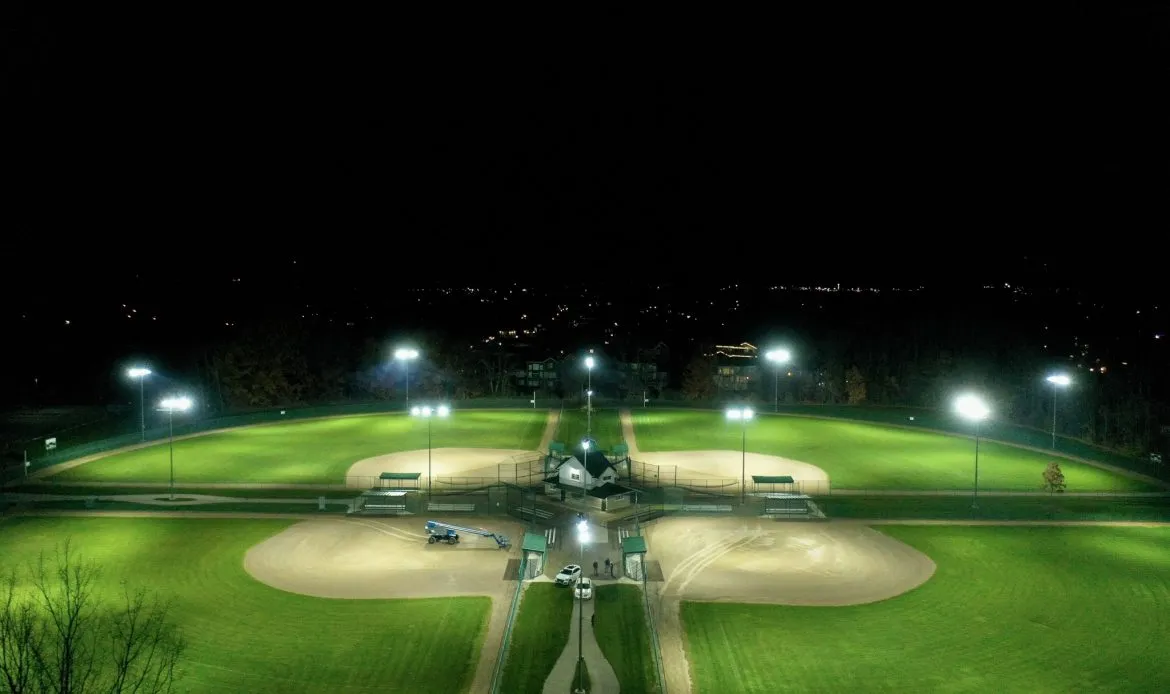
duvon lighting project byron center in michigan
Byron Center, MI (Photo Credit: Duvon™)

Selecting lighting for a sports facility is rarely as simple as choosing a fixture and mounting height. Different sports, field sizes, and levels of play all place different demands on lighting performance, from glare control and uniformity to output and long-term reliability.

For contractors and installers, this means evaluating systems based on how they will perform once installed, not just how they look on paper. For project owners, it often comes down to balancing performance expectations with cost, operating efficiency, and long-term value.

Duvon Lighting offers a range of lighting systems designed for specific applications, including sports fields, courts, indoor facilities, and off-grid environments. Rather than approaching lighting as a one-size-fits-all solution, its product lines are structured around how different facilities are actually used.

This article provides an overview of Duvon Lighting’s core product categories and how each system fits into real-world project scenarios.

Table of Contents

What Defines Duvon Lighting’s Approach to Sports and Facility Lighting

Across its product categories, Duvon Lighting takes a system-based approach to lighting design. Instead of focusing on individual fixtures, the emphasis is on how optics, output, mounting, and controls work together to deliver consistent performance across the entire surface.

That shows up in a few key ways:

  • Optics are designed to control glare and direct light precisely where it is needed
  • Systems are built around photometric design, not assumed layouts
  • Product lines are segmented by application, rather than repurposed across different environments
  • Output and distribution are aligned with real usage scenarios, not just maximum brightness


For contractors, this means installations are less about adapting generic fixtures and more about implementing systems that are already aligned with the project’s requirements.
 
stadium lighting installed by duvon lighting
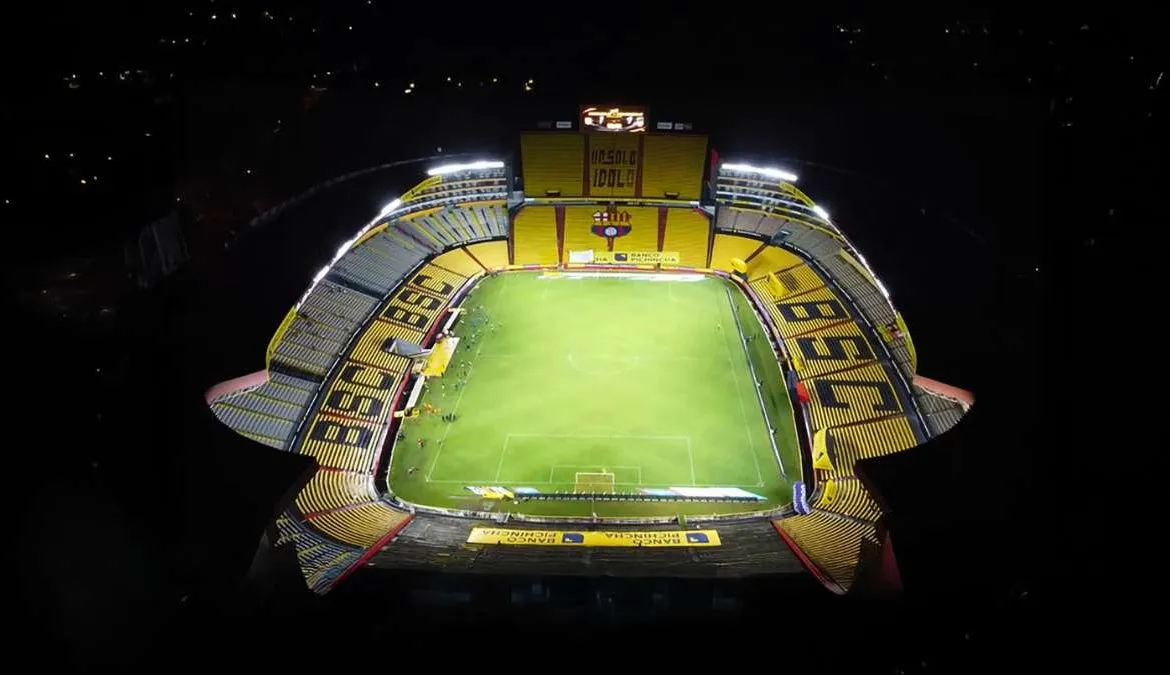
Banco Pichincha Monumental Stadium | Guayaquil, Ecuador (Photo Credit: Duvon™)

Stadium and Sports Field Lighting Systems from Duvon Lighting

Duvon’s field lighting systems are designed for football, soccer, baseball, and multi-sport facilities, where coverage, uniformity, and glare control are critical.

Core Field Lighting Systems

The Union™ LED Sports Field Lighting series sits at the more accessible end of the lineup. With outputs ranging from 300W to 600W and replacing up to 1500W HID systems, it is typically used in school and municipal projects where reliable performance is required without overbuilding the system.

The Liberty™ LED Sports Field Lighting series steps up in output and flexibility. With configurations from 800W to 1200W and up to 144,000 lumens, it is designed for multi-sport environments that require stronger uniformity and broader coverage across larger playing surfaces. 

Stadium and High-Performance Systems

For larger venues, Duvon Lighting offers systems designed for higher levels of play and more demanding performance standards.

The Vanguard™ Broadcast-Grade Stadium Lighting system is engineered for high-mast installations and televised environments. It focuses on flicker-free output, long-throw optics, and precise control, which are critical for broadcast visibility and consistent field coverage.

The Apex™ LED Stadium Lighting system is built for large-scale venues requiring higher output levels, with configurations reaching up to 216,000 lumens. It is typically used in competitive facilities where uniformity, control, and fixture-level adjustability are priorities. 

Practical Takeaway

  • Union is best suited for cost-conscious field upgrades
  • Liberty provides flexibility across a range of field types
  • Vanguard and Apex are designed for higher-performance and broadcast-level applications

The key difference across these systems is not just output, but how precisely that output can be controlled across the field.


Sports Court Lighting Systems from Duvon Lighting

Applications

This category focuses on tennis, pickleball, and basketball courts, where lighting challenges are different from large fields. Mounting heights are lower, player sightlines are more sensitive, and glare becomes a much more immediate issue.

Core Court Lighting Systems

The Freedom™ LED Sports Court Lighting system is designed for higher-level competition environments. With outputs up to 104,000 lumens and configurations from 500W to 800W, it supports multi-court layouts and environments where visual clarity is critical. 

The ProCourt™ LED Sports Court Lighting system targets clubs, schools, and municipal courts. With 300W to 400W configurations and asymmetric optics, it focuses on delivering consistent illumination while minimizing glare and spill beyond the court. 

The Patriot™ Series is designed for recreational environments. With lower output levels ranging from 100W to 200W, it is typically used where cost, simplicity, and controlled lighting are more important than competition-level intensity. 

Practical Takeaway

  • Freedom is designed for competitive play and higher output requirements
  • ProCourt balances performance and control for multi-use environments
  • Patriot is suited for recreational courts and smaller installations


In court lighting, the difference between these systems is often less about brightness and more about how well glare and distribution are managed.
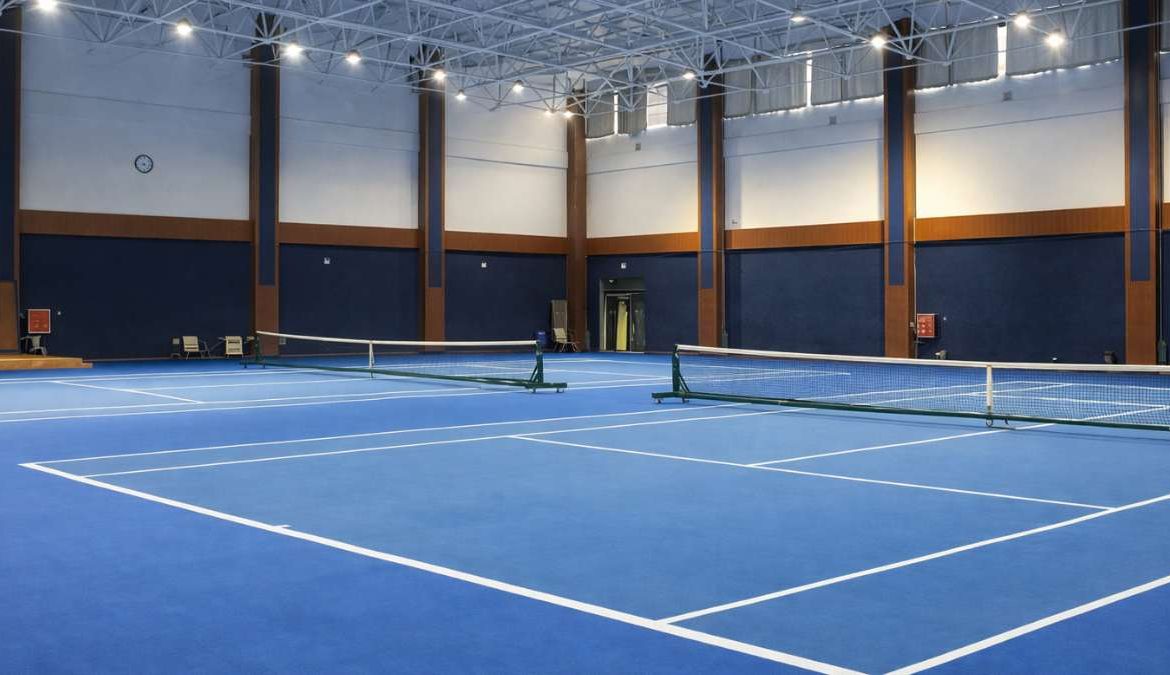
 
Indoor Sports Lighting (Photo Credit: Duvon™)

Indoor Sports Lighting Systems from Duvon Lighting

Applications

Indoor systems are used in gymnasiums, training facilities, and multi-purpose athletic spaces where ceiling height, fixture placement, and glare control all affect performance.

Core Indoor Lighting Systems

The CoreBay™ LED High Bay system is designed for recreational indoor environments, offering outputs up to 30,000 lumens with configurations between 100W and 200W. 

The TitanBay™ LED High Bay system introduces more industrial durability and broader light distribution, making it suitable for facilities that combine sports and general-use spaces.

The Forge™ High Bay is positioned as a higher-performance indoor solution, designed for facilities that require stronger output and more consistent coverage.

The Atlas™ Linear LED High Bay system adds flexibility through linear configurations and asymmetric optics. This makes it particularly useful in spaces where lighting needs to be directed across courts or specific zones rather than uniformly across an entire area. 

Key Considerations

Indoor lighting performance depends heavily on:

  • Fixture placement relative to ceiling height
  • Glare control for player comfort
  • Uniform distribution across playing surfaces
  • Thermal management for long-term reliability


Duvon Lighting’s indoor systems are structured to address these variables directly, rather than relying on general-purpose high bay fixtures.


Solar and Off-Grid Lighting Solutions from Duvon Lighting

Duvon Lighting also offers solar and off-grid solutions through its dedicated division, designed for projects where trenching or grid access is not practical.

These systems are commonly used for:

  • Parks and recreational spaces
  • Pathways and perimeter lighting
  • Smaller court applications


The key consideration with solar lighting is aligning system capacity with actual usage. Battery storage, runtime expectations, and lighting levels must be planned together to ensure consistent performance.

Key Performance Factors Across All Duvon Lighting Systems

Regardless of the application, several performance factors determine how a lighting system will perform once installed:

  1. Horizontal and vertical foot-candle levels
  2. Uniformity ratios across the playing surface
  3. Glare control at player and spectator sightlines
  4. Light spill at the property line
  5. Optical distribution patterns
  6. Control systems for scheduling and dimming


These factors are interconnected. A system that performs well on paper but does not balance these elements can still create issues in real-world use.


Matching Duvon Lighting Systems to Project Type

The table below connects common project types with the lighting systems typically suited to those applications.

Project Type Recommended Duvon Lighting System Primary Focus Why It Fits
High school field
Union or Liberty
Balanced performance and cost
Provides reliable coverage without overbuilding
Municipal complex
Liberty
Uniformity and spill control
Supports multiple fields with controlled output
Competitive stadium
Apex or Vanguard
High output and precision control
Designed for performance and broadcast requirements
Tennis or pickleball courts
ProCourt or Freedom
Glare control and visual clarity
Matches court-level sightline needs
Recreational courts
Patriot
Simplicity and efficiency
Lower output with controlled distribution
Indoor gym
CoreBay or Atlas
Even distribution and glare control
Adapts to ceiling height and layout constraints

Choosing the Right Duvon Lighting System for the Job

Selecting the right lighting system depends on a combination of technical and practical factors:

  • Size and layout of the field or facility
  • Level of play and performance expectations
  • Budget and long-term operating costs
  • Local regulations related to glare and light spill
  • Mounting constraints and structural considerations
  • Maintenance expectations over time


In most cases, the right system is not the one with the highest output, but the one that aligns most closely with how the facility will actually be used.
 
outdoor stadium lighting for sports field
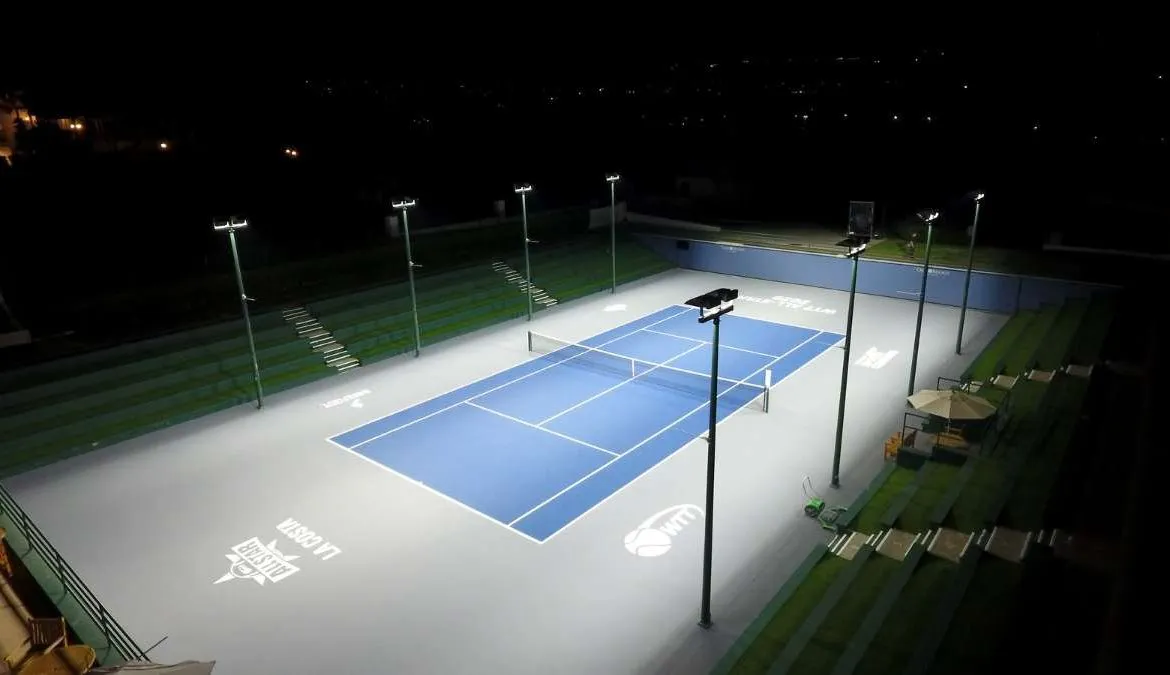
Outdoor Lighting System (Photo Credit: Duvon™)

Common Questions About Sports and Facility Lighting

What lighting is required for a sports field?

Lighting requirements depend on the level of play, with higher levels requiring greater light output, tighter uniformity, and stricter glare control.

How are lighting levels measured?

Lighting is typically measured in foot-candles, both horizontally across the field and vertically for ball tracking and visibility.

What is glare in sports lighting?

Glare occurs when light sources interfere with visibility, particularly when players look upward or across bright fixtures. It is one of the most important factors in sports lighting design.

When is solar lighting a viable option?

Solar lighting is typically used where grid access is limited or impractical, particularly in parks and recreational settings.


Final Thoughts on Duvon Lighting Systems

Lighting systems play a central role in how sports facilities perform over time. From installation through ongoing use, the difference between a system that works well and one that creates challenges often comes down to how well it was designed for the specific application.

Duvon Lighting’s product lineup reflects a structured approach to these challenges, with systems designed around specific use cases rather than generalized solutions. 

For contractors and project owners, that distinction becomes most visible after installation, when performance, consistency, and long-term reliability begin to matter most.

Meet the SVC Experts

Written by: Ryan Caravalho, Contributing Author

Ryan Caravalho has been writing for Sports Venue Calculator since 2022, specializing in clear, research-driven content for sports facility planners. With a background in tech, F&B, non-profits, and NGOs, he brings a broad, practical perspective to early-stage sports construction projects.

Read more from Ryan.

Edited by: Antti Rydman, Managing Editor

Antti Rydman is a Co-Founder and the Managing Editor of Sports Venue Calculator. A member of the founding team, Antti has led editorial operations since 2021, shaping the platform’s content strategy and overseeing its growth as a trusted resource for sports facility planning and construction.

Read more about Antti.

Members & Partners

asba
NIRSA

Related Articles

Building Better Tennis Facilities: Interview with Todd Carlson from USTA Tennis Venue Services
Expert Insights on the Planning & Design Phases of LED Sports Lighting Projects
Shaping the Sport: Insights from Carl Schmits on the Future of Pickleball in America
USDA Community Facilities Grant Program: Funding for Sports Facility Projects
NCAA Lighting Standards for College Athletic Facilities
Sports Venue Calculator - logo

We’d Love to Hear from You!

Sportsvenuecalculator.com is a free resource dedicated to helping sports facility planners.

Did our site support your project?

Leave a quick testimonial to help us keep assisting others like you!