
Home » Gymnasium Flooring » Gymnasium Flooring Systems: A Comprehensive Guide
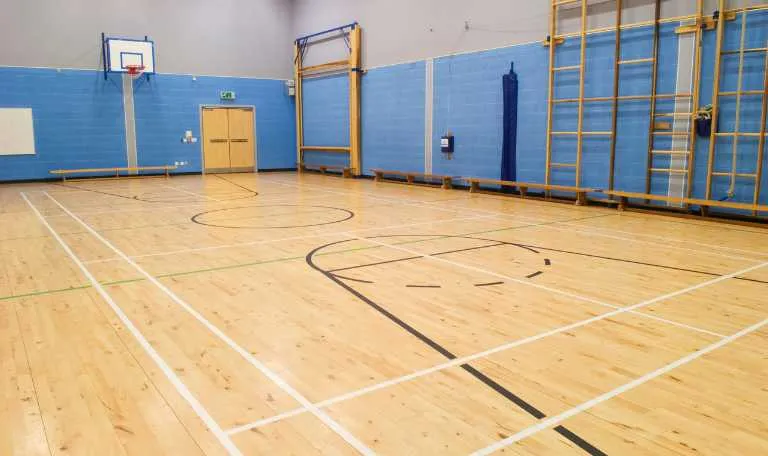
When designing a top-tier sports facility, whether for a school, college, university, or a commercial facility, the gymnasium flooring system is one of the most critical factors to consider. A well-chosen flooring system enhances athletic performance, ensures safety, and provides long-lasting durability, all while being cost-effective in the long run.
Gymnasiums are high-traffic environments where athletes train, compete, and push their limits, and the right flooring plays a crucial role in supporting this performance while reducing the risk of injury. Beyond its functional purpose, a gymnasium flooring system also contributes to the space’s overall aesthetics, reflecting the identity of the institution. From the classic appeal of maple hardwood to the versatility of modern synthetic options, your choice of flooring will directly impact both the performance and durability of your gym over time.
In this article, we’ll explore key components, types of gymnasium flooring, cost considerations, funding opportunities, and the latest trends in gym flooring systems.
If you are currently planning to install a new gymnasium flooring system for your facility, try our cost calculator to get a tailored cost estimate.
Types of Gymnasium Flooring Systems
Choosing the right type of gymnasium flooring system depends on the activities that will take place in the space, the budget, and the level of maintenance you are willing to commit to. Here are the most common types of indoor gym flooring systems:
Wooden Gymnasium Flooring
Maple hardwood is the gold standard for gymnasium floors, particularly for sports like basketball and volleyball. Known for its durability, shock absorption, and ability to enhance athletic performance, maple hardwood is widely used in professional and educational settings. Its smooth, polished surface gives it a premium appearance, and its longevity makes it a long-term investment for any facility. However, it requires regular maintenance, including refinishing, to preserve its performance and aesthetic quality.
Engineered wood flooring offers a more versatile and moisture-resistant alternative to solid hardwood. It features a top layer of real wood and multiple layers of plywood underneath, making it more stable and less prone to warping in environments with high humidity. Engineered wood provides similar performance to solid maple hardwood, with the added benefit of being easier to install and maintain, making it an excellent option for gyms in areas where moisture control is a concern. Both options offer strong performance, but engineered wood is often seen as a more affordable and flexible solution.
Synthetic Flooring
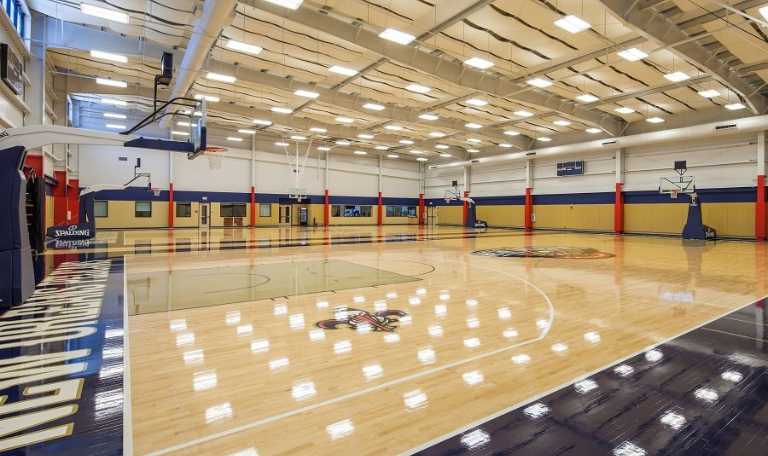
Synthetic gym flooring is a versatile option, especially for multi-purpose gymnasiums that host a variety of sports and activities. Common materials for synthetic flooring include rubber, vinyl, and polyurethane. These materials are more cost-effective than hardwood, and they can better withstand the demands of diverse activities such as indoor soccer, wrestling, fitness classes, and community events.
Synthetic floors provide good shock absorption, are easy to clean, and require less maintenance compared to hardwood. They are also customizable in terms of color and branding, making them ideal for schools or commercial facilities looking to reflect their identity through the gym’s design.
Read more about vinyl gymnasium flooring in our separate guide.
Modular Flooring
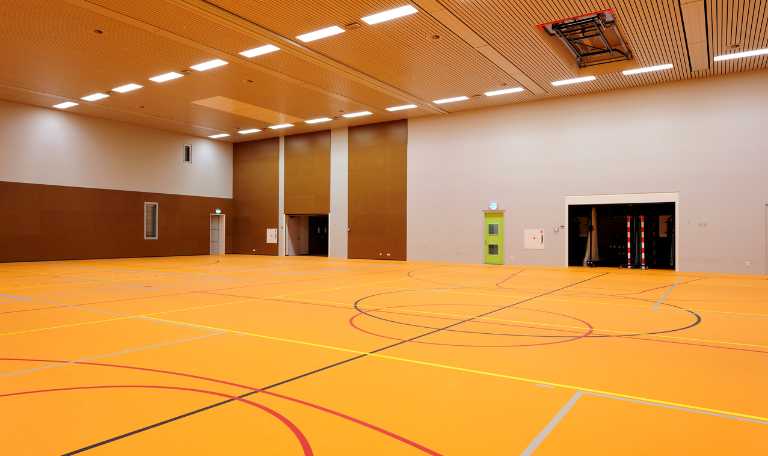
Modular flooring systems use interlocking tiles, typically made from plastic, vinyl, or rubber, and are designed for flexibility and ease of installation. This type of flooring is ideal for facilities that require a temporary or portable solution, as it can be quickly installed, removed, and reconfigured. Modular flooring is often used in multi-use gymnasiums or areas where quick setup is needed, such as for events or exhibitions. While it may not offer the same level of performance as hardwood or synthetic flooring, modular systems are durable, cost-effective, and low-maintenance, making them a popular choice for recreational facilities.

Gymnasium Flooring Systems for Different Use Cases
Gymnasium flooring systems must adapt to the specific needs of different spaces and educational levels, from middle schools to colleges, as well as commercial fitness centers and weight rooms.
Middle Schools and High Schools: These facilities often require flooring that balances performance and durability for sports like basketball, volleyball, and general PE activities. Hardwood is commonly used for its durability and classic appearance, while synthetic flooring offers a more affordable and low-maintenance option, suitable for multi-purpose gyms. Read more about the best gym flooring options for schools.
Colleges and Universities: Higher education institutions typically need more specialized flooring that supports competitive sports as well as recreational use. Hardwood is frequently used for competition-grade courts, while synthetic surfaces and modular flooring are ideal for spaces that host multiple sports and events.
Weight Rooms: Durable, impact-resistant flooring is essential in weight rooms where heavy equipment and weights are used. Rubber flooring is the go-to choice for these areas, providing superior shock absorption and protection for both the floor and the equipment. Turf flooring is also becoming increasingly popular for functional training areas, providing a softer surface for activities like sled pushes and agility drills. Read more about weight room flooring in our separate guide.
Commercial Gyms: Versatility and ease of maintenance are key in commercial gyms, which cater to a wide range of users and activities. Vinyl, rubber, and gym turf flooring are commonly used to provide shock absorption, durability, and traction while also being easy to clean and maintain. Learn about commercial gym flooring in our dedicated article.
High-Impact Zones: Areas used for activities like aerobics, CrossFit, or plyometrics require flooring that can handle intense impacts. Polyurethane flooring or padded vinyl is ideal for these zones, providing the necessary resilience and comfort underfoot.
Choosing the right flooring for each area ensures that the facility not only meets the performance and safety needs of its users but also remains durable and cost-effective in the long run.
Main Components of Gymnasium Floor Systems
A high-quality gymnasium flooring system is composed of several layers that work together to provide the necessary performance and durability. Here are the key components:
Subfloor
The subfloor is an essential component that lies beneath the surface layer, providing stability and additional shock absorption. Different types of subfloors include fixed, floating, or sprung systems, which are designed to cushion impact and minimize injuries. The subfloor also helps in leveling the floor and ensuring that the surface remains even over time, even with heavy use.
Surface Layer
The surface layer is the top, visible part of the flooring system, and it’s the material that athletes and users directly interact with. This could be solid hardwood, engineered wood, or synthetic materials like vinyl or rubber. The surface layer is critical because it provides the traction, shock absorption, and aesthetic appeal necessary for different types of sports.
Protective Coating or Finish
For hardwood floors, a clear protective finish is applied to enhance durability and make the surface resistant to wear, moisture, and staining. This coating helps maintain the aesthetic appearance of the gym floor while also extending its lifespan. Synthetic floors may have different finishes to increase slip resistance and protect against scuff marks.
Moisture Barrier
A moisture barrier is a critical layer that prevents water or humidity from seeping into the flooring system and causing damage, such as warping or mold growth. This is especially important in gymnasiums located in areas with high humidity or where the floor may come into contact with water from cleaning.
Cost Considerations for Gymnasium Flooring
The cost to install a gymnasium flooring system ranges from $46,200 to $198,000, depending on several factors. These include the type of flooring, the complexity of the subfloor, the size of the facility, and the level of competition it will host. Hardwood, especially maple, is typically more expensive than synthetic options like vinyl or rubber. The size of the gym and the quality of materials also play a role, as do regional and seasonal price variations, which can impact both material and labor costs. Understanding these factors helps project planners budget effectively while ensuring high performance and durability.
Longevity of Gymnasium Flooring Systems
While hardwood floors have a higher upfront cost, they can last 50+ years if properly maintained, making them a good long-term investment. Synthetic floors have a shorter lifespan, typically lasting up to 20 years, but with fewer maintenance demands.
Funding Opportunities for Gymnasium Flooring Projects
Financing a gymnasium flooring system installation project can be challenging, especially for schools or smaller institutions, but several funding options can help. Schools may qualify for government grants like Title IX or PEP, which support athletic upgrades.
Corporate sponsorships offer another option, with businesses contributing in exchange for advertising opportunities within the gym. For smaller institutions, community fundraising through crowdfunding or local events often plays a vital role, with booster clubs and parent-teacher organizations actively supporting the cause. These approaches can significantly reduce the financial burden of gym renovations.
Read more about funding opportunities in our separate guide about grants for fitness facilities.
Sustainability in Gymnasium Flooring
Sustainability is an increasingly important consideration for gymnasium flooring projects. Many facilities are choosing eco-friendly materials and construction practices to reduce their environmental impact.
Eco-Friendly Materials
Sustainably harvested wood is an option for hardwood floors, ensuring that the materials come from responsibly managed forests. Similarly, synthetic floors made from recycled rubber or other sustainable materials are gaining popularity due to their durability and environmental benefits.
Energy-Efficient Solutions
Innovations in gymnasium flooring now include low-VOC (volatile organic compound) finishes for hardwood floors, which reduce harmful emissions, and the use of energy-efficient manufacturing processes for synthetic materials.
Trends and Innovations in Gymnasium Flooring
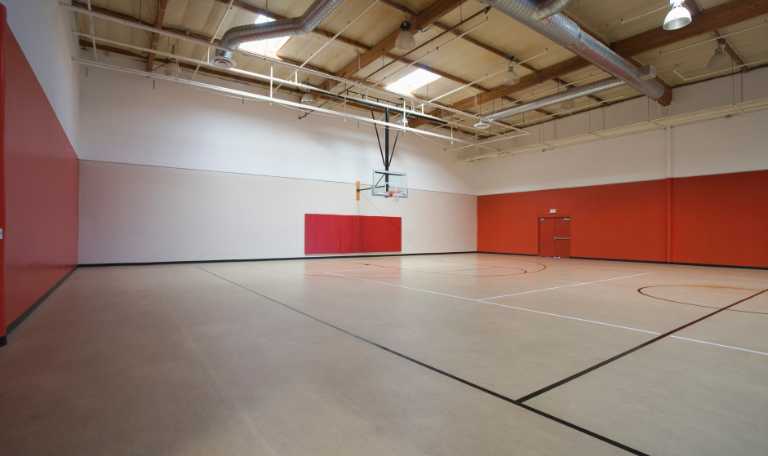
The gym flooring industry continues to evolve with new technologies that enhance performance, safety, and sustainability.
Advanced Shock Absorption Systems
Modern gym floors are designed with advanced subfloor technologies that provide superior shock absorption, reducing the risk of injuries and improving athlete comfort during high-impact activities.
Hybrid Flooring Systems
Hybrid flooring systems combine the aesthetic appeal of hardwood with the durability and easy maintenance of synthetic materials. These floors are ideal for multi-purpose gyms that host a wide range of activities.
Customization and Branding
Many schools and universities are incorporating custom colors, logos, and court markings into their gym floors to align with their identity and create a sense of community pride.
Conclusion
Selecting the right gymnasium flooring system is essential for creating a safe, durable, and high-performance space for athletes and users. From traditional maple hardwood to modern synthetic options, each material has its advantages and challenges. By understanding the main components, cost considerations, funding opportunities, and the latest trends in gym flooring, project planners can make informed decisions that align with their facility’s goals and budget.