Artificial turf doesn’t fail all at once — it degrades gradually through contamination, infill displacement, fibre matting, and compaction.
The difference between a field that performs for its full intended lifespan and one that draws complaints early often comes down to the quality and consistency of maintenance machinery.
This guide focuses on the machines used to maintain artificial turf fields, explaining how they contribute to performance, safety, and longevity.
It breaks down the core categories of maintenance equipment, how they’re used in real-world workflows, and what contractors should consider when building or upgrading a turf maintenance fleet.
Use our turf field maintenance equipment calculator to receive a tailored cost estimate for purchasing the right machinery for your facility.
Why Maintenance Machinery Matters More Than Most People Realize
Routine turf maintenance is not cosmetic work — it’s mechanical conditioning. The machines used to clean, brush, decompact, and manage infill directly affect how a surface drains, how fibres respond under load, and how safe the field remains over time.
Without proper machinery, maintenance becomes reactive instead of preventative. Crews end up addressing visible problems — hard spots, loose fibres, inconsistent footing — instead of controlling the underlying causes.
Well-chosen maintenance machines allow contractors and operators to:
- Keep infill evenly distributed and within spec
- Remove contaminants before they affect drainage
- Restore fibre orientation and resilience
- Identify issues early, before they require major intervention
Over the life of a turf field, these machines often deliver more ROI than installation equipment alone.
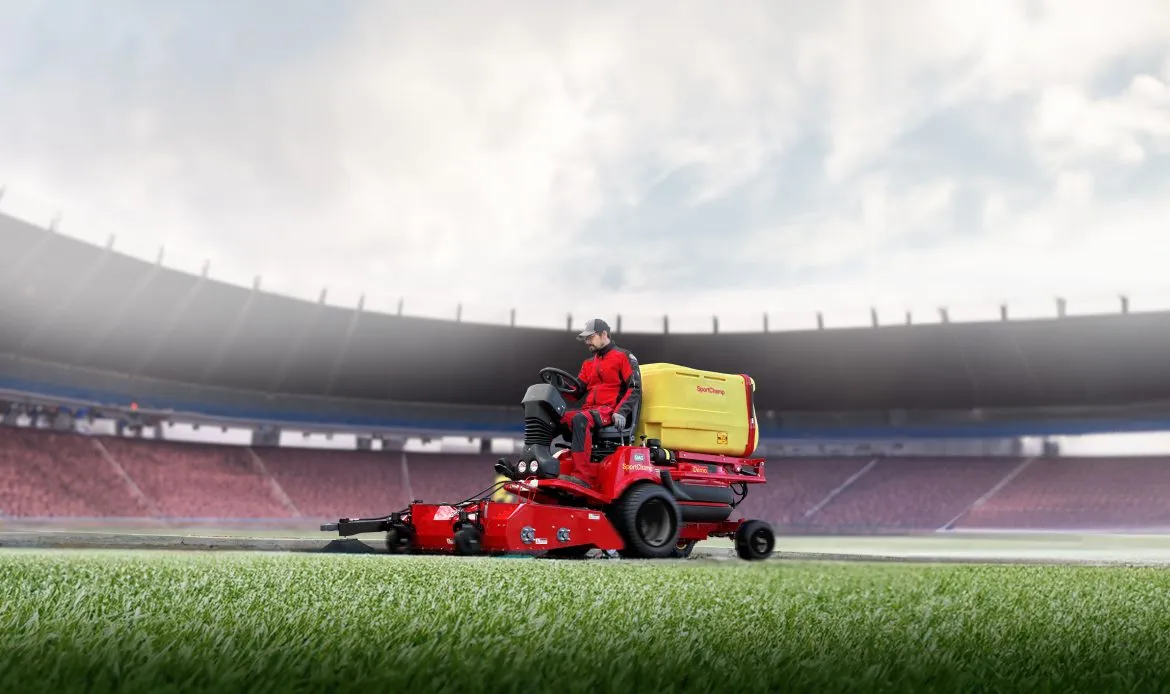
Cleaning and Vacuum Machines: Removing What Doesn’t Belong
Contamination Is the Silent Turf Killer
Artificial turf fields constantly accumulate unwanted material: dust, organic debris, fibre abrasion, and micro-particles that migrate deep into the infill layer. Left untreated, this contamination restricts drainage, accelerates compaction, and alters surface behavior.
Cleaning and vacuum machines are designed to remove this material while preserving usable infill. Unlike simple drag mats or surface brushes, professional systems combine brushing, screening, and vacuuming in a controlled process.
In practice, these machines are used for:
- Routine cleaning during weekly or monthly maintenance
- Seasonal debris removal (leaves, dust, pollen)
- Annual or semi-annual deep cleaning
- Edge and perimeter cleanup where debris accumulates
Advanced systems often include:
- Adjustable working depths
- Integrated screening or vibrating sieves
- High-capacity vacuum units with fine-particle filtration
From a buyer’s perspective, filtration quality matters as much as suction power. Machines designed to capture fine dust and fibre abrasion help protect both turf performance and environmental compliance.
Brushing and Grooming Equipment: Resetting the Playing Surface
Fibre Support Is a Mechanical Process
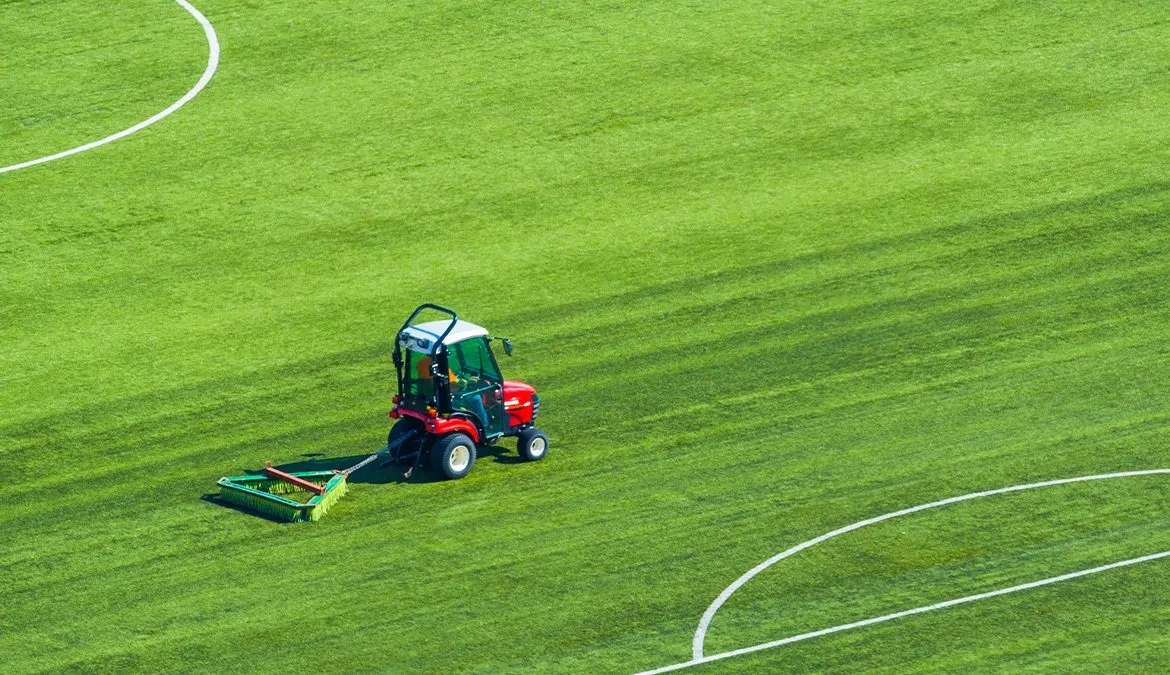
Brushing and grooming equipment play a central role in how a turf field feels underfoot. These machines are responsible for standing fibres upright, redistributing infill, and preventing premature matting.
Unlike basic surface dragging, purpose-built grooming machines allow crews to control:
- Direction of fibre movement
- Working depth relative to pile height
- Pressure applied to the surface
Oscillating and multi-directional brush systems are particularly effective because they work with and against the pile, restoring fibre structure more evenly across the field.
Grooming equipment is typically used:
- As part of regular weekly maintenance
- After heavy usage or events
- In combination with infill redistribution
- Before inspections or performance testing
Contractors managing multiple field types often prioritize machines with adjustable brush stiffness, allowing them to work effectively across sand, rubber, and mixed infill systems.
Decompaction Machines: Fixing Problems You Can’t See Yet
When Infill Stops Acting Like Infill
As infill becomes compacted, it loses its ability to absorb shock, support fibres, and drain effectively. Compaction often develops gradually, making it difficult to detect until performance complaints appear.
Decompaction machines are designed to loosen and recondition infill layers without damaging the turf backing or base. These machines typically work deeper than standard grooming tools and are used less frequently, but with significant impact.
Common use cases include:
- Annual or biennial deep maintenance
- Correcting hard or uneven playing areas
- Preparing a field for rejuvenation or top-up
- Extending usable life before resurfacing
For contractors, decompaction capability often differentiates basic maintenance services from professional turf care programs.
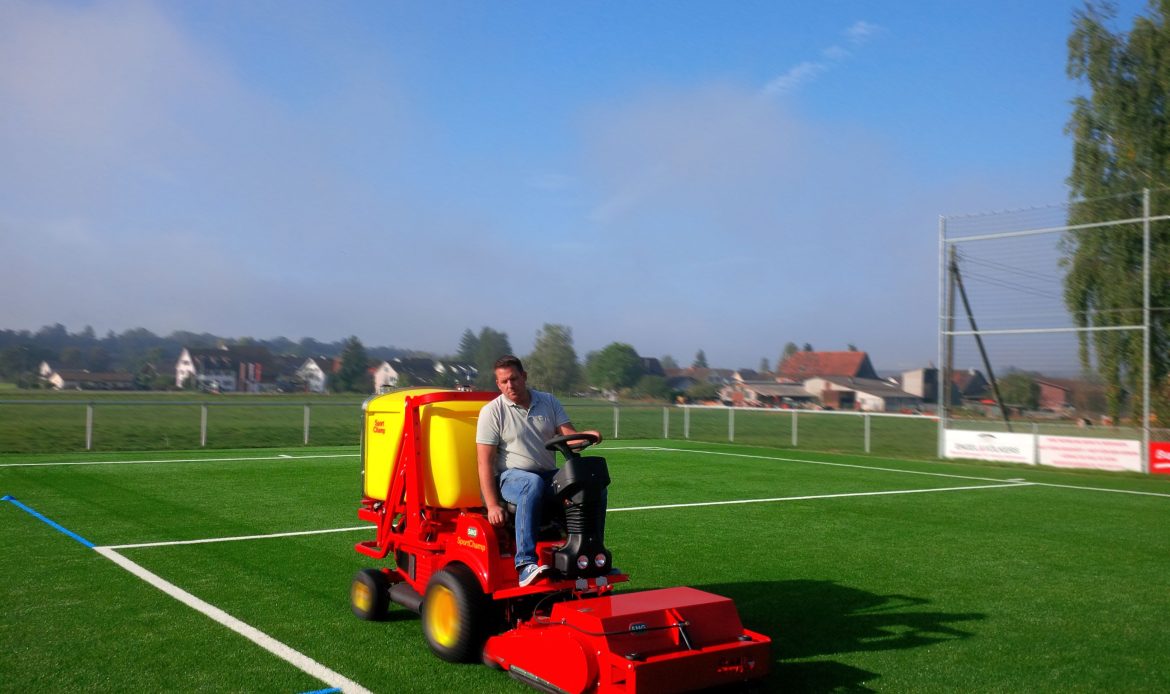
Specialized Tools That Improve Safety and Detail Work
The Details That Matter on Real Fields
Beyond core cleaning and grooming machines, many maintenance fleets include specialized attachments that address specific risks or constraints.
Examples include:
- Edge and perimeter cleaning tools for tight areas near boards and fences
- Magnetic collection attachments that remove metal debris, such as screws or shavings
- Lightweight, maneuverable machines for small or restricted-access areas
While these tools may not be used on every visit, they often prevent incidents, reduce liability, and improve overall field quality — especially in high-use community facilities.
How Contractors Should Think About Buying Maintenance Machines
Maintenance machines are not one-size-fits-all purchases. The most effective fleets are built around frequency of use, field volume, and service scope.
When evaluating purchases, experienced contractors consider:
- How often the machine will be used per year
- Whether it supports multiple maintenance tasks
- Compatibility with existing equipment and transport
- Ease of operation for different crew skill levels
- Maintenance needs and wear components
Self-propelled, multifunctional machines often make sense for contractors managing many fields or offering full-service contracts. Smaller operators may prioritize modular or attachment-based systems that scale with demand.
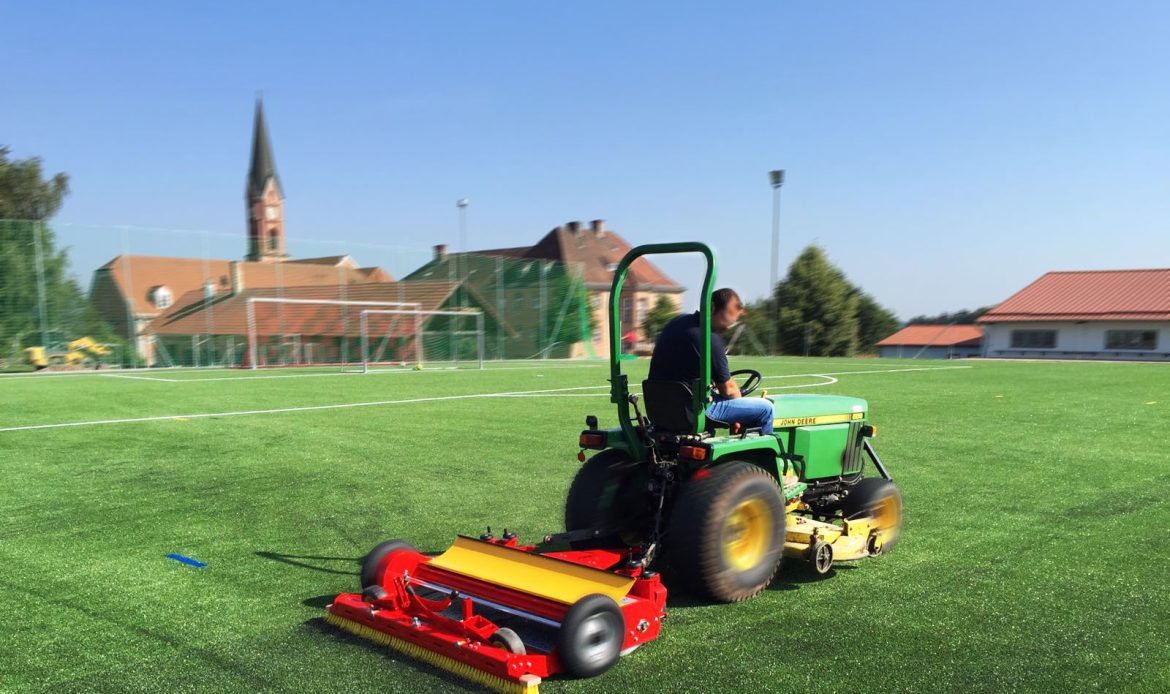
How Maintenance Equipment Fits Into a Long-Term Turf Strategy
Maintenance machinery is where installation quality is either preserved or lost. Even the best-installed turf system will degrade quickly without proper upkeep.
In a complete turf equipment lineup, maintenance machines work alongside:
- Installation equipment used during initial construction
- Infill machines that manage material levels
- Removal and recycling equipment used at the end of life
Contractors who invest early in professional maintenance capability are better positioned to offer long-term service contracts, recurring revenue, and measurable performance improvements for clients.
Maintenance Is Where Turf Value Is Protected
Artificial turf maintenance machines are not optional extras — they are the tools that determine whether a field performs as intended over time. From routine cleaning to deep restoration, these machines directly influence safety, playability, and lifespan.
For contractors and facility operators, investing in the right maintenance equipment is one of the most effective ways to protect turf assets, reduce complaints, and maximize return on every installation.