Installing artificial turf fields is a precision-driven process in which equipment selection directly affects production speed, surface quality, and long-term performance.
From material handling and layout to seaming, inlays, and final finishing, installation machines allow crews to control alignment, consistency, and efficiency across large surfaces.
This guide breaks down the equipment used throughout an artificial turf installation, from material handling to final finishing, with practical insight into how each machine fits into real-world contractor workflows and purchasing decisions.
Try our turf field maintenance equipment calculator to get an instant cost estimate for purchasing the right tools for your field.
What Is Artificial Turf Installation Equipment and When Is It Used?
Artificial turf installation equipment includes the machines used during the active build phase of a turf project, after base preparation and before final inspection. These machines are operated by installation crews on nearly every new field build and turf replacement project.
Installation equipment is typically used for:
- Handling and positioning turf rolls
- Aligning and bonding seams
- Cutting and installing permanent line inlays
- Distributing and brushing infill
- Final grooming before handoff
Unlike maintenance equipment, installation machines focus on accuracy, repeatability, and throughput, reducing reliance on manual labor while improving consistency across projects.
Laying and Unrolling Equipment
Controlling Turf Placement from the First Pass
Artificial turf rolls are heavy, wide, and difficult to manage without specialized handling equipment. Controlled unrolling and positioning is critical to avoid wrinkles, skewed seams, or material stress that can compromise the finished surface.
Turf laying and unrolling equipment is used to:
- Transport full-width turf rolls safely
- Unroll the material evenly across the prepared base
- Maintain straight seam lines and consistent orientation
- Reduce manual handling and crew fatigue
Professional turf-handling systems allow installers to position material with precision, rather than relying on forklifts or manual pulling, which often introduces alignment issues early in the installation.
When purchasing laying and unrolling equipment, contractors typically evaluate:
- Roll width and weight capacity
- Maneuverability on prepared bases
- Set up time between runs
- Transport and storage requirements
This category forms the foundation of efficient turf installation and often delivers immediate labor savings.
Turf Seaming and Bonding Equipment
Where Long-Term Turf Performance Is Determined
Seaming and bonding equipment plays a critical role in turf durability. Poor seam alignment or inconsistent adhesive application is one of the most common causes of premature turf failure and post-install callbacks.
Turf seaming equipment is used to:
- Align adjacent turf panels accurately
- Apply adhesive evenly across seam tape
- Maintain consistent pressure during curing
- Prevent seam lift, separation, or visible joint lines
Mechanical seaming systems reduce variability by controlling adhesive flow and pressure, producing stronger, cleaner seams with less reliance on installer technique.
Key considerations when evaluating seaming equipment include:
- Compatibility with commonly used turf adhesives
- Pressure consistency across the seam
- Ease of cleaning and maintenance
- Availability of consumables
For contractors installing turf regularly, reliable seaming equipment is essential to protecting both surface performance and reputation.
Line Inlay and Marking Equipment
Precision That Prevents Rework
Line inlay equipment is often underestimated during purchasing decisions, but it has a direct impact on layout accuracy, inspection approval, and client satisfaction.
These machines are used to:
- Cut precise channels for permanent turf lines
- Insert contrasting turf material cleanly
- Maintain consistent line width and alignment
Manual cutting increases the risk of misalignment, especially on multi-sport fields where tolerances are tight, and rework is costly.
When purchasing line-inlay equipment, contractors usually prioritize:
- Accuracy on straight and curved lines
- Adjustability for different layouts
- Calibration speed
- Flexibility across multiple sports
Precision equipment at this stage reduces inspection issues and eliminates time-consuming corrections late in the project.
Finishing and Final Pass Equipment
Locking In Surface Quality
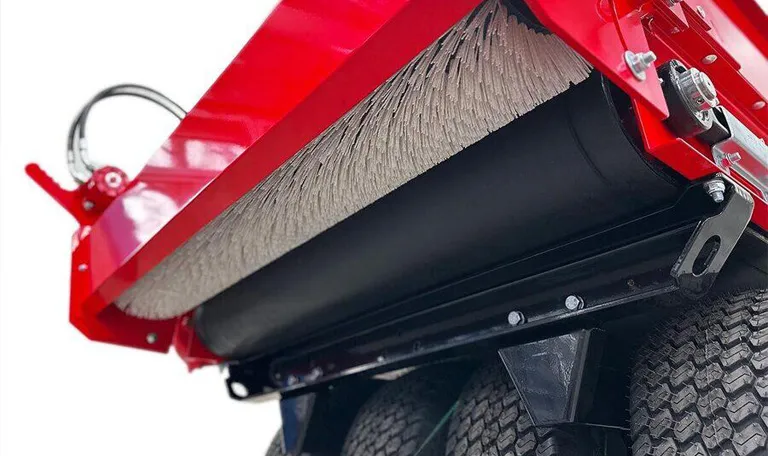
Finishing equipment is used after primary installation to bring the turf surface to its final performance state. This phase often determines how the field looks and feels on opening day.
- Turf finishing machines are used for:
- Distributing and leveling infill
- Brushing fibers upright
- Ensuring consistency across seams and field zones
Proper finishing improves playability, visual quality, and surface consistency while reducing the need for post-install adjustments.
Although finishing equipment is sometimes purchased later than core installation machines, it plays a major role in delivering professional-grade results.
Buying Installation Equipment: Contractor-Focused Considerations
When purchasing turf installation equipment, experienced contractors focus on workflow efficiency and consistency, not just upfront price.
Key questions to ask before buying:
- Will this reduce labor hours per project?
- Does it improve consistency across large surfaces?
- Can it be transported easily between sites?
- What maintenance is required to keep uptime high?
Used equipment may be suitable for low-frequency tasks, but machines used on every project are typically worth purchasing new to avoid downtime and variability.
Common Installation Mistakes Caused by the Wrong Equipment
Many of the most expensive turf installation problems don’t stem from poor workmanship, but from crews being forced to compensate for inadequate equipment.
When installers rely too heavily on manual methods, small inconsistencies quickly multiply across a full field.
Improper equipment selection often leads to issues that appear weeks or months later, long after the project is complete.
Common problems caused by the wrong turf installation equipment include:
Wrinkled or distorted turf from uncontrolled unrolling
Without proper roll handling and tension control, turf can shift during placement, creating imperfections that resurface under play.
Weak or visible seams due to inconsistent bonding pressure
Manual adhesive application often leads to uneven seam strength, separation, or visible joint lines.
Misaligned lines requiring rework
Inaccurate inlay cutting increases the risk of layout errors that are difficult to correct once infill is applied.
Incomplete finishing that affects playability and appearance
Poor infill distribution or rushed brushing leads to uneven surface feel and client complaints.
These issues frequently cost more in labor overruns, schedule delays, and callbacks than the investment in proper installation machines.
Read more: Artificial Turf Field Installation Considerations
How Installation Equipment Fits Into a Complete Turf Machine Fleet
Installation equipment sits at the center of a contractor’s artificial turf machinery lineup. It’s the phase where material quality, base preparation, and finishing converge, and where equipment has the greatest influence on speed and consistency.
In a complete turf fleet, installation equipment works alongside:
- Removal machines are used to strip old turf systems
- Maintenance equipment for grooming and infill management
- Recycling or refurbishment machines for surface renewal and reuse
Contractors planning long-term growth typically build strong installation capability first. Once installation workflows are efficient and repeatable, they can be extended into maintenance and recycling to support full-lifecycle services and recurring revenue.
From a purchasing standpoint, installation machines are often:
- Used on every new build or replacement
- Responsible for the largest labor and schedule gains
- The equipment category with the greatest impact on perceived quality
For experienced contractors, installation equipment is not a collection of tools — it is the core system around which the rest of the turf operation is built.
Final Takeaway
Artificial turf installation equipment is where quality, efficiency, and profitability intersect. Contractors who invest in the right machines gain better control over timelines, reduce labor dependency, and deliver fields that perform consistently over time.
For crews focused solely on artificial turf, professional-grade installation equipment is a foundational investment that supports scalability, repeatability, and long-term success.