Infill is one of the most influential components in how an artificial turf field performs, yet it’s often treated as a secondary concern during equipment planning. The machines used to install, redistribute, and manage infill affect surface firmness, drainage, fiber support, and long-term maintenance far more than many crews anticipate.
This guide takes a closer look at the equipment categories used to handle infill on artificial turf fields, with a focus on how contractors use these machines during installation, finishing, ongoing adjustment, and eventual removal. Rather than listing products, the goal is to explain what each machine type actually does on the jobsite and how it fits into real-world turf workflows.
Check out our turf field maintenance equipment calculator to get a cost breakdown for purchasing the right equipment for your field.
Where Infill Equipment Fits in Turf Construction and Maintenance
Infill machines are used across nearly every phase of a turf field’s life, starting with installation and continuing through years of use and maintenance. Unlike grooming tools, these machines are built to move and manage large volumes of material with consistent application rates while protecting the turf system from excessive ground pressure.
During installation, infill equipment helps crews place material accurately and efficiently as the turf is laid. After handoff, the same machine type is used to correct displacement, replenish material, and maintain even distribution in high-wear areas. In later stages, infill equipment becomes critical again during renovation or removal, when material must be separated, recovered, or recycled.
Because of this wide usage window, infill machines often deliver more long-term value than equipment used only during the initial build.
Machines Used to Apply Infill During Installation
The first infill application is where surface performance begins to take shape. During this stage, machines must spread material evenly across the field and work it into the turf profile without damaging fibers or compacting the base.
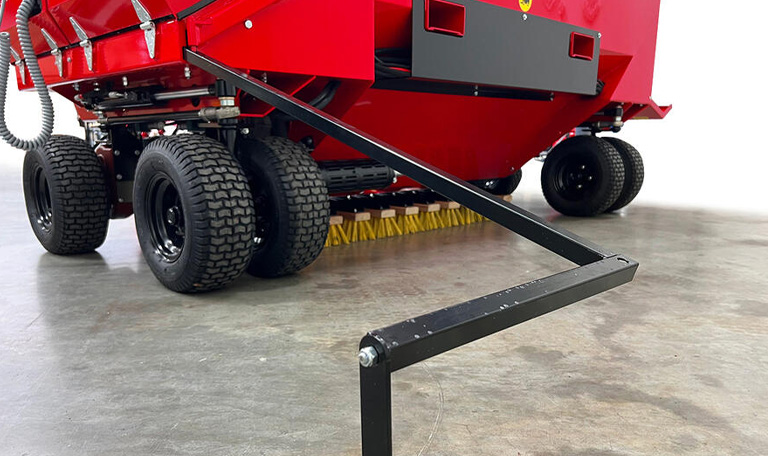
Modern infill spreaders are typically self-propelled or ride-on machines designed to carry substantial material loads and apply infill at controlled, adjustable rates. Conveyor systems and integrated brushing mechanisms ensure consistent material flow, even when handling coarse rubber or organic infills.
From a contractor’s perspective, these machines replace labor-intensive manual spreading with a process that is:
- Faster across large surfaces
- More consistent from zone to zone
- Easier to control on high-pile systems
When evaluating equipment for this stage, buyers tend to focus less on raw engine power and more on spread accuracy, maneuverability, and ground pressure, especially on newly installed turf.
Adjusting and Redistributing Infill After Installation
Once a field is in use, infill begins to move. Foot traffic, weather, grooming, and play patterns all contribute to displacement over time. Redistribution equipment allows contractors and maintenance crews to correct these changes before they affect playability or accelerate wear.
This category includes both ride-on machines used for targeted adjustments and tractor-driven spreaders that integrate into existing fleets. The key advantage of mechanized redistribution is control: crews can return infill to worn areas without overfilling the rest of the field.
Effective redistribution equipment allows operators to:
- Apply precise quantities to specific zones
- Maintain consistent infill depth over time
- Reduce the need for emergency repairs
For contractors offering maintenance services, these machines are often used far more frequently than installation equipment, making reliability and ease of adjustment critical buying factors.
Brushing Systems That Work Infill Into the Turf
Spreading infill is only part of the process. Brushing equipment determines how well that material integrates into the turf system and how fibers respond under play.
Oscillating, multi-directional brushing systems are commonly used to work infill into the backing while lifting fibers into an upright position. This process improves surface consistency, supports fiber structure, and helps prevent premature matting.
Adjustable brushing systems are especially valuable because they allow crews to match working depth and brush stiffness to:
- Different pile heights
- Sand-heavy vs rubber-heavy infills
- Compacted vs loose surfaces
Over time, consistent brushing reduces compaction and helps fields remain within performance expectations without requiring excessive infill.
Handling Infill During Removal and Renovation
Infill equipment becomes important again when a turf system reaches the end of its usable life. During removal or renovation, machines are used to separate infill from turf fibers so material can be reused, recycled, or disposed of efficiently.
For contractors, this stage presents both a logistical challenge and an opportunity. Equipment that supports infill recovery can:
- Reduce disposal volume
- Lower replacement material costs
- Shorten removal timelines
- Support sustainability requirements
As more clients ask about reuse and recycling, infill removal capability is becoming a differentiator rather than an add-on.
What Contractors Should Consider Before Buying Infill Equipment
Infill machines are rarely one-task tools. The most valuable systems support installation, adjustment, and renovation across multiple projects.
When evaluating equipment purchases, experienced contractors typically prioritize workflow impact over individual features. They look at how a machine will reduce labor, improve consistency, and integrate with the rest of their fleet.
Key considerations usually include:
- Throughput relative to crew size
- Compatibility with multiple infill types
- Transport and setup requirements
- Wear parts and maintenance intervals
- Scalability from small fields to large venues
For high-volume installers, self-propelled machines often provide the best return. For contractors managing multiple sites, tractor-mounted systems can provide flexibility without increasing the fleet size.
Problems That Start With Poor Infill Equipment Choices
Many turf performance issues stem from how infill is handled, not from the turf product itself. When crews lack proper equipment, they often compensate with manual workarounds that introduce variability.
Common infill-related problems include uneven depth across the field, compacted material that restricts drainage, and poor fiber support that accelerates wear. These issues may not be immediately visible but tend to surface during the first season of use.
Over time, the cost of correcting these problems through labor and callbacks often exceeds the upfront investment in proper machinery.
Infill Equipment as Part of a Long-Term Turf Operation
Infill machines sit at the intersection of installation and maintenance, making them some of the most frequently used tools in a turf contractor’s operation. They work alongside installation equipment during the build phase and remain in use long after the field is handed over.
Contractors who plan for long-term growth often prioritize early infill capability, then expand into grooming, removal, and recycling to offer full-lifecycle services. In that sense, infill equipment is not a specialty purchase, but a core part of a professional turf operation.
Getting Infill Right from Day One
Infill equipment plays a decisive role in how artificial turf fields perform over time. From the first application during installation to years of redistribution and eventual removal, these machines influence playability, durability, and maintenance costs.
For contractors focused on artificial turf, investing in purpose-built infill equipment is one of the most effective ways to improve efficiency, reduce rework, and deliver consistent results across every phase of a project.