TenCate took a leading role at the 2026 International Sports Engineering Association (ISEA) Conference, held June 1–4 at Washington State University in Pullman, Washington — one of the most prominent global gatherings in sports engineering and technology. The company sponsored awards in the Sports Surfaces Session recognizing researchers advancing the science behind synthetic turf, natural grass, and field performance consistency.
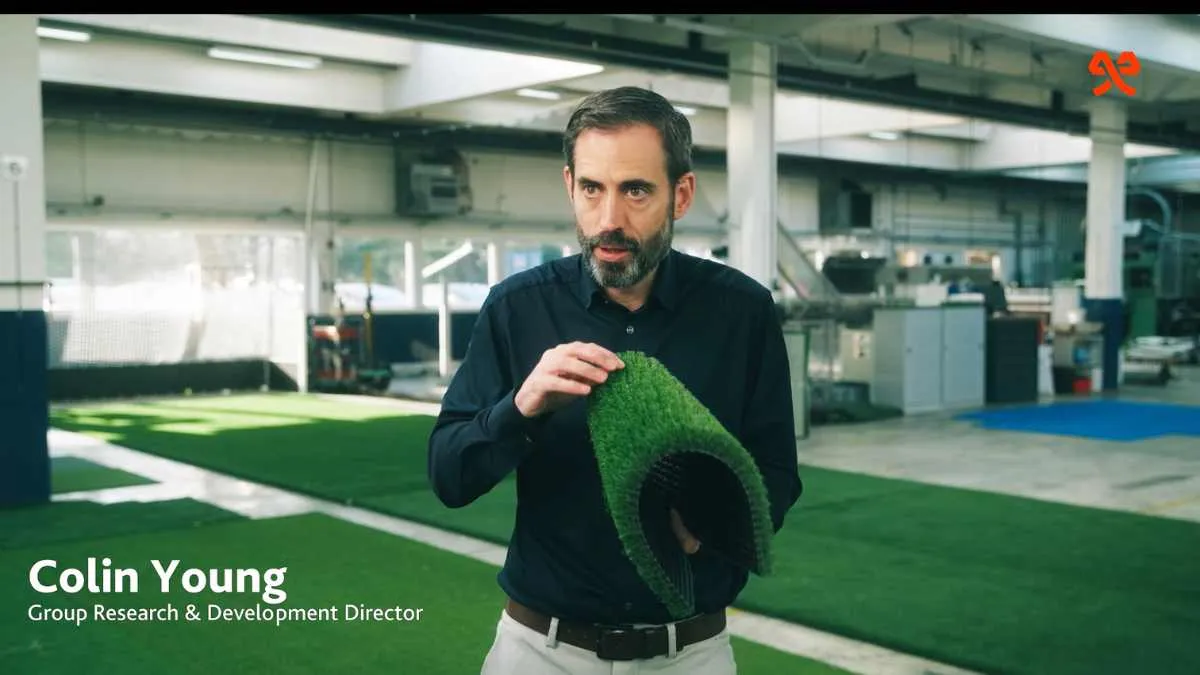
The session was chaired by Dr. Colin Young, TenCate’s Chief Technical Officer, who emphasized the value of cross-sector collaboration. “When researchers and industry experts work together, we get a better understanding of how surfaces perform, where they can improve and how they can better support athletes,” Young said.
Three research papers received recognition during the session, covering compaction behavior of pine chip infill on third-generation artificial grass pitches (Loughborough University), turfgrass traction differences for NFL sod production (a multi-institution study), and spatial consistency of NFL game fields using player-informed testing methods.
Young noted a broader shift in how the industry approaches surface evaluation. “There is growing recognition that surfaces cannot simply be grouped together as ‘grass’ or ‘turf.’ Different types of grass and turf behave differently depending on field conditions and many other variables. The more we understand and classify those differences, the better the research and the better the decision-making becomes.”
TenCate’s participation at ISEA ties directly to its work developing Pivot® Performance Turf, an infill-free turf system engineered to replicate the feel and traction of natural grass. The product was tested with over 1,000 college and professional athletes wearing movement sensors, with the resulting data used to refine surface traction, release, and response under real playing conditions.