We sat down with Neil Peterson, CEO of LED Lighting Supply, to understand how the company helps recreational and school sports facilities get professional-grade lighting without a turnkey price tag, and what planners should look for before they buy.
Uniformity Over Everything: Inside LED Lighting Supply's Approach to Sports Lighting
When most people picture a lit sports field, they think about brightness. Neil Peterson wants you to think about something else entirely.
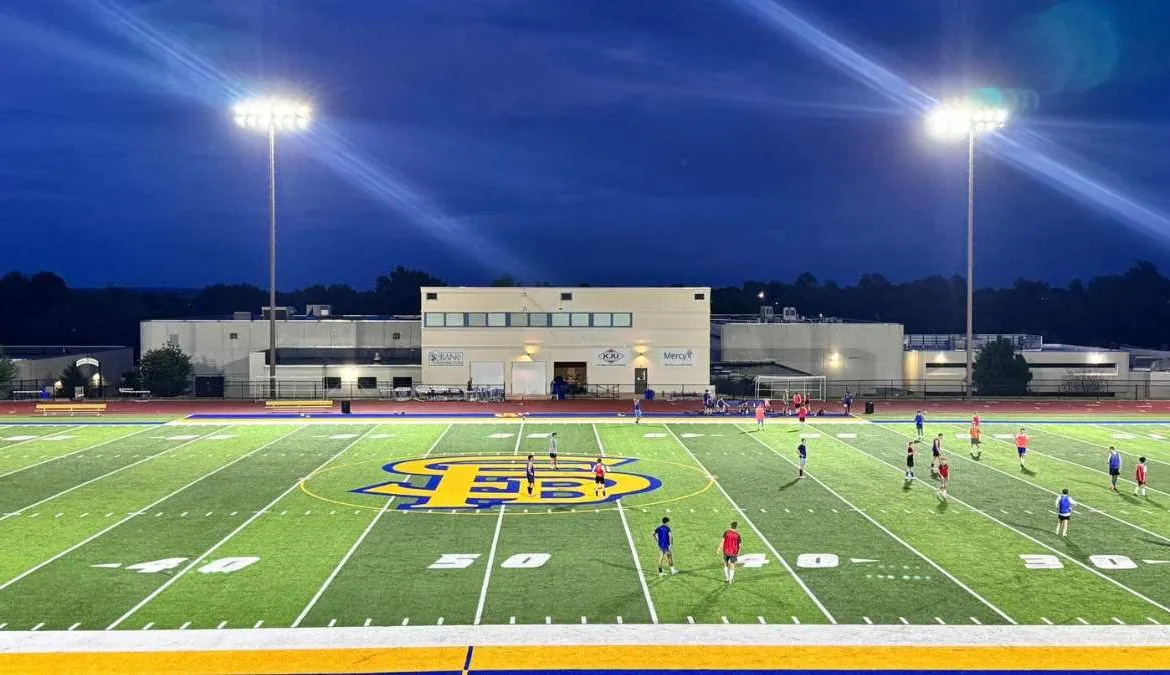
“Uniformity is the main driver,” he told us. “It really isn’t a level of light. It’s how uniform it is, because if you have a uniform field with one level of light, it will always look perfect.” That single idea, that the evenness of light matters more than its raw intensity, runs through nearly everything LED Lighting Supply does, from the optics it designs into its fixtures to the way it lays out poles around a baseball diamond.
We spoke with Peterson as part of our ongoing series of conversations with suppliers in the sports facility construction space. What follows is a look at how the company operates, who it serves best, and the practical advice Peterson offers to anyone weighing their options.
A Consultative Model, Not a Catalog
Peterson oversees the customer-facing team at LED Lighting Supply, a company that is both a manufacturer and a supplier, building its own product rather than reselling someone else’s. ‘We actually manufacture product,’ Peterson explained. The real differentiator, though, is the process that wraps around the product.
That process starts with understanding the application. Before recommending anything, the team wants to know the particulars: Is there housing around the field that raises concerns about glare and light trespass? How tall are the poles? What level of play does the facility host? Those answers shape a recommendation tailored to the site rather than pulled off a shelf.
The company supplies the fixtures, the mounting hardware, and the poles, both wood poles and stadium steel poles, each available up to seventy feet. What it deliberately doesn’t do is the installation. “We don’t do the installation,” Peterson said. “Local contractors, or schools with their own electricians, do that. But we provide that support to make sure the project gets done right, and then support them afterwards.”
That division of labor is central to the company’s identity, and it defines exactly the kind of customer LED Lighting Supply is built for.
Where They Fit, and Where They Don't
Peterson is refreshingly direct about the competitive landscape. He knows there are premium, full-service firms that will handle everything: rip out the old poles, run the wiring, manage the entire build end to end. He doesn’t pretend to compete with them on that model.
“We’re not going to compete with that company that does the full turnkey installation,” he said. Those projects, he noted, can run from a quarter of a million to half a million dollars for big complexes, figures that sit well outside the budgets of many schools and towns. “A lot of the schools don’t have the budget to do that.”
Instead, LED Lighting Supply’s sweet spot is the facility that has installation resources of its own, whether an electrical contractor on staff or a local crew they work with regularly, and wants a cost-effective, high-performance system they can manage installing with expert support behind them. In Peterson’s words, the ideal customer is “that customer that’s looking for a cost-effective, high-performance option where they can rely on the light.”
Concretely, that means recreational fields up through the high school level. “We’ve done college-level ball, we’ve done semi-pro,” Peterson said, “but our sweet spot is recreational up to high school. That’s where we do the most.” Think softball complexes with 40- to 60-foot poles, municipal fields being upgraded from decades-old equipment, and towns that maintain their own facilities.
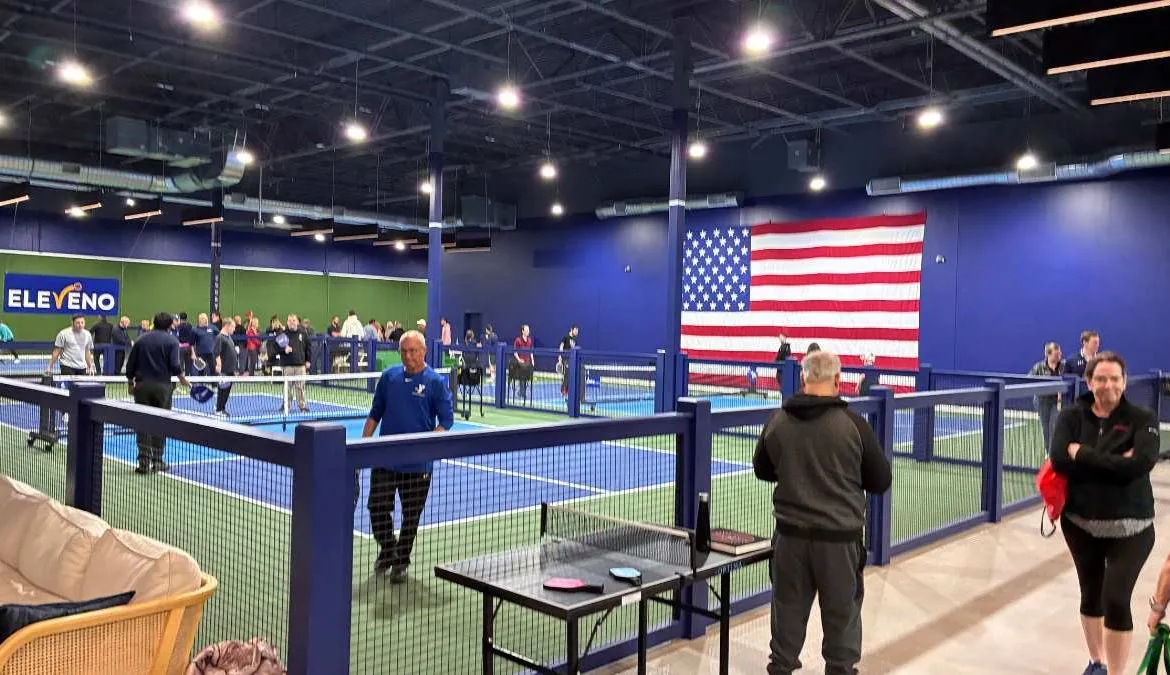
The company also does a brisk business indoors. Tennis and pickleball projects have become a significant vertical. As Peterson put it, “pickleball’s been, the last couple of years, it’s really exploded,” and LED Lighting Supply works with national chains like Pickleball Kingdom as a standard part of their buildouts. Its reach extends beyond the mainland, too, to Caribbean hotel tennis and pickleball courts where local lighting expertise is scarce but installation labor is available.
The Engineering Behind the Light
For a company that emphasizes consultation, the lighting plan is the heart of the offering. LED Lighting Supply produces thousands of them a year, and the process is methodical. It begins with the address, where the team pulls up the site on Google Maps to see it firsthand, then moves through pole heights, fixture counts, and the customer’s specific requirements. A plan typically takes one to two days to produce, followed by a review meeting to fine-tune it against the facility’s needs.
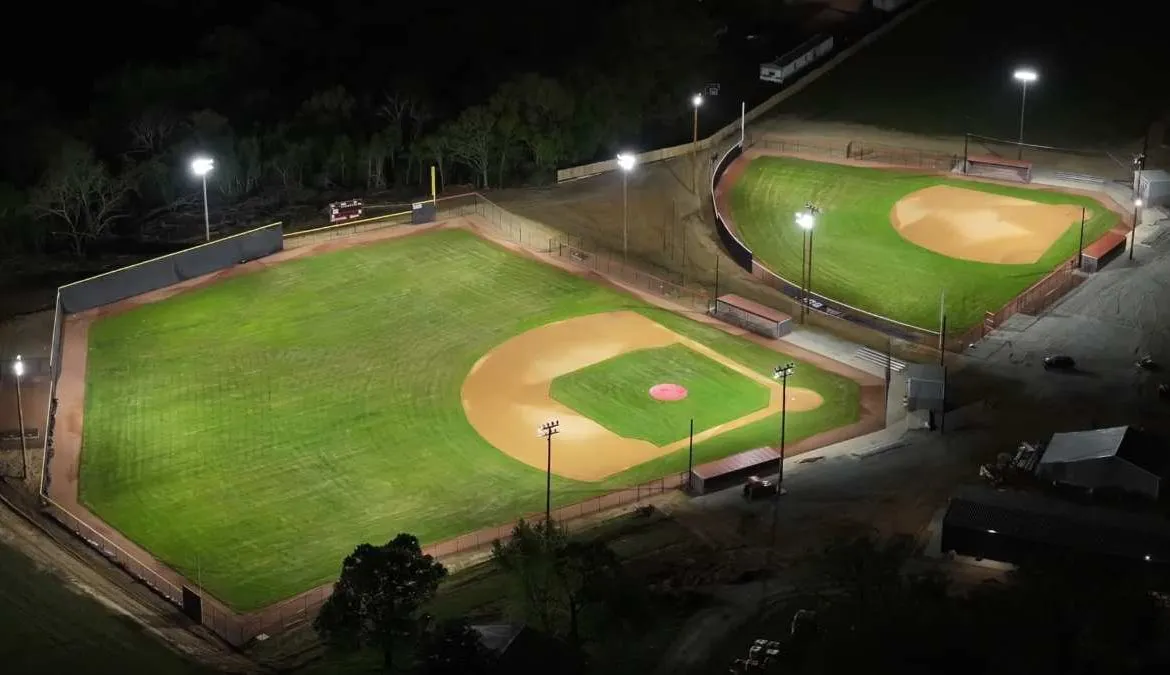
The technical goal is always the same: even coverage without hot spots or dark corners. For a little league baseball field, Peterson offered a concrete benchmark of roughly fifty foot-candles in the infield and thirty in the outfield, with a tight max-to-min ratio so the light reads as uniform across the entire playing surface. Corners, backstops, and the transition between infield and outfield all get special attention, because a ball lost against a poorly lit backstop is a safety problem, not just an aesthetic one.
That safety focus drives the company’s approach to glare and light pollution, which is increasingly governed by local compliance rules. Rather than simply flooding a field with light, an approach Peterson says creates pollution and spill, LED Lighting Supply uses a directional strategy built around optics. “Our optics are what control where the light goes,” he said. Glare shields are available across the fixture line and ship standard on many models.
The design principles carry across sports. On a track, he noted, you never aim light into the direction runners are coming from. In baseball, pole height is a lever for control: the higher the pole, the more the system behaves like directional light rather than a flood, which is why the team so often asks whether a facility can upgrade 40-foot poles to fifty or sixty. Each plan identifies the type of glare and the amount of off-site light so the owner can confirm it meets local permitting requirements, and those requirements are something the team asks about at the very start.
Built to Last in Harsh Conditions
Because the fixtures live outdoors through snow, rain, and lightning, durability is engineered in. LED Lighting Supply’s sports lights are marine-grade, rated to the C4 corrosion level, and carry an IP66 ingress rating. “The key is to make sure that the fixtures are going to last,” Peterson said, describing a design target of 10 to 12 years of continued operation, with products that in practice often run fifteen years or more.
The fixtures use industry-standard LED chips and drivers, carry a five-year warranty, and increasingly ship as wattage-selectable units, so a customer who wants a little more or a little less light can adjust without swapping hardware. One recommendation Peterson returns to repeatedly is surge protection. Lightning is the most common culprit behind premature driver failures, so the company strongly advises adequate surge protection at the panel and will include it in a quote when an installer can’t supply it.
What Happens After the Sale
Support doesn’t end at delivery, which, thanks to in-house stock, is fast. Peterson says around ninety percent of projects ship within a week, depending on the optical modifications a given job requires. The team follows up before installation, during it, and after, and often converts the lighting plan into detailed, blown-up per-pole diagrams showing exactly where each fixture should point.
If something fails down the road, there’s a defined path. Customers can reach their lighting specialist directly or open a ticket with the support team, with contact typically made within 24 hours. The team looks for a root cause, often a surge event, before shipping a replacement driver, which is commercially available and easily swapped. Full fixture failures within the warranty period are replaced from stock.
And when a project wraps, Peterson’s favorite moment arrives: the photos. “Our most exciting thing is when we get the pictures, or the drone pictures, once a project’s completed,” he said. Those completed projects populate the company’s website as a library of case studies.
Peterson's Advice to Project Owners
Asked for the single piece of guidance he’d give owners choosing both a lighting product and a partner, Peterson didn’t pitch a spec. He pitched a relationship.
“We’re gonna earn their business,” he said. “We’re gonna follow up, we’re gonna call you back. And even when there’s an issue, we’re gonna call you back, because we’re gonna solve that problem for you.” He points to repeat customers as the real measure of whether a supplier delivers; the city of North Attleboro, Massachusetts, for instance, has done six or seven fields over several years. The company actively looks for customers with multiple fields, precisely because that creates the incentive to get every project right.
For planners comparing options, the takeaway is a useful filter: decide whether you need a full turnkey builder or a design-and-supply partner you’ll install alongside. If it’s the latter, the questions Peterson emphasizes, namely uniformity, glare control, durability ratings, surge protection, and genuine after-sales follow-through, are the ones worth putting to any supplier on your shortlist.
Get Your Lighting Project Started
Planning a sports lighting project of your own? Sports Venue Calculator can help you move forward: estimate your budget with our cost calculator, check out LED Lighting Supply’s profile in our supplier directory, and explore grants and financing options in our funding database, all in one place.